Remembering D-Day…69 Years Later

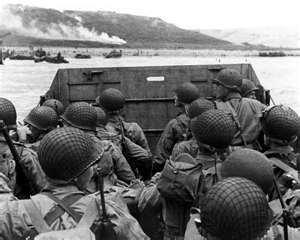
D-Day, also called the Battle of Normandy, was fought on June 6, 1944, between the Allied nations and German forces occupying Western Europe. To this day, 69 years later, it  still remains the largest seaborne invasion in history. Almost three million troops crossed the English Channel from England to Normandy to be used as human cannon fodder in an invasion of occupied France.

The twelve nations who participated in the invasion included Australia, Canada, Belgium, France, Czechoslovakia, Greece, New Zealand, the Netherlands, Norway, Poland, the United Kingdom, and, of course. the United States of America.

The codename for the invasion was Operation Overlord. The assault phase was known as Operation Neptune. Operation Neptune began on D-Day (June 6, 1944) and ended on June 30. Operation Overlord also began on D-Day, and ended with the crossing of the River Seine on August 19.

General Dwight D. Eisenhower faced a daunting task in the planning of such a massive invasion. He would have to move his forces 100 miles across the English Channel and storm a heavily fortified coastline. His enemy was the weapon-and-tank-superior German army commanded by the “Desert Fox” Erwin Rommel, one of the most brilliant generals of the war.

Less than 15 percent of the young men called upon to sacrifice their lives for our freedom in the invasion had ever seen combat.

A crossing of the unpredictable and dangerous English Channel had not been attempted since 1688. Once the invading forces set out, there was no turning back. The channel was soon hosting a 5,000-vessel armada that stretched as far as the eye could see, transporting both men and vehicles across the channel to the French beaches. Not to mention, the Allies also launched 4,000 smaller landing craft and more than 11,000 aircraft.

By the time the sun set on June 6, more than 9,000 Allied soldiers were dead or wounded, and more than 100,000 had made it ashore, capturing French coastal villages. Within weeks, supplies were being unloaded at Utah and Omaha beachheads at the rate of more than 20,000 tons per day. By June 11, more than 326,000 troops, 55,000 vehicles, and 105,000 tons of supplies had been landed on the beaches. By June 30, the Allies had established a firm foothold in Normandy. Allied forces crossed the River Seine on August 19.
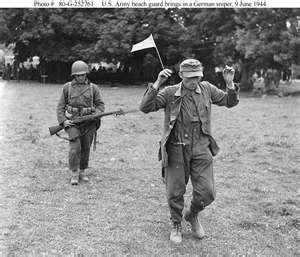
There has never been an exact count of the sacrifices made on D-Day. Although, it is estimated that more than 425,000 Allied and German troops were killed, wounded, or went missing during the battle. 209,000 of those who lost their lives were Allied forces. In addition to almost 200,000 German troops killed or wounded, the Allies also captured 200,000 soldiers. Captured Germans were sent to American prisoner-of-war camps at the rate of 30,000 per month, from D-Day until Christmas 1944. Between 15,000 and 20,000 French civilians were killed during the battle.

Basically, the invasion of Normandy was a success, due to sheer force of numbers. By July 1944, some one million Allied troops, mostly American, British, and Canadian, were entrenched in Normandy. During the great invasion, the Allies assembled nearly three million men and stored 16 million tons of arms, munitions, and supplies in Britain.

Among the young men who stepped off those boats, in a hail of gunfire, was a fellow named Edward, whom everyone called Ned, from the small town of Helena, Arkansas.  Already in his young life, Ned had been forced to drop out of school in the sixth grade, in order to work at the local movie theatre to help support his mother, brother, and sister faced with the ravages of the Great Depression.

He was a gentle man who loved to laugh and sing, having recorded several 78 rpm records in the do-it-yourself booths of the day. And now, he found himself, a Master Sergeant in an Army Engineering Unit, stepping off a boat into the unknown, watching his comrades being mercilessly gunned down around him.

Ned, along with the rest of his unit who survived the initial assault, would go on to assist in the cleaning out of the Concentration Camps, bearing witness to man’s inhumanity to man.

The horrors he saw had a profound effect on Ned.  One which he would keep to himself for the remainder of his life.  While his children knew that he served with an Engineering Unit in World War II, they did not know the full extent of his service, until they found his medal, honoring his participation in the Invasion of Normandy, going through his belongings, after he passed away on December 29, 1997.

How do I know so much about Ned?  He was my Daddy.  You see, my love of Christ and, of this country, comes from my Earthly father, 40 years my senior.

I was raised by members of the Greatest Generation.  It is today that we pause to remember their sacrifices at home and abroad. 

May this day also serve as a reminder of the sacrifices made by our Best and Brightest and their families, yesterday, today, and tomorrow.

May God bless them all and may He hold them in the hollow of His hand. 

Until He Comes,

KJ

Remembering D-Day

D-Day, also called the Battle of Normandy, was fought on June 6, 1944, between the Allied nations and German forces occupying Western Europe. To this day, 68 years later, it  still remains the largest seaborne invasion in history. Almost three million troops crossed the English Channel from England to Normandy to be used as human cannon fodder in an invasion of occupied France.

The twelve nations who participated in the invasion included Australia, Canada, Belgium, France, Czechoslovakia, Greece, New Zealand, the Netherlands, Norway, Poland, the United Kingdom, and, of course. the United States of America.

The codename for the invasion was Operation Overlord. The assault phase was known as Operation Neptune. Operation Neptune began on D-Day (June 6, 1944) and ended on June 30. Operation Overlord also began on D-Day, and ended with the crossing of the River Seine on August 19.

General Dwight D. Eisenhower faced a daunting task in the planning of such a massive invasion. He would have to move his forces 100 miles across the English Channel and storm a heavily fortified coastline. His enemy was the weapon-and-tank-superior German army commanded by the “Desert Fox” Erwin Rommel, one of the most brilliant generals of the war.

Less than 15 percent of the young men called upon to sacrifice their lives for our freedom in the invasion had ever seen combat.

A crossing of the unpredictable and dangerous English Channel had not been attempted since 1688. Once the invading forces set out, there was no turning back. The channel was soon hosting a 5,000-vessel armada that stretched as far as the eye could see, transporting both men and vehicles across the channel to the French beaches. Not to mention, the Allies also launched 4,000 smaller landing craft and more than 11,000 aircraft.

By the time the sun set on June 6, more than 9,000 Allied soldiers were dead or wounded, and more than 100,000 had made it ashore, capturing French coastal villages. Within weeks, supplies were being unloaded at Utah and Omaha beachheads at the rate of more than 20,000 tons per day. By June 11, more than 326,000 troops, 55,000 vehicles, and 105,000 tons of supplies had been landed on the beaches. By June 30, the Allies had established a firm foothold in Normandy. Allied forces crossed the River Seine on August 19.

There has never been an exact count of the sacrifices made on D-Day. Although, it is estimated that more than 425,000 Allied and German troops were killed, wounded, or went missing during the battle. 209,000 of those who lost their lives were Allied forces. In addition to almost 200,000 German troops killed or wounded, the Allies also captured 200,000 soldiers. Captured Germans were sent to American prisoner-of-war camps at the rate of 30,000 per month, from D-Day until Christmas 1944. Between 15,000 and 20,000 French civilians were killed during the battle.

Basically, the invasion of Normandy was a success, due to sheer force of numbers. By July 1944, some one million Allied troops, mostly American, British, and Canadian, were entrenched in Normandy. During the great invasion, the Allies assembled nearly three million men and stored 16 million tons of arms, munitions, and supplies in Britain.

Among the young men who stepped off those boats, in a hail of gunfire, was a fellow named Edward, whom everyone called Ned, from the small town of Helena, Arkansas.  Already in his young life, Ned had been forced to drop out of school in the sixth grade, in order to work at the local movie theatre to help support his mother, brother, and sister faced with the ravages of the Great Depression.

He was a gentle man who loved to laugh and sing, having recorded several 78 rpm records in the do-it-yourself booths of the day. And now, he found himself, a Master Sergeant in an Army Engineering Unit, stepping off a boat into the unknown, watching his comrades being mercilessly gunned down around him.

Ned, along with the rest of his unit who survived the initial assault, would go on to assist in the cleaning out of the Concentration Camps, bearing witness to man’s inhumanity to man.

The horrors he saw had a profound effect on Ned.  One that he would keep to himself for the remainder of his life.  While his children knew that he served with an Engineering Unit in World War II, they did not know the full extent of his service, until they found his medal, honoring his participation in the Invasion of Normany, going through his belongings after he passed away on December 29, 1997.

How do I know so much about Ned?  He was my Daddy.  You see, my love of Christ and, of this country, comes from my Earthly father, 40 years my senior.

I was raised by members of the Greatest Generation.  It is today that we pause to remember their sacrifices at home and abroad. 

May this day also serve as a reminder of the sacrifices made by our Best and Brightest and their families, yesterday, today, and tomorrow.

May God bless them all and may He hold them in the hollow of His hand. 

Rush Limbaugh and the Liberal Blitzkrieg

In their unfettered zeal to get rid of one of the most effective barriers to the re-election of their false messiah and the continued existence of the political status quo, Liberals in both political parties and the Main Stream Media have launched a Liberal Blitzkrieg against Rush Limbaugh over his comments concerning Professional Activist Sandra Fluke.

What’s a Blitzkrieg, you ask?

Per historylearningsite.co.uk:

Blitzkrieg means “lightning war”. Blitzkrieg was first used by the Germans in World War Two and was a tactic based on speed and surprise and needed a military force to be based around light tank units supported by planes and infantry (foot soldiers). The tactic was developed in Germany by an army officer called Hans Guderian. He had written a military pamphlet called “Achtung Panzer” which got into the hands of Hitler. As a tactic it was used to devastating effect in the first years of World War Two and resulted in the British and French armies being pushed back in just a few weeks to the beaches of Dunkirk and the Russian army being devastated in the attack on Russia in June 1941.

Rush Limbaugh addressed the situation and why he issued an apology last weekend to Ms. Fluke as he opened his show yesterday:

I want to explain why I apologized to Sandra Fluke in the statement that was released on Saturday. I’ve read all the theories from all sides, and, frankly, they are all wrong. I don’t expect — and I know you don’t, either — morality or intellectual honesty from the left. They’ve demonstrated over and over a willingness to say or do anything to advance their agenda. It’s what they do. It’s what we fight against here every day. But this is the mistake I made. In fighting them on this issue last week, I became like them.

Against my own instincts, against my own knowledge, against everything I know to be right and wrong I descended to their level when I used those two words to describe Sandra Fluke. That was my error. I became like them, and I feel very badly about that. I’ve always tried to maintain a very high degree of integrity and independence on this program. Nevertheless, those two words were inappropriate. They were uncalled for. They distracted from the point that I was actually trying to make, and I again sincerely apologize to Ms. Fluke for using those two words to describe her. I do not think she is either of those two words. I did not think last week that she is either of those two words.

The apology to her over the weekend was sincere. It was simply for using inappropriate words in a way I never do, and in so doing, I became like the people we oppose. I ended up descending to their level. It’s important not to be like them, ever, particularly in fighting them. The old saw, you never descend to the level of your opponent or they win. That was my error last week. But the apology was heartfelt. The apology was sincere. And, as you will hear as I go on here, it was not about anything else. No ulterior motive. No speaking in code. No double entendre or intention. Pure, simple, heartfelt. That’s why I apologized to Sandra Fluke on Saturday, ’cause all the theories, all the experts are wrong.

What’s gone on since and what really is going on here is what we all know to be true. Our president, Barack Obama, has a socialist agenda when it comes to health care, when it comes to birth control, when it comes to virtually every aspect of his agenda. In this case, Barack Obama wants the government, his government, making moral decisions about what treatments, prescriptions, pills you pay for through your insurance premiums. He isn’t willing to let you or the market make that decision for yourself.

Rush also had something to say concerning the advertisers who have acquiesced to the Liberal Blitzkrieg: 

The left, folks — the media — are giddy that some advertisers have said they’re leaving the program. And I’m sorry to see ’em go. They have profited handsomely from you. These advertisers who have split the scene have done very well due to their access to you, my audience, from this program. To offer their products and services to you through this venue is the best opportunity that they have ever had to advertise their wares. Now they’ve chosen to deny themselves that access, and that’s a business decision, and it’s theirs alone to make.

They’ve decided they don’t want you or your business anymore.

So be it.

For me, this program is always about you. You talk to anybody that knows me who asks me about this program, and I always say, “It’s all for the audience,” because if you’re not there, all the rest of this is academic. This show is about you. It’s not about the advertisers. I knew the political inclinations of these people. They didn’t care when they were profiting — and I didn’t, either. Everybody’s able to put these things aside for the sake of mutual beneficial business activity. No radio broadcast will succeed by putting business ahead of the needs of its loyal audience, and that audience is you. My success has come from you. My focus has always been, and always will be, on you.

…As I was saying, ladies and gentlemen, this show has always been about you. It has always been about meeting and surpassing your expectations as an audience on any level that I can imagine, on any level for which I have empathy. If this program were about the advertising… (laughing) you don’t know the kind of commercials you’d be treated to. I reject millions of dollars of advertising a year, much to the chagrin of my hardworking sales staff. Millions, folks, including, I might add, General Motors. What would you have thought, if, after the government took over General Motors, I started advertising General Motors? I made the decision not to accept that because you, the audience, come first. Because no successful program puts the audience second or third.

See, I understand my successes come from you. During the year, many of you regale me with how much the program has meant to you personally, your family, over the years. Every Thanksgiving and Christmas I take time out to tell you that no matter what this program’s meant to you, it can’t compare to what you have meant to me and my family. In fact, I have no adequate way to express my gratitude to you. Just doesn’t exist. It’s how great my gratitude for all of you is. Without you, advertisers would have no need to participate in this program. So what we’re gonna do is replace those that leave, those that no longer want access to you, those advertisers who no longer want your business, fine. We’ll replace them. It’s simple, really.

Advertising’s a business decision. It’s not a social one. Only the leftists try to use extortion, pressure, threats to silence opposing voices. We don’t do that. Never, ever, do any of us on our side of the aisle try to suppress the speech or the voices of those with whom we disagree, and we never will. So, as you’ve always done, you make your own business decisions about the products and services you buy. But don’t be like the opposition. That was my mistake last week. Don’t make it yours.

Rush will survive this.  Conservatives, such as myself, will not desert him, nor our political ideology.

I have noticed that since this story broke on the Conservative websites, the Vichy Republicans, otherwise known as Moderates, have aligned themselves with the Liberal Blitzkrieg…and the overwhelming majority of them seem to be Romney supporters.

Coincidence?  I think not.