Pope Francis’ Far Left Politics Causing Controversy and Intrigue Among Church Hierarchy

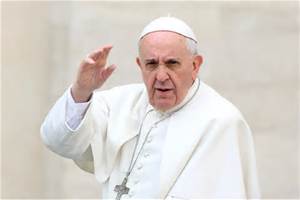
thHE8RRXS2It appears that a number of the Hierarchy of the Catholic Church are less than pleased with Pope Francis’ performance of his duties as “Il Papa“.

Here is an excerpt from this morning’s story in the Washington Post:

A measure of the church’s long history of intrigue has spilled into the Francis papacy, particularly as the pope has ordered radical overhauls of murky Vatican finances. Under Francis, the top leadership of the Vatican Bank was ousted, as was the all-Italian board of its financial watchdog agency.

One method of pushback has been to give damaging leaks to the Italian news media. Vatican officials are now convinced that the biggest leak to date — of the papal encyclical on the environment in June — was driven by greed (it was sold to the media) rather than vengeance. But other disclosures have targeted key figures in the papal cleanup — including the conservative chosen to lead the pope’s financial reforms, the Australian Cardinal George Pell, who in March was the subject of a leak about his allegedly lavish personal tastes.

More often, dissent unfolds on ideological grounds. Criticism of a sitting pope is hardly unusual — liberal bishops on occasion challenged Benedict. But in an institution cloaked in traditional fealty to the pope, what shocks many is just how public the criticism of Francis has become.

In an open letter to his diocese, Bishop Thomas Tobin of Providence, R.I., wrote: “In trying to accommodate the needs of the age, as Pope Francis suggests, the Church risks the danger of losing its courageous, countercultural, prophetic voice, one that the world needs to hear.” For his part, Burke, the cardinal from Wisconsin, has called the church under Francis “a ship without a rudder.”

Even Pell appeared to undermine him on theological grounds. Commenting on the pope’s call for dramatic action on climate change, Pell told the Financial Times in July, “The church has got no mandate from the Lord to pronounce on scientific matters.”

In conservative circles, the word “confusion” also has become a euphemism for censuring the papacy without mentioning the pope. In one instance, 500 Catholic priests in Britain drafted an open letter this year that cited “much confusion” in “Catholic moral teaching” following the bishops’ conference on the family last year in which Francis threw open the floodgates of debate, resulting in proposed language offering an embraceable, new stance for divorced or gay Catholics.

That language ultimately was watered down in a vote that showed the still-ample power of conservatives. It set up another showdown for next month, when senior church leaders will meet in a follow-up conference that observers predict will turn into another theological slugfest. The pope himself will have the final word on any changes next year.

Conservatives have launched a campaign against a possible policy change that would grant divorced and remarried Catholics the right to take Communion at Mass. Last year, five senior leaders including Burke and the conservative Cardinal Carlo Caffarra of Bologna, Italy, drafted what has become known as “the manifesto” against such a change. In July, a DVD distributed to hundreds of dioceses in Europe and Australia, and backed by conservative Catholic clergy members, made the same point. In it, Burke, who has made similar arguments at a string of Catholic conferences, issued dire warnings of a world in which traditional teachings are ignored.

But this is still the Catholic Church, where hierarchical respect is as much tradition as anything else. Rather than targeting the pope, conservative bishops and cardinals more often take aim at their liberal peers. They include the German Cardinal Walter Kasper, who has suggested that he has become a proxy for clergy members who are not brave enough to criticize the pope directly.

Yet conservatives counter that liberals are overstepping their bounds, putting their own spin on the pronouncements of a pope who has been more ambiguous than Kasper and his allies are willing to admit.

“I was born a papist, I have lived as a papist, and I will die a papist,” Caffarra said. “The pope has never said that divorced and remarried Catholics should be able to take Holy Communion, and yet, his words are being twisted to give them false meaning.”

Some of the pope’s allies insist that debate is precisely what Francis wants.

“I think that people are speaking their mind because they feel very strongly and passionately in their position, and I don’t think the Holy Father sees it as a personal attack on him,” said Chicago Archbishop Blase J. Cupich, considered a close ally of the pope. “The Holy Father has opened the possibility for these matters to be discussed openly; he has not predetermined where this is going.”

According to the website, churchauthority.org, the Pope has three main duties:

He is the Supreme Pastor.

That means that he represents Christ’s love and concern for every single individual. That is why the Pope’s priority lies in getting to know people, understanding how they live, listening to their interests and sharing their sufferings and their joys. On no account should the Pope allow his contact with ordinary people to be obstructed by a multitude of administrative duties.

He is the Unifier of the People of God.

Because of the international character of the Church, this will create many demands. The good of the world-wide Church and the autonomy of local Churches need to be balanced. That is why the Pope should guide and inspire the Central Synod of Bishops so that it can efficiently work out agreements and general Church policies.

He is the Prime Witness to Faith.

This includes both preaching [= announcing the message to non-Christians] and teaching [= explaining an element of Christ’s message in today’s context]. On very rare occasions the Pope is the main exponent of the infallible understanding of faith [=inerrancy] that is carried by the whole people of God. The Pope can only do so after listening to the People of God and discerning the faith they carry in their hearts.

Pope Francis is the first Pope who represents the Far Left Political Viewpoint.

Pope Francis seems more comfortable reaching out to Communist and Socialist countries, then he does to the Vatican’s Traditional Allies, those countries who enjoy strong economies, built upon freedom and a competitive marketplace.

I know that I may sound like an old cracker, but my generation was blessed with three very remarkable leaders: United States President Ronald Reagan, British Prime Minister Margaret Thatcher, and Pope John Paul II.

These three stood for everything that was good about freedom.

All three knew the dangers and corruption of the implementation of Marxist Theory through the governments of man.

Here is what the wonderful and gracious Pope John Paul II said about an out-of-control Nanny-State (Socialist) Government:

By intervening directly and depriving society of its responsibility, the Social Assistance State leads to a loss of human energies and an inordinate increase of public agencies, which are dominated more by bureaucratic thinking than by concern for serving their clients, and which are accompanied by an enormous increase in spending, In fact, it would appear that needs are best understood and satisfied by people who are closest to them who act as neighbors to those in need. It should be added that certain kinds of demands often call for a response which is not simply material but which is capable of perceiving the deeper human need.

And, while this present Pontiff is romancing the Palestinians, Pope John Paul II reached out to God’s Chosen People.

In 1994, John Paul II established full diplomatic ties between the Vatican and Israel. He said,

For the Jewish people who live in the State of Israel and who preserve in that land such precious testimonies to their history and their faith, we must ask for the desired security and the due tranquillity that are the prerogative of every nation . . .

Pope John Paul II also said…

The historical experience of socialist countries has sadly demonstrated that collectivism does not do away with alienation but rather increases it, adding to it a lack of basic necessities and economic inefficiency.

I do not believe that Jesus would be a part of the Social Justice Movement, which is so popular among Liberal Churches, today. His was and is a soul-saving movement. One that still brings hundreds of thousand of people to individual salvation on this terrestrial ball every day. A movement that, in fact, was embraced by the founders of this cherished land.

Dr. Albert Mohler, President of the Southern Baptist Theological Seminary, once said:

Regrettably, there is no shortage of preachers who have traded the Gospel for a platform of political and economic change, most often packaged as a call for social justice…

The church is not to adopt a social reform platform as its message, but the faithful church, wherever it is found, is itself a social reform movement precisely because it is populated by redeemed sinners who are called to faithfulness in following Christ. The Gospel is not a message of social (collective) salvation, but it does have social implications.

Pope Francis is presently doing the World’s Catholics a great disservice.

The current Pope’s embracing of certain aspects of Socialism, “Climate Change”, and the other erroneous, secular philosophies of the Far Left, dilutes his effectiveness as an Emmissary of God and the Head of the Catholic Church.

The world hungers for the Word of God.

Mankind needs to hear of God’s Love for them as individuals, not the machinations and limitations of man, as detailed in Marxist Theory.

 Until He Comes,

KJ

Pope Francis: The Pope of the Far Left

th (7)The current Leader of the Catholic Church, Pope Francis, has chosen a very different path than any of his predecessors.

And, from this Christian American’s Viewpoint, that is not necessarily a good thing.

Yahoo News Canada reports that

Pope Francis’ hard-hitting criticisms of globalization and inequality long ago set him out as a leader unafraid of mixing theology and politics. He is now flexing the Vatican’s diplomatic muscles as well.

Last year, he helped to broker an historic accord between Cuba and the United States after half a century of hostility.

This past week, his office announced the first formal accord between the Vatican and the State of Palestine — a treaty that gives legal weight to the Holy See’s longstanding recognition of de-facto Palestinian statehood despite clear Israeli annoyance.

The pope ruffled even more feathers in Turkey last month by referring to the massacre of up to 1.5 million Armenians in the early 20th century as a “genocide”, something Ankara denies.

After the inward-looking pontificate of his scholarly predecessor, Pope Benedict, Francis has in some ways returned to the active Vatican diplomacy practiced by the globetrotting Pope John Paul II, widely credited for helping to end the Cold War.

Much of his effort has concentrated on improving relations between different faiths and protecting the embattled Middle East Christians, a clear priority for the Catholic Church.

However in an increasingly fractured geopolitical world, his diplomacy is less obviously aligned to one side in a global standoff between competing blocs than that of John Paul’s 27-year-long papacy.

This is reinforced by his status as the world’s first pope from Latin America, a region whose turbulent history, widespread poverty and love-hate relationship with the United States has given him an entirely different political grounding from any of his European predecessors.

“Under this pope, the Vatican’s foreign policy looks South,” said Massimo Franco, a prominent Italian political commentator and author of several books on the Vatican.

He said the pope has been careful to avoid taking sides on issues like Ukraine, where he has never defined Russia as an aggressor, but has always referred to the conflict between the government and Moscow-backed rebels as a civil war.

That approach is intended to ensure he remains more credible with countries like Syria, Russia or Cuba, all nations where Francis feels he can help local Christians best by steering an independent course.

DIPLOMATIC RISKS

Francis already has his hands full overhauling the Vatican’s complex internal bureaucracy after a series of financial and sexual scandals involving abuse of children by priests which date back decades.

But clearly deeply interested in how the world outside the walls of the Vatican works, he appears determined to use his position and the huge global audience he commands to challenge entrenched diplomatic positions as well.

The former secretary of state, Cardinal Tarcisio Bertone, a veteran insider whose office formerly controlled both relations with foreign powers and many internal Vatican affairs, has been replaced. His office has been downgraded to resemble a more classical diplomatic service while Francis has set a bolder, more personal stamp on Vatican foreign policy.

“He’s someone who’s capable of praying in the Blue Mosque in Istanbul and then talking about the Armenian genocide. He’s not someone who’s bound by political correctness,” said former Italian Foreign Minister Franco Frattini.

“It’s the diplomacy of a real leader.”

Whether it is to the taste of all the world’s 1.2 billion Catholics, world politicians with priorities of their own or even the many layers of the Church’s own administration is another matter.

With many conservative Catholics unhappy about the pope’s focus on issues like economic injustice and his relatively tolerant tone on sensitive social topics like homosexuality and the status of divorced people, pronounced views on delicate diplomatic issues could cause further division in the Church.

It is a point where he will be particularly tested in September on his upcoming visit to the United States, where some conservative U.S. Catholics are openly hostile.

After helping to foster last year’s agreement reviving diplomatic relations between Havana and Washington, Francis reaped criticism from many U.S. conservatives, including Marco Rubio, a candidate for the Republican nomination for president.

Rubio, the son of Cuban immigrants and a practicing Catholic, avoided directly admonishing the pope, but said he should “take up the cause of freedom and democracy” in Cuba.

That kind of veiled criticism from a politician who would normally be considered a staunch Church ally reflects the wider unease some Catholics feel at the change Francis has ushered in at one of the world’s most conservative institutions.

“Bishops complain that he becomes popular by attacking the Church,” said Franco.

“He speaks directly to the people and doesn’t respect the usual command structures. He decides on his own or with people who are not those who previously had a central role.”

In other words, he is the first pope who seemingly represents the Far Left Political Viewpoint.

Pope Francis seems more comfortable reaching out to Communist and Socialist countries, then he does to the Vatican’s Traditional allies, those countries who enjoy strong economies, built upon freedom and a competitive marketplace.

I know that I may sound like an old cracker, but my generation was blessed with three very remarkable leaders: United States President Ronald Reagan, British Prime Minister Margaret Thatcher, and Pope John Paul II.

These three stood for everything that was good about freedom.

All three knew the dangers and corruption of the implementation of Marxist Theory through the governments of man.

Here is what the wonderful and gracious Pope John Paul II said about an out-of-control Nanny-State (Socialist) Government:

By intervening directly and depriving society of its responsibility, the Social Assistance State leads to a loss of human energies and an inordinate increase of public agencies, which are dominated more by bureaucratic thinking than by concern for serving their clients, and which are accompanied by an enormous increase in spending, In fact, it would appear that needs are best understood and satisfied by people who are closest to them who act as neighbors to those in need. It should be added that certain kinds of demands often call for a response which is not simply material but which is capable of perceiving the deeper human need.

And, while this present Pontiff is romancing the Palestinians, Pope John Paul II reached out to God’s Chosen People.

In 1994, John Paul II established full diplomatic ties between the Vatican and Israel. He said,

For the Jewish people who live in the State of Israel and who preserve in that land such precious testimonies to their history and their faith, we must ask for the desired security and the due tranquillity that are the prerogative of every nation . . .

Pope John Paul II also said…

The historical experience of socialist countries has sadly demonstrated that collectivism does not do away with alienation but rather increases it, adding to it a lack of basic necessities and economic inefficiency.

Why is this present Pope supporting the enemies of Freedom…and of God’s Chosen People?

Being a peacemaker is one thing. Being an enabler of the Enemies of Freedom is quite another.

 Until He Comes,

KJ

America and Foreign Policy: We’ve Gone From “Ronnie Raygun” to “Steve Urkel”

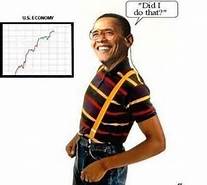
Obama Urkel  2We all remember the first time we went into a voting booth and got to pull the lever for the candidate of our choice.

I was especially blessed as a 22 year old college senior. My very first vote, in any sort of election, was when I got to pull the lever for Ronald Wilson Reagan.

In 1974, at the very first Conservative Political Action Conference, the future President of the United States said the following:

Somehow America has bred a kindliness into our people unmatched anywhere, as has been pointed out in that best-selling record by a Canadian journalist. We are not a sick society. A sick society could not produce the men that set foot on the moon, or who are now circling the earth above us in the Skylab. A sick society bereft of morality and courage did not produce the men who went through those years of torture and captivity in Vietnam. Where did we find such men? They are typical of this land as the Founding Fathers were typical. We found them in our streets, in the offices, the shops and the working places of our country and on the farms.

We cannot escape our destiny, nor should we try to do so. The leadership of the free world was thrust upon us two centuries ago in that little hall of Philadelphia. In the days following World War II, when the economic strength and power of America was all that stood between the world and the return to the dark ages, Pope Pius XII said, “The American people have a great genius for splendid and unselfish actions. Into the hands of America God has placed the destinies of an afflicted mankind.

We are indeed, and we are today, the last best hope of man on earth.

And when Reagan became president, he did everything within his power to uphold these lofty words.

I suppose that is why I hold Barack Hussein Obama in such disdain. As a young man just starting my new life in the business world, I was able to watch the economy start to turn around under the greatest president in our lifetime. There was a confidence in our strength as an American people that I had never seen before.

You could see it in people’s faces as you walked past them on the street… or at the gas station, as we all watched the price of a gallon of gas finally go down after the pain at the pump that we experienced during the Carter Presidency.

People who had been out of work and suffering along with their families were beginning to be hired again. And, young Americans who had no confidence in the previous commander in chief, were once again going to military recruiters asking to sign up to serve our country.

Yes, indeed. Once again, it was “Morning in America”.

However, the popularity of our president was not just limited to the boundaries of our nation. Reagan was admired the world over. The things that he accomplished, along with his friends, Prime Minister of Britain Margaret Thatcher, Soviet Premier Mikhail Gorbachev, and Pope John Paul II, have caused the decade of the 1980s to be recorded as a seminal moment in world history.

I remember watching President Reagan speak at the Berlin Wall. When he said, “Mr Gorbachev tear down this wall!”, I was never prouder to be an American and of an American president, than at that moment.

The Liberal Democrats lost their collective minds.

For you see, Liberal Democrats, just as they do now, hate it when Marxism gives way to Freedom.

Nothing bothers them more than when a strong American President is at the forefront of a conquering moment, when a strong foreign policy based on the reality that negotiating from a position of strength is always more effective than negotiating from a position of weakness.

Fast forward to the present, where an ineffective President Barack Hussein Obama is looking like a fool to a world who used to look to America as a bastion of strength and freedom, not weakness and political expediencies.

President Barack Hussein Obama has placed us in untenable position with his weak and vacillating Smart Power Foreign Policy.

Those who used to cringe in their desert tents, while calling us the Great Satan, now laugh in our faces as they walk across our southern borders with the rest of the illegal immigrants.

That is, if Obama simply does not invite them to the White House and meet with them, as he has the Muslim Brotherhood.

My sympathies go out to the people of Ukraine. I wish we had a president who would man up and negotiate. From a position of strength with the Soviets, so that they would back off from there planned invasion of your country.

Unfortunately though my friends, Americans are stuck with Steve Urkel in the White House… when we need Lieutenant Colonel Allen West or a man equally as strong un conviction and patriotism.

Rest assured that Americans are praying for you my Ukrainian friends… and we ask that you return the favor.

Until He Comes,

KJ