Munich ’72 – London ’12: A Warning From 40 Years Ago

I remember it as if it were yesterday. I was in the 8th Grade and the Summer Olympics were on.  At least, they were supposed to be…

The XXth Olympic Games were held in Munich, Germany in 1972. Tensions were high at these Olympics, because they were the first Olympic Games held in Germany since the Nazis hosted the Games in 1936. The Israeli athletes and their trainers were especially nervous; many had family members who had been murdered during the Holocaust or were themselves Holocaust survivors.

The first few days of the Olympic Games went smoothly. On September 4, the Israeli team spent the evening out to see the play, Fiddler on the Roof, and then went back to the Olympic Village to sleep. A little after 4 a.m. on September 5, as the Israeli athletes slept, eight members of the Palestinian terrorist organization, Black September, jumped over the six-foot high fence that encircled the Olympic Village.

The terrorists headed straight for 31 Connollystrasse, the building where the Israeli contingent was staying. Around 4:30 a.m., the terrorists entered the building. They rounded up the occupants of apartment 1 and then apartment 3. Several of the Israelis fought back; two of them were killed. A couple of others were able to escape out windows. Nine were taken hostage.

By 5:10 a.m., the police had been alerted and news of the attack had begun to spread around the world. The terrorists then dropped a list of their demands out the window; they wanted 234 prisoners released from Israeli prisons and two from German prisons by 9 a.m.

Negotiators were able to extend the deadline to noon, then 1 p.m., then 3 p.m., then 5 p.m.; however, the terrorists refused to back down on their demands and Israel refused to release the prisoners. A confrontation became inevitable.

At 5 p.m., the terrorists realized that their demands were not going to be met. They asked for two planes to fly both the terrorists and the hostages to Cairo, Egypt, hoping a new locale would help get their demands met. The German officials agreed, but realized that they could not let the terrorists leave Germany. Desperate to end the standoff, the Germans organized Operation Sunshine, which was a plan to storm the apartment building. The terrorists discovered the plan by watching television. The Germans then planned to attack the terrorists on their way to the airport, but again the terrorists found out their plans.

Around 10:30 p.m., the terrorists and hostages were transported to the Fürstenfeldbruck airport by helicopter. The Germans had decided to confront the terrorists at the airport and had snipers waiting for them. Once on the ground, the terrorists realized there was a trap. Snipers started shooting at them and they shot back. Two terrorists and one policeman were killed. Then a stalemate developed. The Germans requested armored cars and waited for over an hour for them to arrive.

When the armored cars arrived, the terrorists knew the end had come. One of the terrorists jumped into a helicopter and shot four of the hostages, then threw in a grenade. Another terrorist hopped into the other helicopter and used his machine gun to kill the remaining five hostages. The snipers and armored cars killed three more terrorists in this second round of gunfire. Three terrorists survived the attack and were taken into custody.

Less than two months later, the three remaining terrorists were released by the German government after two other Black September members hijacked a plane and threatened to blow it up unless the three were released.

Israel is taking measures to make sure that another slaughter of their Olympians does not happen.

Agents from Israel’s elite intelligence organisation, Mossad, are hunting Iranian-backed terrorists in Europe, who are allegedly planning an “anniversary” attack 40 years after the Munich massacre, Britain’s The Sunday Times reports.

The fears come as tensions rise over the International Olympic Committee refusal to commemorate the killing of 11 Israeli athletes and coaches by Palestinian terrorists on September 5, 1972.

In preparation for an Olympic terror assault, panic rooms for VIPs and spectators have been set up beneath London’s Olympic Stadium to protect them from being taken hostage or killed, according to The Sunday Times.

The paper also claims that if an attack occurred on the stadium, security forces would “invacuate” key people, rushing them to safety inside the attack zone.

An estimated 50,000 VIPs will attend the Games, including a reported 140 heads of state, 200 government ministers, 100 royals and 150 members of the International Olympic Committee.

A ring of steel has been set up to protect the Games, including snipers on the stadium roof and lighting towers and airborne radiation detecting equipment.

The world watched in horror in 1972 when Palestinian terrorists scaled the fences of the Athletes Village in Munich and killed two Israeli athletes and took another nine hostage.

After German forces bungled an ambush at the military airport, the terrorists shot the athletes and threw a grenade into their helicopter to ensure they were dead.

A global campaign – backed by US president Barack Obama – has pushed for a minute of silence during London’s Opening Ceremony to honour the victims.

But IOC president Jacques Rogge rejected the proposals, saying that it was inappropriate to commemorate the deaths at the Olympics.

“We feel that the Opening Ceremony is an atmosphere that is not fit to remember such a tragic incident,” he told a press conference.

He added that some IOC delegates would attend a memorial on September 5 at the German military airport of Furstenfeldbruck where the killing took place.

“We are going to pay a homage to the athletes, of course, as we always have done in the past and will do in the future,” he said.

That’s alright, President Rogge. The world still remembers.

And, we’ll be watching…and praying.

Israel Prepares for Their New Rowdy Neighbors

Even if United States President Barack Hussein Obama sees nothing wrong with the current events in Egypt, our greatest ally, Israel, doesn’t particularly care for the goings-on at the neighbor’s house…especially, when they come over uninvited:

Militants crossed from Egypt’s turbulent Sinai Peninsula into southern Israel on Monday and opened fire on civilians building a border security fence, defense officials said. One of the Israeli workers was killed, and two assailants died in a gunbattle with Israeli troops responding to the attack.

No group claimed responsibility for the attack, which underscored the growing lawlessness in the Sinai desert since longtime Egyptian President Hosni Mubarak was toppled by a popular uprising last year.

Military spokeswoman Lt. Col Avital Leibovich said the assailants have not been identified but acknowledged that defense officials suspected Palestinian militants in the Hamas-run Gaza Strip, which also borders the Sinai desert in that same area, might have been involved.

Several hours after the attack, an Israeli airstrike killed two men riding a motorcycle in the northern Gaza Strip near the Israeli border. The Islamic Jihad militant group said the men were members on a “reconnaissance” mission and vowed revenge. Military officials said the incident was not connected to the earlier infiltration from Egypt.

Israeli security officials have grown increasingly anxious about the security situation in the Sinai since Mubarak’s ouster. Continued political turmoil in Egypt, weak policing in the Sinai and tough terrain have all encouraged Islamic militant activity in the area. The mountainous desert now harbors an array of militant groups, including Palestinian extremists and al-Qaida-inspired jihadists, Egyptian and Israeli security officials say. The tumultuous situation surrounding Egyptian elections, in which Islamic groups made a strong showing, has added to Israeli unease.

Israeli Defense Minister Ehud Barak told Army Radio that there has been “a worrisome deterioration of Egyptian control” over the Sinai. Barak said he expected the winner of this week’s presidential elections in Egypt to honor the country’s international obligations – an apparent reference to Egypt’s 1979 peace treaty with Israel. The Muslim Brotherhood has said it would respect the historic peace accord but that it would also seek modifications.

Vice Premier Shaul Mofaz, a former defense minister and military chief, said he hoped Israel could conduct a security dialogue with the Egyptians and demand more forceful policing in the Sinai.

“No doubt Sinai has become a security problem,” Mofaz told Army Radio. “Today’s incident ratchets it up a notch.”

There was no immediate comment from Egypt on the attack.

They’ve been a little busy:

The Muslim Brotherhood has vowed to face down Egypt’s ruling generals in a “life or death” struggle over the country’s political future, after declaring that its candidate had won the presidential election and would refuse to accept the junta’s last-ditch attempts to engineer a constitutional coup.

As final ballot results trickled in and unofficial tallies suggested that Mohamed Morsi had secured approximately 52% of the popular vote, the Brotherhood deployed its harshest language yet against the Supreme Council of the Armed Forces (Scaf), promising to bring millions of Egyptians back on to the streets if attempts to rebuild the old regime continued.

“Over the past 18 months we were very keen to avoid any clashes or confrontations with other components of Egypt’s political system because we felt that it would have negative consequences for the democratic system and for society as a whole,” said Fatema AbouZeid, a senior policy researcher for the Brotherhood’s Freedom and Justice party and a media co-ordinator for the Morsi campaign. “But now it’s very clear that Scaf and other institutions of the state are determined to stand in the way of what we’re trying to achieve, and we won’t accept this any more. Egypt will not go back to the old regime through any means, legal or illegal.

“If we find that Scaf stands firm against us as we try to fulfil the demands of the revolution, we will go back to the streets and escalate things peacefully to the highest possible stage,” she said. “Now we have a new factor in Egyptian politics, the Egyptian people themselves, who will not accept a return to the old regime in any form, not after so much Egyptian blood was shed to remove it.

“The revolution is facing a life or death moment and the Egyptian people have put their faith in Dr Morsi to represent them at this time.”

On Monday the parliamentary speaker, Saad el-Katatni, a Brotherhood veteran, said he did not recognise last week’s decision by Mubarak-era judges in Egypt’s supreme constitutional court to dissolve the legislature, a move widely viewed as highly politicised and designed to bolster the generals. Katatni said MPs planned to attend parliament – which was surrounded by armed soldiers – as usual on Tuesday or convene in nearby Tahrir Square, setting the stage for a showdown between the generals who have held sway for six decades and the long-outlawed Islamist movement now on the brink of political control.

An 11th-hour constitutional declaration issued unilaterally by Scaf awarded the generals sweeping powers including the right to put forward legislation and an effective veto over clauses in the new constitution, and formalised the army’s ability to detain civilians and sweep out of barracks at moments of “internal unrest”.

Political analysts described the move as a constitutional obscenity and said it left the three major institutions of the post-Mubarak Egyptian state – the presidency (now curtailed), the parliament (now dissolved) and the constitutional assembly (now floundering in legal uncertainty) – all under the full or partial influence of the armed forces.

With the oldest of all (and the father of all) Islamic Extremist Organizations taking over Egypt, you can hardly blame Israel for being ready to go to war.

Speaking of war, remember when ol’ Scooter declared that Israel should go back to its old borders, as they stood before the 1967 war?  PJTV’s Andrew Klavan had a better idea.

And I will bless them that bless you, and curse him that curses you.

Genesis 12: 3

Israel Hits the “Delete” Button on Iran

The Islamic loud mouth bully of a country known as Iran, is being brought to its knees…without firing a shot.

Iran on Tuesday said it was a victim of cyberwarfare by Israel and the U.S., the semiofficial Fars news agency reported.

“It’s in the nature of some countries and illegitimate regimes to spread viruses and harm other countries. We hope these viruses dry out,” Ramin Mehmanparast, Iran’s Foreign Ministry spokesman, said on Tuesday.

Iran’s computer emergency response team, known as Maher, a branch of the telecommunication ministry, said on Tuesday that it was sharing research information on the virus for the first time ever on its website. Maher posted a link to antivirus software developed by its researchers to remove Flame and offered assistance to any infected organization.

Maher also said Flame was linked to an earlier cyberattack that erased data. In March, Wiper disrupted internal Internet communications at Iran’s oil ministry and stole massive amounts of data.

Flame is the biggest and most high-functioning cyberweapon ever discovered, various cybersecurity experts said. It is comprised of multiple files that are 20 times larger than Stuxnet and carry about 100 times more code than a basic virus, experts said.

The most alarming feature, experts said, is that Flame can be highly versatile, depending on instructions by its controller. The malware can steal data and social-network conversations, take snapshots of computer screens, penetrate across networks, turn on a computer’s microphone to record audio and scan for Bluetooth-active devices.

The cyber espionage activities described by the researchers are cyberspying techniques employed by the U.S., Israel and a number of other countries, cybersecurity specialists said. Cybersecurity researchers said the complexity of Flame’s coding and comprehensiveness of its spy capabilities could suggest it was the work of a government.

Experts said they believe Flame reports back the information to a central command-and-control network that has constantly changed location. Analysts found servers in Germany, Vietnam, Turkey, Italy and elsewhere, but haven’t located the main server.

White House National Security Council spokeswoman Caitlin Hayden declined to comment on Iranian accusations of U.S. involvement.

Analysts suspected Israel and the U.S. to be behind Stuxnet, but the link hasn’t been confirmed. U.S. officials have declined to comment on Stuxnet’s origins, but former U.S. officials said they regard it as a joint effort between the U.S. and Israel. That virus infected computers in several countries but was written to only sabotage specific systems in Iran, they said.

Stuxnet’s purpose differed considerably from the apparent aim of Flame. Stuxnet was designed to damage computerized control systems running nuclear centrifuges, while Flame appears to have been designed for high-end targeted espionage. Researchers haven’t found evidence of any damage to systems caused by Flame.

Israel has neither confirmed nor denied being involved with Stuxnet.

On Tuesday, Deputy Prime Minister Moshe Ya’Alon hinted that the country may be involved in Flame, saying in an interview with Army Radio, “Anyone who sees the Iranian threat as a significant threat—it’s reasonable [to assume] that he will take various steps, including these, to harm it.”

Wow.  Beam me up, Scotty.   

For the uninformed…

Cyberwarfare is Internet-based conflict involving politically motivated attacks on information and information systems. Cyberwarfare attacks can disable official websites and networks, disrupt or disable essential services, steal or alter classified data, and criple financial systems — among many other possibilities.

According to Jeffrey Carr, author of “Inside Cyber Warfare,” any country can wage cyberwar on any other country, irrespective of resources, because most military forces are network-centric and connected to the Internet, which is not secure. For the same reason, non-governmental groups and individuals could also launch cyberwarfare attacks. Carr likens the Internet’s enabling potential to that of the handgun, which became known as “the great equalizer.”

On August 7, 2011, foxnews.com reported that

Israel has set up a military cyber command to wage a computer war against Iran as senior officers become increasingly concerned that a conventional attack on Tehran’s nuclear sites could end in failure, London’s The Sunday Times reported.

The new cyber command will report directly to Israeli Prime Minister Binyamin Netanyahu who has placed the program at the heart of Israel’s defense capability.

“Israel must turn into a global cyber superpower,” he told a meeting of cyber warfare experts recently.

The center, which has been set up under the auspices of military intelligence unit 8200 has already conducted a series of “soft” espionage missions, including hacking into Iran’s version of Facebook and other social networking sites.

The Stuxnet malware virus, which dramatically affected Iran’s nuclear program in 2009 by sabotaging the delicate centrifuges needed to enrich uranium, is widely believed to have been developed by Israeli and American technicians.

In April [2011], Iranian government offices came under attack from a hitherto unknown malware virus to which Tehran officials gave the name Stars. They claimed the damage had been contained but admitted it was the second mysterious virus found since the Stuxnet attack.

“Israel has two principal targets in Iran’s cyberspace,” said a defense source with close knowledge of the cyber war preparations. “The first is its military nuclear program and its military establishment. The second is Iran’s civil infrastructure. Attacking both, we hope, will cripple the entire country’s cyberspace.”

It appears that they’re well on their way.

Mazel tov!

The Muslim Brotherhood Visits the White House

The Obama Administration’s Bizarro World Smart Power! Foreign Policy Minions are at it again…treating our friends like they’re our enemies and our enemies as our friends.

For example…

White House officials held talks with representatives of the Muslim Brotherhood in Washington this week, as the Islamist group threw itself into the fray in Egypt’s presidential election.

The meeting on Tuesday with low-level National Security Council staff was part of a series of US efforts to broaden engagement with new and emerging political parties following Egypt’s revolution last year, a US official said.

The White House pointed out that Republican Senators Lindsey Graham and John McCain, and other US lawmakers and officials had also met with Brotherhood representatives in Egypt and elsewhere in recent months.

“We believe that it is in the interest of the United States to engage with all parties that are committed to democratic principles, especially nonviolence,” said National Security Council spokesman Tommy Vietor.

“In all our conversations with these groups, we emphasize the importance of respect for minority rights, the full inclusion of women, and our regional security concerns.”

The Muslim Brotherhood’s political arm, the Freedom and Justice Party, said on Saturday it would nominate Khairat al-Shater, a professor of engineering and business tycoon, to contest Egypt’s first presidential election since a popular uprising ousted Hosni Mubarak last year.

The Islamists, who control parliament, had repeatedly said they would not put forward a member for the election in order to mitigate fears that they were trying to monopolize power.

So…just who are these welcomed representatives of the “religion of peace”?

Founded in 1928 by the Egyptian schoolteacher/activist Hasan al-Banna (a devout admirer of Adolf Hitler and the Nazis), the Muslim Brotherhood (MB) — a Sunni entity — is one of the oldest, largest and most influential Islamist organizations in the world. While Egypt historically has been the center of the Brotherhood’s operations, the group today is active in more than 70 countries (some estimates range as high as 100+). Islam expert Robert Spencer has called MB “the parent organization of Hamas and al Qaeda.” In 2003, Richard Clarke – the chief counterterrorism advisor on the U.S. National Security Council during both the Bill Clinton and George W. Bush administrations – told a Senate committee that Hamas, al Qaeda, and Palestinian Islamic Jihad were all “descendants of the membership and ideology of the Muslim Brothers.”

MB was established in accordance with al-Banna’s proclamation that Islam should be “given hegemony over all matters of life.” Toward that end, the Brotherhood seeks to establish an Islamic caliphate, or kingdom — first spanning all of the present-day Muslim world, and eventually the entire globe. The organization further aspires to dismantle all non-Islamic governments wherever they currently exist, and to make Islamic Law (Shari’a) the sole basis of jurisprudence everywhere on earth. This purpose is encapsulated in the Brotherhood’s militant credo: “God is our objective, the Koran is our Constitution, the Prophet is our leader, struggle [jihad] is our way, and death for the sake of God is the highest of our aspirations.”

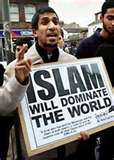
Consistent with the foregoing credo, MB since its founding has supported the use of armed struggle, or jihad, against non-Muslim “infidels.” As al-Banna himself wrote: “Jihad is an obligation from Allah on every Muslim and cannot be ignored nor evaded.” Added al-Banna: “It is the nature of Islam to dominate, not to be dominated, to impose its law on all nations and to extend its power to the entire planet.”

Embracing Hasan al-Banna’s belief that Islam is destined to eventually dominate all the world, MB today is global in its reach, wielding influence in almost every country with a Muslim population. Moreover, it maintains political parties in many Middle-Eastern and African countries, including Jordan, Bahrain, Tunisia, Algeria, Jordan, Iraq, Syria, Sudan, Somalia, Yemen, and even Israel. Not only does the Brotherhood exist in Israel proper, but its Palestinian chapter created the terrorist organization Hamas, through which MB has supported terrorism against Israel ever since. Article II of the Hamas charter explicitly identifies Hamas as “one of the wings of Moslem Brotherhood in Palestine.” In January 2006 Hamas defeated the rival Fatah party to win the Palestinian legislative elections, thereby becoming the first branch of MB to control an official government.

Outside of the Middle East, MB exercises a strong influence in Muslim communities throughout Europe. Among the more prominent Brotherhood organizations in the region are: the Forum of European Muslim Youth and Student Organizations, the Muslim Association of Britain, the European Council for Fatwa and Research, the Islamische Gemeinschaft Deutschland (IGD), and the Union des Organisations Islamiques de France (UOIF).

…In early February 2011, Muhammad Ghannem, a leading member of the Muslim Brotherhood in Egypt, told the Iranian news network Al-Alam that “the people [of Egypt] should be prepared for war against Israel,” emphasizing that “the Egyptian people are prepared for anything to get rid of this regime.” That objective was entirely consistent with former MB Supreme Guide Muhammad Mahdi Othman Akef’s 2007 assertion that his organization had never recognized Israel and never would: “Our lexicon does not include anything called ‘Israel.’ The [only thing] we acknowledge is the existence of Zionist gangs that have occupied Arab lands and deported the residents. If they want to live among us, it will have to be as [residents of] Palestine.”

And these are the people that President Barack Hussein Obama and his Administration have chosen to support.

Schmucks.

Which Will Come First: $5 Per Gallon Gas or an Iranian War?

When Barack Hussein Obama was inaugurated the 44th President of the United States, back in January of 2009, a gallon of gas cost $1.84.

A little over a month before Obama ascended to his throne, his loyal minion, Tom Brokaw, of NBC, made the following suggestion:

Let’s talk for a moment about consumer responsibility when it comes to the auto industries. As soon as gas prices dropped, consumers moved back to the larger cars once again. The SUVs are the big gas consumers. Why not take this opportunity to put a tax on gasoline, bump it back up to $4 a gallon where people were prepared to pay for that, and use that revenue for alternative energy and as a signal to the consumers: “Those days are gone. We’re not going to have gasoline that you could just fill up your tank for 20 bucks anymore.”

Well, it look like ol’ Liberal Tom is going to get his wish:

CNBC.com has the story:

The world’s top oil exporter, Saudi Arabia, appears to have cut both its oil production and export in December, according to the latest update by the Joint Organizations Data Initiative (JODI), an official source of oil production, consumption and export data.

The OPEC heavyweight saw production decline by 237,000 barrels per day (bpd) from three-decade highs of 10.047 million bpd in November, the JODI data showed on Sunday.

The draw-down was sharper for the actual amount exported, declining by 440,000 bpd, or 5.6 percent, to come in at 7.364 million bpd, the data also showed. The level would still be similar to exports after a steep ramp-up last June.

In its monthly report on February 10, the IEA put Saudi Arabia’s production number for December slightly lower at 9.55 million bpd, a disparity of 260,000 bpd versus the JODI data.

Iran appeared not to have filed data in time for the latest release, providing no additional clues about how many export barrels were already lost in December, as some reports have suggested.

In a related story, courtesy of Reuters.com:

Iran has stopped selling crude to British and French companies, the oil ministry said on Sunday, in a retaliatory measure against fresh EU sanctions on the Islamic state’s lifeblood, oil.

“Exporting crude to British and French companies has been stopped … we will sell our oil to new customers,” spokesman Alireza Nikzad was quoted as saying by the Ministry of Petroleum website.

The European Union in January decided to stop importing crude from Iran from July 1 over its disputed nuclear program, which the West says is aimed at building bombs. Iran denies this.

Iran’s oil minister said on February 4 that the Islamic state would cut its oil exports to “some” European countries.

The European Commission said last week that the bloc would not be short of oil if Iran stopped crude exports, as they have enough in stock to meet their needs for around 120 days.

Industry sources told Reuters on February 16 that Iran’s top oil buyers in Europe were making substantial cuts in supply months in advance of European Union sanctions, reducing flows to the continent in March by more than a third – or over 300,000 barrels daily.

France’s Total has already stopped buying Iran’s crude, which is subject to fresh EU embargoes. Market sources said Royal Dutch Shell has scaled back sharply. Shell had no comment on the announcement.

Among European nations, debt-ridden Greece is most exposed to Iranian oil disruption.

Motor Oil Hellas of Greece was thought to have cut out Iranian crude altogether and compatriot Hellenic Petroleum along with Spain’s Cepsa and Repsol were curbing imports from Iran.

Iran was supplying more than 700,000 barrels per day (bpd) to the EU plus Turkey in 2011, industry sources said.

By the start of this year imports had sunk to about 650,000 bpd as some customers cut back in anticipation of an EU ban.

And, if ke you lose your breakfast, this probably will.

The Associated Press reports that:

The U.S. and Britain on Sunday urged Israel not to attack Iran’s nuclear program as the White House’s national security adviser arrived in the region, reflecting growing international jitters that the Israelis are poised to strike.

In their warnings, both the chairman of the U.S. joint chiefs of staff, Gen. Martin Dempsey, and British Foreign Secretary William Hague said an Israeli attack on Iran would have grave consequences for the entire region and urged Israel to give international sanctions against Tehran more time to work. Dempsey said an Israeli attack is “not prudent,” and Hague said it would not be “a wise thing.” It was not known whether their messages were coordinated.

Both Israel and the West believe Iran is trying to develop a nuclear bomb – a charge Tehran denies. But differences have emerged in how to respond to the perceived threat.

The U.S. and the European Union have both imposed harsh new sanctions targeting Iran’s oil sector, the lifeline of the Iranian economy. With the sanctions just beginning to bite, they have expressed optimism that Iran can be persuaded to curb its nuclear ambitions.

[As mentioned earlier] On Sunday, Iran’s Oil Ministry said it has halted oil shipments to Britain and France in an apparent pre-emptive blow against the European Union. The semiofficial Mehr news agency said the National Iranian Oil Company has sent letters to some European refineries with an ultimatum to either sign long-term contracts of two to five years or be cut off. The 27-nation EU accounts for about 18 percent of Iran’s oil exports.

Israel has welcomed the sanctions. But it has pointedly refused to rule out military action and in recent weeks sent signals that its patience is running thin.

Israel believes a nuclear-armed Iran would be a threat to its very existence, citing Iran’s support for Arab militant groups, its sophisticated arsenal of missiles capable of reaching Israel and its leaders’ calls for the destruction of the Jewish state.

Last week, Israel accused Iran of being behind a string of attempted attacks on Israeli diplomats in India, Georgia and Thailand.

There is precedent for Israeli action. In 1981, the Israeli air force destroyed an unfinished Iraqi nuclear reactor. And in 2007, Israeli warplanes are believed to have destroyed a target that foreign experts think was an unfinished nuclear reactor in Syria.

So, America, here we are, with our Ship of State on a precipice, looking down into the abyss.

And at the helm, we have our own Dear Leader, who is busily counting all the money he will be able to give to his Green Energy Cabal, after the $5 per gallon gas prices hit.  And, at the same time figuring out how to appease the hungry lion (the Muslim Brotherhood), so that they will eat us last.

That is…if the world doesn’t blow up first.

Iran: Those Who Do Not Learn From History…

Since the ouster of the Shah, Iran has been a thorn in the side of the Free World, and, especially, the United States of America.

Are you old enough to remember the Hostage Crisis? If not, here is a summary, courtesy of u-s-history.com:

 On November 4, 1979, an angry mob of some 300 to 500 “students” who called themselves “Imam’s Disciples,” laid siege to the American Embassy in Teheran, Iran, to capture and hold hostage 66 U.S. citizens and diplomats. Although women and African-Americans were released a short time later, 51 hostages remained imprisoned for 444 days with another individual released because of illness midway through the ordeal.

…Upon the death of the shah in July [1980] (which neutralized one demand) and the Iraqi invasion of Iran in September (necessitating weapons acquisition), Iran became more amenable to reopening negotiations for the hostages’ release.

In the late stages of the presidential race with Ronald Reagan, Carter, given those new parameters, might have been able to bargain with the Iranians, which might have clinched the election for him. The 11th-hour heroics were dubbed an “October Surprise”* by the Reagan camp — something they did not want to see happen.

Allegations surfaced that William Casey, director of the Reagan campaign, and some CIA operatives, secretly met with Iranian officials in Europe to arrange for the hostages’ release, but not until after the election. If true, some observers aver, dealing with a hostile foreign government to achieve a domestic administration’s defeat would have been grounds for charges of treason.

Reagan won the election, partly because of the failure of the Carter administration to bring the hostages home. Within minutes of Reagan’s inauguration, the hostages were released.

Unfortunately, these same barbarians now have new “toys” to threaten us with.

USNews.com has the story:

Iran has the ability to fire missiles at U.S. targets in the Middle East and “temporarily” close a key sea transit route, a senior intelligence official said Thursday. Tehran has a missile arsenal capable of reaching “targets throughout the region and into Eastern Europe,” Lt. Gen. Ronald Burgess, Defense Intelligence Agency director, told the Senate Armed Services Committee. “Iran has … threatened to launch missiles against the United States and our allies in the region in response to an attack” on its nuclear facilities or other targets, he said. What’s more, Iran “could also employ its terrorist surrogates worldwide,” Burgess said. He also noted that “Iran can close the Strait of Hormuz,” the key sea lane used to move oil and other goods to destinations around the globe. The U.S. intelligence community believes Iran “is unlikely to initiate or intentionally provoke a conflict or launch a preemptive attack,” Burgess told the panel.

The Leader of Israel has a better grasp of this dangerous situation than the Obama Administration does.  Ynetnews.com reports that

Prime Minister Benjamin Netanyahu and Cypriot President Dimitris Christofias signed a search and rescue agreement on Thursday. According to the agreement, in the event of a disaster Israeli aircraft will be authorized to enter Cyprus’ airspace, and vice versa. A similar agreement between the Jewish state and Turkey was revoked recently in light of heightened tensions between the countries. While in Nicosia, Netanyahu also addressed the Iranian nuclear threat, saying the sanctions imposed by the international community on the Islamic Republic “are not working.” Iran is the most irresponsible force in the world, he said, claiming the sactions imposed on the Islamic Republic have not had an effect so far. According to Netanyahu, the regime in Tehran violates every resolution and has no respect for international norms. He added that Iran’s race towards nuclear weapons should concern the US and every other country. Nuclear arms in the hands of the Iranian regime is a cause for great concern to the US and Israel, he said.

The U.S. Senate is concerned, as Freebeacon.com reports:

A bipartisan slate of senators announced this afternoon they would reject “any United States policy that would rely on efforts to contain a nuclear weapons-capable Iran.” Drawing a clear line in the sand, the senators – among them Sens. Joe Lieberman (I-Conn.), Lindsey Graham (R-S.C.) and Robert Menendez (D-N.J.) – demanded that President Obama reject “any policy that would rely on containment as an option in response to the Iranian nuclear threat,” according to a new Senate resolution set to be unveiled later today. The resolution “warns that time is limited to prevent the Iranian government from acquiring a nuclear weapon” and demands that the hostile regime immediately suspend all uranium enrichment activities. Most noteworthy, perhaps, is the resolution’s thorough accounting of the Iranian regime’s hostile behavior. It details, for example, Iran’s connections to terror groups and its various efforts to harm U.S. interests across the Middle East. “Iran has provided weapons, training, funding, and direction to terrorist groups, including Hamas, Hezbollah, and Shiite militias in Iraq that are responsible for the murders of hundreds of American forces and innocent civilians,” the resolution declares. It states unequivocally that Iran and nuclear weapons are simply anathema. “If Iran were successful in acquiring a nuclear weapon capability, it would likely spur other countries in the region to consider developing their own nuclear weapons capabilities,” it reads. Earlier in the week, opponents of tough action towards Iran appeared almost gleeful over reports that lawmakers were having trouble attracting Democrats to the resolution.

Evidently, these Senators opposing tough action, learned nothing from the Hostage Crisis.

Those who do not learn from history…are doomed to repeat it.  

Smart Power? $4 Per Gallon Gas, Bankrolling Barbarians, and Ignoring Our Friends

Tonight, in celebration of Valentine’s Day, a lot of American couples will be using their cars to go out to dinner.

Enjoy going out while you can still afford to, Americans.

ABC.go.com has the story:

Gasoline prices could soon hit $4 a gallon, a threshold they haven’t flirted with since last spring.

The average price paid by U.S. drivers for a gallon of regular now stands at $3.52, according to the U.S. Energy Information Administration, which released its latest figures this afternoon. That price represents an increase of 0.04 percent from a week ago and 0.38 percent from a year ago.

Experts expect prices to spike another 60 cents or more, with the $4 mark being touched—or exceeded—sometime this summer, probably by Memorial Day weekend, the peak of the summer driving season. The last time the U.S. saw $4 gasoline was back in the summer of 2008.

“I think it’s going to be a chaotic spring,” says Tom Kloza of the Oil Price Information Service. He expects average prices to peak at $4.05, though he and other industry trackers say prices could be sharply higher in some markets.

Historically, $4 a gallon has been the upper limit of what consumers have been willing to pay. Last April, national prices peaked at about $3.98 a gallon before receding. “It’s going to be tough to sustain that level,” thinks Brian Milne of energy tracker Televent DTN. “People will drive less.”

Andrew Lipow, president of Lipow Oil Associates in Houston, says where prices will go long-term is anybody’s guess. He has been following gas prices one way or another for more than 30 years. He distinguishes between those forces affecting prices that are predictable, and others that are not.

Chief among the unknowns is war in the Middle East–or if not war, increased tensions. It’s such worries, he says, that are most responsible now for the run up in prices at the pump. Also boosting prices is the higher seasonal demand that comes with summer vacations, plus a federally mandated switch from winter gas formulations to costlier ones for summer. The summer ones, designed to reduce emissions, require further refining steps.

Where could gas be by year’s end? “It depends if the Middle East blows up in a war or not,” says Lipow. “That’s really the big headline out there: Whether or not geopolitical events disrupt supply. We see that affect already.”

We all know that the Middle East is a powderkeg.  Revolution is in the air, and all of the secular despots that America was used to dealing with, are being replaced by Muslim despots, who believe that we are all infidels, and who rather kill us than look at us.

So…what is our president, the Leader of the Free World doing?  Is he negotiating with Ali Baba and his forty thieves in order to drive our oil prices down, thereby stimulating our stagnant economy?

Nope.  This yutz wants to bankroll the barbarians.

Reuters.com reports:

The White House announced plans on Monday to help countries swept by “Arab Spring” revolutions with more than $800 million in economic aid, while maintaining U.S. military assistance to Egypt despite a crisis triggered by an Egyptian crackdown on U.S. democracy activists.

In a year marked by fierce debate over U.S. budget deficits, President Barack Obama sought to maintain the core of U.S. spending on overseas aid and development while squeezing savings out of existing programs and scaling back proposals to build new embassies and hire more diplomats.

In his annual budget message to Congress, Obama asked that military aid to Egypt be kept at the level of recent years – $1.3 billion – and sought $250 million in regular economic aid for the country as it makes its shaky transition away from autocratic rule following the overthrow of President Hosni Mubarak last year.

The proposals are part of Obama’s budget request for fiscal year 2013, which begins Oct. 1. His requests need the approval of Congress. Some lawmakers have urged cuts to overseas spending to address U.S. budget shortfalls and are particularly angry at Egypt.

Obama proposed $51.6 billion in funding for the U.S. State Department and foreign aid overall, when $8.2 billion in assistance to war zones is included.

The White House sought a 1.6 percent increase in the State Department’s budget, excluding spending for Iraq and Afghanistan, which was tallied up separately.

Most of the new economic aid for the Arab Spring countries – $770 million – would go to a new “Middle East and North Africa Incentive Fund,” the president said in his budget plan.

Officials said the bulk of this would be new money, and would be spent on initiatives to support long-term economic, political, and trade reforms for countries in transition such as Egypt, Tunisia and Yemen.

“We’re in a new world. The Arab Spring has come,” said Deputy Secretary of State Tom Nides, Secretary of State Hillary Clinton’s chief budget official.

“We need to make sure we have the tools and flexibility in which to fund these initiatives. … The world is evolving as we see it, and we felt it was important to have a pool of money.”Obama continued the practice of putting proposed foreign assistance for war zones in a separate account. This account, known as the “Overseas Contingency Operations,” includes $8.2 billion for the State Department and foreign aid.

It includes $3.3 billion for Afghanistan, $1 billion for Pakistan, and $4 billion for Iraq, where U.S. troops have left the country but the State Department has picked up some of their functions such as police training.

Overall funding for Iraq declined about 10 percent from the 2012 fiscal year to $4.8 billion.

Assistance for Israel was steady at around $3.1 billion.

Let me try to wrap my head around this.  While Americans face the propect of $4 per gallon gas, the Obama Administration’s  Middle East Policy is to reward the people jacking around with the gas prices, a bunch of murderous barbarians, and ignore our greatest ally?

And they call this Smart Power?