
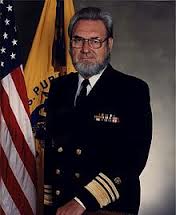
 The finest Surgeon General of the United States in our generation, C. Everett Koopp, passed away this past week.
The following very fair biography is courtesy of msnbc.com (Can you believe it?)
To judge from the reaction on the left, when Ronald Reagan announced his choice for Surgeon General 32 years ago, you would have thought the man he’d chosen had a horn and tail.
C. Everett Koop, who passed away this week at the impressive age of 96, had been the chief of surgery at Children’s Hospital in Philadelphia, where he’d pioneered revolutionary techniques that saved countless infant lives. He was also a committed Christian whose faith and medical work had made him a fervent opponent of abortion. Democrats roared in protest and sent months fighting the nomination. Reagan had been elected with a major assist from the burgeoning Christian Right, and Koop perfectly symbolized the hard-right, almost theocratic direction liberals believed the new president wanted to take the country.
“The nomination” The New York Times declared in one of many editorials condemning Koop’s selection, “is a disservice not only to the Public Health Service and the public itself, but also to Dr. Koop. He is being honored for the most cynical of reasons–not for his medical skills but for his political compatibility.”
But his opponents didn’t really know Koop. And actually, Reagan didn’t either. [ I disagree…but, let’s move on] Because he was also a man of science, and of immense integrity–and when he was finally confirmed in the spring of 1981, Koop set about confounding critics and cheerleaders alike, becoming the most consequential surgeon general in the nation’s history and probably the single most important public health voice of the last three decades.
Smoking was one of his first crusades. The tobacco companies and their powerful allies in Congress denied it, but the evidence was overwhelming: Cigarette smoking was killing Americans in droves. Koop had little official power, but he did have a big platform, and he used it fearlessly–issuing blunt reports on the fatal risks of cigarettes, a landmark warning about the danger of second-hand smoke, and barnstorming the country to urge Americans to change their habits. Jesse Helms–one of the conservatives who’d championed his nomination–turned on him. The governor of North Carolina screamed for his impeachment. It all made Koop’s boss in the White House uncomfortable–but the smoking rate went down.
Then there was AIDS. The earliest reports of the killer virus coincided with the start of Reagan’s presidency, but as the death rate spiked and the mystery deepened, the president and his administration said little and did even less. Except for Dr. Koop, who saw AIDS not as a niche concern of gay men–a constituency much of Reagan’s political base was openly hostile to–but as the public health crisis it was. ”It is time,” Koop said, “to put self-defeating attitudes aside and recognize that we are fighting a disease–not people.” He issued a report that shocked the nation and enraged the right: the AIDS epidemic was only getting worse, Koop said, and while abstinence was the only sure way to stop its spread, the use of condoms by those who opted for sexual activity was essential.
When Reagan asked Koop to study the health risks that abortion posed to women, the surgeon general complied. Ardent abortion foes were hopeful: finally, a way to tilt the abortion debate back in their favor. But Koop did his study and reported back with words that bitterly disappointed the president and his supporters: “I regret, Mr. President, that in spite of a diligent review on the part of many in the Public Health Service and in the private sector, the scientific studies do not provide conclusive data about the health effects of abortion on women.”
C. Everett Koop left office just as committed to his faith and just as opposed to abortion as he had been when he entered office. But his personal moral views never clouded his judgment, or his commitment to public health. He was–and still is–a model surgeon general and his legacy is a reminder that sometimes the worst thing you can do is to judge a book by its cover.
Of course, I disagree with MSNBC on one point. Dr. Koop’s “personal moral view”, aka his Christian Faith, guided the decisions he made, in all aspects of his life. This article first appeared in the March 6, 1987, issue of Christianity Today. At the time, C. Everett Koop was Surgeon General of the United States.
My mother was 87 when she died of uterine cancer. She was in a coma, during which people actually asked me if I wanted to put her on dialysis. That would have been ridiculous for personal, spiritual, and economic reasons.
I do not believe—and have never taught—that every patient should be kept alive for the longest time possible. Nor have I said every patient has to have the last bit of high-tech heroic treatment available. I do believe in the right of the patient to say, “I have lived my life,” and to choose his or her own treatment. But that question becomes complicated when we consider the decisions people make for others who are not cognitive and have not made their final wishes known.
Right now, I am 70 years old and in excellent health. If my kidneys shut down tomorrow, let’s say, after a severe infection, I don’t know how long I would want to be on dialysis. It would be foolish and a waste of resources for me to have a kidney transplant at my age. I would probably opt to clean up my affairs, say goodbye to my family, and drift out in uremia.
The important point is that my wife and I know exactly how each of us feels about the end of life. This will be crucial if the time comes to make such a decision and I’m not then able to do so.
Of course, all such talk has different connotations for the Christian than for the non-Christian. My wife knows I do not believe in being ushered out of this life with a lethal injection. I want to hang around long enough to be sure my family is taken care of. But after that, I don’t want my life prolonged in great discomfort when it is fruitless.
I don’t look forward to the manner in which I am going to die. But I do not fear death. Indeed, the way in which we face death is a matter of faith. For the Christian, it is not the end.
Thank you, Dr. Koop, for your service to this nation, and your love of God and Country. You will be missed, sir. Godspeed.
Until He Comes,
KJ
 Kingsjester's Blog