Government Bureaucracy: Making it Expensive to Breathe

Asthma is a disease of the lungs in which the airways become blocked or narrowed causing breathing difficulty. This chronic disease affects 20 million Americans. Asthma is commonly divided into two types: allergic (extrinsic) asthma and non-allergic (intrinsic) asthma. There is still much research that needs to be done to fully understand how to prevent, treat and cure asthma. But, with proper management, people can live healthy and active lives.

-Asthma and Allergy Foundation of America, aafa.org

Yesterday, the Senate placed appeasing environmental wackos in front of the welfare of American citizens with Asthma…again.

Fox News reports:

Sen. Jim DeMint blasted the federal government Tuesday after the Senate voted down a proposed amendment that would have protected a popular over-the-counter asthma inhaler from a Food and Drug Administration looming ban.

The FDA plans to take an epinephrine asthma inhaler known as Primatene Mist off the shelves. The product is currently the only FDA-approved over-the-counter inhaler and is being banned because it uses chlorofluorocarbons, or CFCs, as a propellant. The substance is considered harmful to the ozone layer.

DeMint’s proposed amendment — which would have cut off funding for the implementation of the ban — failed by a vote of 44-54.

“Fifty-four Senators voted to appease extreme environmentalists by banning inhalers that millions of Americans depend on to breathe,” DeMint, R-S.C., said. “This ban won’t do anything serious to help the environment but it will force asthma suffers to spend two to three times more on prescription inhalers, leading many low-income Americans to seek less effective remedies.”

He added: “Once again, Washington is willing to put Americans at risk in the hopes of appeasing special interests.”

In October, DeMint’s office noted that CFC emissions from U.S. inhalers make up just a tiny fraction of total CFC emissions.

The FDA push to regulate the chemical in inhalers has been under way since 2006. It stems from an international treaty signed under the Reagan administration.

In lieu of Primatene Mist, the FDA has suggested users of the product get a prescription for sanctioned inhalers, such as those that use an “environmentally friendly” propellant known as HFA.

But with the clock ticking, the phase-out has raised concerns. The FDA has acknowledged it’s been a challenge to get the word out about the looming change.

As I previously wrote, this is not the first time our government geniuses have done this.

From an article posted at pharmacist.com on April 1, 2005:

FDA has announced that albuterol metered-dose inhalers (MDIs) using chlorofluorocarbon (CFC) propellants must no longer be produced, marketed, or sold in the United States after December 31, 2008. The federal agency took the action through publication yesterday of a final rule in the Federal Register.

The agency said that sufficient supplies of two approved, environmentally friendly albuterol inhalers will exist by that time to allow the phasing out of similar less environmentally friendly versions.

The manufacturers of three environmentally friendly albuterol inhalers are implementing programs to help lower income patients obtain these albuterol MDIs. These programs include MDI giveaways, coupons for reducing the price paid, and patient-assistance programs based on financial need.

CFC-containing albuterol MDIs, as with other CFC-based MDIs for asthma and chronic obstructive pulmonary disease (which includes emphysema and chronic bronchitis), were previously exempted from a general ban of CFC production and importation under an international agreement established through the Montreal Protocol on Substances that Deplete the Ozone Layer and the U.S. Clean Air Act.

This little move did away with inhalers which cost $10-$20 a piece, replacing them with a brand costing $35-$45.

You haven’t seen anything, yet.  In February 2010, in my home state of Mississippi:

The governor of US state Mississippi, Haley Barbour, has signed a bill restricting the use of over-the-counter (OTC) drugs containing pseudoephedrine.

Pseudoephedrine is a sympathomimetic drug of the phenethylamine and amphetamine chemical classes, which is used as a nasal/sinus decongestant and stimulant.

The drug is also, however, a important ingredient in methamphetamine, a highly addictive and dangerous street drug that increases levels of dopamine and norepinephrine in the brain.

The statute, House Bill 512 received overwhelming support and passed through legislature within a week. The new rules will take effect from 1 July and will require a doctor’s prescription for products containing pseudoephedrine, including popular nasal decongestants such as Sudafed and Advil Cold and Sinus.

Basically, they punished Sinus sufferers in their attempt to try to make it harder for Meth Heads to kill themselves.

Every day in America:

40,000 people miss school or work due to asthma.

30,000 people have an asthma attack.

5,000 people visit the emergency room due to asthma.

1,000 people are admitted to the hospital due to asthma.

11 people die from asthma.

Suffering from Sinus problems is not exactly a picnic, either:

Sinus disease is a major health problem. It afflicts 31 million people in the United States. Americans spend more than $1 billion each year on over-the-counter medications to treat it. Sinus disease is responsible for 16 million doctor visits and $150 million spent on prescription medications. People who have allergies, asthma, structural blockages in the nose or sinuses, or people with weak immune systems are at greater risk.

Especially for Asthmatics, Sinus problems can lead to Asthmatic Bronchitis and a trip to the doctor, or worse, a stay in the hospital.

It’s a shame that the federal and local governments have made it so expensive and inconvenient for those Americans who suffer with these conditions to get relief.

It’s enough to take your breath away.

Derailing the Cain Train

The Internet was busting at the seams yesterday, filled with stories about an ill-defined scandal, involving a 15 year old Sexual Harassment Claim filed against Republican Candidate for President Herman Cain.

Politico.com broke the nebulous story:

During Herman Cain’s tenure as the head of the National Restaurant Association in the 1990s, at least two female employees complained to colleagues and senior association officials about inappropriate behavior by Cain, ultimately leaving their jobs at the trade group, multiple sources confirm to POLITICO.

The women complained of sexually suggestive behavior by Cain that made them angry and uncomfortable, the sources said, and they signed agreements with the restaurant group that gave them financial payouts to leave the association. The agreements also included language that bars the women from talking about their departures.

…Cain was president and CEO of the National Restaurant Association from late 1996 to mid-1999.

Cain explained the situation on Greta Van Susteren’s show on Fox News last night.  Byron York of the Washington Examiner reports:

Cain told van Susteren that he remembered one woman who was a writer in the Association’s communications department. “I can’t even remember her name, but I do remember the formal allegation she made in terms of sexual harassment,” Cain said. “I turned it over to my general counsel and one of the ladies that worked for me, the woman in charge of human resources. They did investigate…and it was found to be baseless.”

Van Susteren asked Cain how often he saw the woman. “I might see her in the office because her office was on the same floor as my office,” Cain said. Van Susteren asked whether the woman traveled with Cain, who spent a lot of time on the road speaking to restaurant associations around the country. “No, never,” Cain said.

Cain said the woman was “younger than I was,” but he could not recall her age. Pressed, he said, “It would have had to have been late 30s, early 40s.”

Van Susteren asked what Cain did that led to the accusation. There were reportedly more than one accusations in the complaint, but Cain said he recalled just one incident. “She was in my office one day, and I made a gesture saying — and I was standing close to her — and I made a gesture saying you are the same height as my wife. And I brought my hand up to my chin saying, ‘My wife comes up to my chin.'” At that point, Cain gestured with his flattened palm near his chin. “And that was put in there [the complaint] as something that made her uncomfortable,” Cain said, “something that was in the sexual harassment charge.”

Van Susteren asked whether the woman complained at the time. “I can’t recall any comment that she made, positive or negative.”

Cain also offered new information about the settlement of the case. Politico, which broke the sexual harassment allegation story, said that the woman received a money settlement “in the five-figure range.” When van Susteren asked about that, Cain said, “My general counsel said this started out where she and her lawyer were demanding a huge financial settlement…I don’t remember a number…But then he said because there was no basis for this, we ended up settling for what would have been a termination settlement.” When van Susteren asked how much money was involved, Cain said. “Maybe three months’ salary. I don’t remember. It might have been two months. I do remember my general counsel saying we didn’t pay all of the money they demanded.”

In 1997, businessweek.com ran an article titled, “Avoiding a Time Bomb: Sexual Harrassment”.  Here is an interesting excerpt:

These days, business owners who fail to deal with the issue of sexual harassment are running big risks. Companies of all sizes increasingly face lawsuits, lawyers say. Since Anita Hill testified in 1991, complaints to the Equal Employment Opportunity Commission have more than doubled, to 15,342 in 1996. Unfortunately, many are frivolous; last year the EEOC found ”no reasonable cause” for action in 38.8% of cases. Management lawyers say it has become common for terminated employees to fire back with sexual-harassment claims. ”Some people call it the whiplash of the 1990s,” quips Nancy E. Pritikin, a management lawyer at San Francisco-based Littler Mendelson. And small businesses are more vulnerable to ”these after-thought claims,” she says, because they have fewer formal procedures.

While some forms of sexual harassment are obvious–a demand for sexual favors, for instance–the law defines it as any ”unwelcome sexual conduct” that creates a ”hostile work environment.”

That leaves room for interpretation that could prove fatal, even to a company as large as California Acrylic Industries Inc. Despite $125 million in sales, the Pomona (Calif.) hot-tub maker was so debt-laden that its net worth stood at just $5.9 million when it was hit with a $1 million sexual-harassment verdict in 1993. The company was saved only because a court cut the award to $350,000, says Mary Maloney Roberts, Acrylic’s Oakland (Calif.) lawyer. Fear of crippling verdicts propels most small companies into settlement talks long before trial, says Roberts, even if they’re convinced the allegations are baseless.

A nebulous story from 15 years ago, filled with unsubstantiated accusations, released by a political website known for their Liberal slant , in order to influence the 2012 Presidential Election.

To quote Captain Renault from the classic movie, “Casablanca”:

I’m shocked.  Shocked, I tell you.

I Refuse to “Settle”.

Yesterday morning, four of the Republican Presidential hopefuls made appearances on Sunday Morning Talk Shows:

Rep. Michele Bachmann was on ABC’s “This Week” with Christiane Amanpour, Herman Cain went on CBS’ “Face the Nation” with Bob Schieffer, Rep. Ron Paul appeared on CNN’s “State of the Union” with Candy Crowley, and Texas Governor Rick Perry was interviewed by Chris Wallace on Fox News Sunday.

GOP Elite-proclaimed frontrunner Mitt Romney was nowhere to be found.

Not that he hadn’t been asked. During Fox News Sunday, Chris Wallace looked straight at the camera and said:

With Gov. Perry’s appearance, we have now interviewed all the major Republican candidates in our 2012 one-on-one series except Mitt Romney. He has not appeared on any Sunday talk show since March of 2010.

We invited Gov. Romney, but his campaign says he’s still not ready to sit down for an interview.

How…brave.

On NBC’s Talk Show Meet the press, White House Senior Adviser David Plouffe said the following about the former Massachusetts Governor:

Mitt Romney continues to have 75, 80 percent of his party looking somewhere else. And so it’ll be interesting to see if he can turn that around.

Host David Gregory then asked:

Will he be a diminished candidate if he’s the nominee?

Plouffe replied:

Well, here’s–we’ll see what happens in the primary. I’d make, I’d make two points about him. One is he has no core. And, you know, every day almost it seems to be we find another issue. You know, he was supportive of doing things like a cap and trade agreement, now he doesn’t think that, you know, climate change is real. He was to the left of Ted Kennedy on gay rights issues, now he wants to amend the Constitution to prevent gay marriage. He was an extremely pro-choice governor, now he believes that life begins at conception and would ban Roe v. Wade. So you, you look at–issue after issue after issue, he’s moved all over the place. And I can tell you one thing, working a few steps down from the president, what you need in that office is conviction, you need to have a true compass, and you’ve got to be willing to make tough calls. And you get the sense with Mitt Romney that, you know, if he thought he–it was good to say the sky was green and the grass was blue to win an election, he’d say it.

The sad thing is, Plouffe is right.

Newspaper Columnist George Will, seen by most Conservatives nowadays as a voice for the “Establishment Republicans”, wrote the following in his nationally syndicated column, “Must Conservatism Settle for Mitt Romney in 2011?”, published yesterday:

A day after refusing to oppose repeal of Kasich’s measure, Romney waffled about his straddle, saying he opposed repeal “110 percent.” He did not, however, endorse the anti-mandate measure, remaining semi-faithful to the trans-Appalachian codicil pertaining to principles, thereby seeming to lack the courage of his absence of convictions.

Romney, supposedly the Republican most electable next November, is a recidivist reviser of his principles who is not only becoming less electable; he might damage GOP chances of capturing the Senate. Republican successes down the ticket will depend on the energies of the Tea Party and other conservatives, who will be deflated by a nominee whose blurry profile in caution communicates only calculated trimming.

Republicans may have found their Michael Dukakis, a technocratic Massachusetts governor who takes his bearings from “data” (although there is precious little to support Romney’s idea that in-state college tuition for children of illegal immigrants is a powerful magnet for such immigrants) and who believes elections should be about (in Dukakis’s words) “competence,” not “ideology.” But what would President Romney competently do when not pondering ethanol subsidies that he forthrightly says should stop sometime before “forever”? Has conservatism come so far, surmounting so many obstacles, to settle, at a moment of economic crisis, for this?

Excellent question, Mr. Will.

The answer is:  NO.

Despite the wishes of the Main Stream Media, the GOP Elite sitting on their bar stools up in the Northeast Corridor, and all those “fiscal” Conservatives anonymously blogging from their Moms’ basements, Conservatives in America’s Heartland have had their fill of “settling”.

If you doubt my words, please reference the 2010 Midterm Election results. 

And, despite an all-out assault of insults, inferences, innuendo, and false comparisons to the Communist-sponsored Occupy Wall Street protestors, by the aforementioned miserable life forms, Tea Partiers are still alive and patiently waiting to pull the lever in the voting booth at their polling place on November 6th, 2012.

In 1996, Conservatives were told that we had to settle for Bob Dole as the Republican Presidential Candidate.

In 2008, Conservatives were told that we had to settle for John McCain as the Republican Presidential Candidate.

And now, we’re being told that we have to settle for Mitt Romney as the Republican President Candidate.

For those that want to “settle”, go ahead.  I agree with this American:

We’ve got a slam-dunk here to have a meaningful conservative candidate with a landslide sweep, which would mean a mandate to do serious rollbacks of what’s happened the last two and half years, the last 50 years. This is no time to be electing moderates. This is no time to be electing mishmash.

– Rush Hudson Limbaugh 10/18/11

The Separation of Church and State: Real or Not Real?

As I sit here on a Sunday morning, getting ready for Church, I find myself wondering what kind of a country we’re going to leave my grandson Robert.

Robert turns 4 years old today, and my family’s coming over for cake and ice cream this afternoon.

Every Sunday morning, Robert’s in Sunday School, whether he’s with us, or his other set of grandparents.  However, it is not his Sunday morning activities that concern me.

It’s whether he’ll be able to express his Christianity in public the rest of the week.

As I have been writing about the last two days, and in my Battleground series of posts, there are those who would pigeonhole and constrain Christian Americans from expressing our faith in  public, under the false assertions of prejudice, hurt feelings, and, hold on for it…”The Separation of Church and State”.

Have you ever wondered where the expression “separation of church and state” came from?

David Barton, writing at wallbuilders.com, presents the following explanation:

In 1947, in the case Everson v. Board of Education, the Supreme Court declared, “The First Amendment has erected a wall between church and state. That wall must be kept high and impregnable. We could not approve the slightest breach.” The “separation of church and state” phrase which they invoked, and which has today become so familiar, was taken from an exchange of letters between President Thomas Jefferson and the Baptist Association of Danbury, Connecticut, shortly after Jefferson became President.

…Jefferson had committed himself as President to pursuing the purpose of the First Amendment: preventing the “establishment of a particular form of Christianity” by the Episcopalians, Congregationalists, or any other denomination.

Since this was Jefferson’s view concerning religious expression, in his short and polite reply to the Danbury Baptists on January 1, 1802, he assured them that they need not fear; that the free exercise of religion would never be interfered with by the federal government. As he explained:

Gentlemen, – The affectionate sentiments of esteem and approbation which you are so good as to express towards me on behalf of the Danbury Baptist Association give me the highest satisfaction. . . . Believing with you that religion is a matter which lies solely between man and his God; that he owes account to none other for his faith or his worship; that the legislative powers of government reach actions only and not opinions, I contemplate with sovereign reverence that act of the whole American people which declared that their legislature should “make no law respecting an establishment of religion or prohibiting the free exercise thereof,” thus building a wall of separation between Church and State. Adhering to this expression of the supreme will of the nation in behalf of the rights of conscience, I shall see with sincere satisfaction the progress of those sentiments which tend to restore to man all his natural rights, convinced he has no natural right in opposition to his social duties. I reciprocate your kind prayers for the protection and blessing of the common Father and Creator of man, and tender you for yourselves and your religious association assurances of my high respect and esteem.

Jefferson’s reference to “natural rights” invoked an important legal phrase which was part of the rhetoric of that day and which reaffirmed his belief that religious liberties were inalienable rights. While the phrase “natural rights” communicated much to people then, to most citizens today those words mean little.

By definition, “natural rights” included “that which the Books of the Law and the Gospel do contain.” That is, “natural rights” incorporated what God Himself had guaranteed to man in the Scriptures. Thus, when Jefferson assured the Baptists that by following their “natural rights” they would violate no social duty, he was affirming to them that the free exercise of religion was their inalienable God-given right and therefore was protected from federal regulation or interference.

So clearly did Jefferson understand the Source of America’s inalienable rights that he even doubted whether America could survive if we ever lost that knowledge. He queried:

And can the liberties of a nation be thought secure if we have lost the only firm basis, a conviction in the minds of the people that these liberties are the gift of God? That they are not to be violated but with His wrath?

Jefferson believed that God, not government, was the Author and Source of our rights and that the government, therefore, was to be prevented from interference with those rights. Very simply, the “fence” of the Webster letter and the “wall” of the Danbury letter were not to limit religious activities in public; rather they were to limit the power of the government to prohibit or interfere with those expressions.

Now, as I sit back and wait for the inevitable wailing and gnashing of teeth, allow me to leave you with this thought:

Our laws and our institutions must necessarily be based upon and embody the teachings of the Redeemer of mankind. It is impossible that it should be otherwise. In this sense and to this extent, our civilizations and our institutions are emphatically Christian.

— Richmond v. Moore, (Illinois Supreme Court, 1883)

Jefferson, Atheists, and False Assertions

I love our country.

I cherish the memory of those who have fought and died to keep us free.

I write with reverence of our Founding Fathers, men of faith, who, in turn,  wrote:

We hold these truths to be self-evident, that all men are created equal, that they are endowed by their Creator with certain unalienable Rights, that among these are Life, Liberty and the pursuit of Happiness.

…and, evidently, the right to make a total jackass out of one’s self.

Jon Cassidy, writing for the Orange County Register, reported on 10/26/11, that:

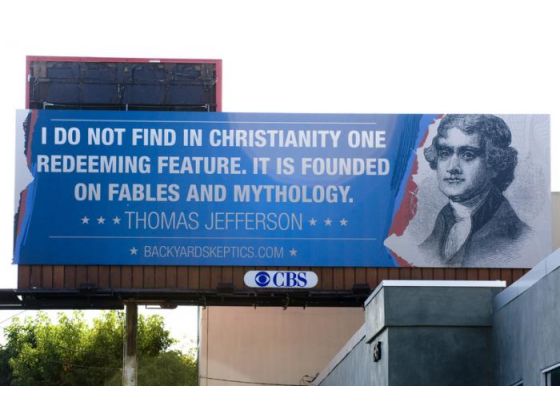
A group of atheists called Backyard Skeptics is planning to unveil a billboard at 1545 Newport Blvd., Wednesday afternoon with a quote from Thomas Jefferson bashing Christianity.

The quote reads, “I do not find in Christianity one redeeming feature. It is founded on fables and mythology.”

There’s one problem: There’s no evidence Jefferson ever said it. The Jefferson Library Collection at Monticello lists it on a page of spurious Jefferson quotes.

Bruce Gleason, whose group paid for this and other recent atheism billboards that have gone up in O.C. in recent months, said Wednesday he wasn’t sure about the origin of the quote.

He agreed that Monticello was an authoritative source.

“You’re absolutely right,” he said. “I should have done the research before I put my billboard up.”

The quote on the billboard is an abridged version of a quote that first appeared in a 1906 book called “Six Historic Americans,” by John E. Remsburg, who attributed it to a “Letter to Dr. Woods.”

It reads: “I have recently been examining all the known superstitions of the world, and do not find in our particular superstition (Christianity) one redeeming feature. They are all alike, founded upon fables and mythologies.”

The Jefferson Library knows of no letter to a Dr. Woods ever written by Jefferson, or of any appearance of the phrase anywhere in his writings.

For some misguided reason, atheists have latched on to Thomas Jefferson as a poster boy for their faith.

Perhaps it’s because Jefferson was such a brilliant man and a prolific, thoughtful writer, that atheists simply misunderstand what he wrote about being a Christian:

The doctrines of Jesus are simple, and tend all to the happiness of man.

The practice of morality being necessary for the well being of society, He [God] has taken care to impress its precepts so indelibly on our hearts that they shall not be effaced by the subtleties of our brain. We all agree in the obligation of the moral principles of Jesus and nowhere will they be found delivered in greater purity than in His discourses.

I am a Christian in the only sense in which He wished anyone to be: sincerely attached to His doctrines in preference to all others.

I am a real Christian – that is to say, a disciple of the doctrines of Jesus Christ.

Seems pretty straightforward and easy to understand to me.

Or, perhaps is that “Separation of Church and State Thingy” that atheists, especially the bitter individuals at the Freedom From Religion Foundation, always bring up as their reason for trying to erase Christianity from American life.

David Barton answered that assertion quite nicely, when he wrote on wallbuilders.com that:

Jefferson penned that phrase to reassure the Danbury (CT) Baptist Association that because of separation of church and state, the government would never interfere with their public religious expressions. For the next 150 years, federal courts followed Jefferson’s intent and attached his separation metaphor to the Free Expression Clause of the First Amendment, thus consistently upholding public religious expressions. However, in 1947, the Supreme Court reversed itself and began applying the phrase to the Establishment Clause instead, thus causing federal courts to remove rather than preserve public religious expressions.

The proof is abundant that this was not Jefferson’s intent. For example, two days after Jefferson wrote his separation letter, he attended worship services in the U. S. Capitol where he heard the Rev. John Leland preach a sermon. (As President of the Senate, Jefferson had personally approved the use of the Capitol Building for Sunday worship services.) The many diaries of Members of Congress during that time confirm that during Jefferson’s eight years, he faithfully attended church services in the Capitol. In fact, he even ordered the Marine Band to play the worship services there. Jefferson also authorized weekly worship services at the War Department and the Treasury Building.

And on December 23, 1803, Jefferson’s administration negotiated – and the Senate ratified – a treaty with the Kaskaskia Indians that stated “the United States will give annually for seven years one hundred dollars for the support of a priest” to minister to the Indians (i.e., federal funds for Christian evangelism!) Jefferson also signed presidential documents, closing them with the appellation, “In the Year of our Lord Christ.” There are many similar surprising facts about Jefferson that are fully documented historically, but that have been ignored for the past 50 years.

So would religious conservatives and Thomas Jefferson really be on opposite sides of the church/state issue? Probably, for I doubt that conservatives would agree with using federal dollars for evangelization.

Well, gosh.  That blows that argument out of the water, doesn’t it?

Golly, Eight Per Centers.  You’ve built your whole Jeffersonian Fan Club around a false assertion.

…That’s not your only one.

Battleground Alabama: Same FFRF. Same Bitter, Broken Record.

In previous “Battleground” articles, I wrote of how the Freedom From Religion Foundation, a 13,000 member, bitter, atheist organization from Wisconsin, had traveled down to Dixie in their quest to remove Christianity from the American landscape.

They’re still here.

Pesky little rodents, aren’t they?

Per foxnews.com:

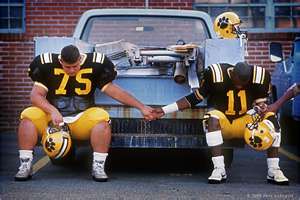
An Alabama school district has been accused of allowing prayers that invoke the name of Jesus during high school football games, according to a complaint filed by a national atheist organization.

The Freedom From Religion Foundation said the Lauderdale County school district has violated the First Amendment by allowing the prayers at Brooks High School.

School superintendent Bill Valentine confirmed to Fox News that he had received the complaint.

“We’ve referred that complaint to our attorney and we are in the process of reviewing it,” he said.

The complaint was lodged by a single resident who objected to the student-led prayer before high school football games played on school property.

The Times Daily newspaper identified the complainant as Jeremy Green. In an email to the newspaper, Green said he was taking a stand for the so-called “separation of church and state in an effort to protect the constitutional rights of the non-religious.”

“It is not the job of the public school system to endorse religion,” he wrote.

Valentine said that to his knowledge, no one has ever lodged a complaint with the school system about the prayers.

The Freedom from Religion Foundation filed a similar complaint against a school in Arab, Ala. That school decided to end pregame prayers and instead offer a moment of silence.

Valentine said they haven’t made any decision about prayers for Friday night’s football game.

He said the complaint has generated lots of telephone calls – mostly in support of keeping the prayers. He added that most callers have been understanding and “seem to appreciate the quandary we find ourselves in.”

Lauderdale County has about 8,600 students enrolled in public schools and Valentine said the community has a very active religious community.

Among those is David McKelvey, pastor of the nearby First Baptist Church, Killen. He discussed the controversy during his Sunday sermon.

“It’s very sad,” McKelvey told Fox News. “I would think that any other prayer from another religion would not receive this kind of negativity.”

According to David Horowitz’s discoverthenetworks.org:

The Foundation is led by its co-presidents, Dan Barker and his wife, Annie Laurie Gaylor. Barker was a Christian preacher for 19 years before renouncing his faith in 1984. Gaylor, who earned a journalism degree from the University of Wisconsin-Madison in 1980, co-founded FFRC with her mother and the late John Sontarck in 1978. She is author of the books Woe to the Women: The Bible Tells Me So (1981), and Betrayal of Trust: Clergy Abuse of Children (1988). She also edited the 1997 anthology Women Without Superstition: No Gods, No Masters. Today she edits FFRF’s newspaper, Freethought Today, which is published ten times annually.

In April of 2010, Judge Barbara Crabb (a Clinton appointee), responding to a lawsuit filed by the FFRF, ruled that the National Day of Prayer, scheduled for May 6th of that year, was unconstitutional.    Crabb wrote in her ruling (excerpt):

It goes beyond mere “acknowledgment” of religion because its sole purpose is to encourage all citizens to engage in prayer, an inherently religious exercise that serves no secular function in this context. In this instance, the government has taken sides on a matter that must be left to individual conscience

One might argue that the National Day of Prayer does not violate the establishment clause because it does not endorse any one religion. Unfortunately, that does not cure the problem. Although adherents of many religions “turn to God in prayer,” not all of them do.

Further, the statute seems to contemplate a specifically Christian form of prayer with its reference to “churches” but no other places of worship and the limitation in the 1952 version of the statute that the National Day of Prayer may not be on a Sunday.

This year, on the National Day of Prayer, May 5th, Jay Sekolow, Lead Counsel for the American Center for Law and Justice, wrote the following:

Just last month [April 2011], a federal appeals court overturned a decision by a federal district court in Wisconsin that declared the National Day of Prayer presidential proclamation unconstitutional. A proclamation like this one issued by President Obama for this year’s event.

As you’ll recall, a decision issued by the U.S. Court of Appeals for the Seventh Circuit, the Court’s Chief Judge Frank Easterbrook rejected an argument by FFRF that they could bring a federal lawsuit because the National Day of Prayer made them feel excluded and unwelcome. Echoing an argument made by the ACLJ in our amicus brief, the court concluded: “Hurt feelings differ from legal injury,” and all plaintiffs ultimately allege is “disagreement with the President’s action.” The decision is posted here. Our amicus brief, in which we represented nearly 70 members of Congress, is posted here.

The appeals court correctly concluded that FFRF does not have the right to silence the speech they don’t agree with and that the organization lacked legal standing to challenge the National Day of Prayer.

While this decision represents a victory for this time-honored tradition, FFRF has already said it plans to appeal that decision.

And, as you also know, that FFRF is currently challenging the constitutionality of the phrase ‘under God’ in the Pledge of Allegiance. FFRF is asking the U.S. Supreme Court to take a case out of New Hampshire and overturn a lower court decision upholding the constitutionality of the Pledge.

So, FFRF wants to get rid of the National Day of Prayer and the Pledge of Allegiance with the phrase ‘under God.’

This is absurd. These challenges not only are legally flawed, but clog our court systems and represent a waste of judicial resources.

We’re standing up for the National Day of Prayer and the Pledge. We will file briefs backing the National Day of Prayer and the Pledge of Allegiance as these flawed challenges and appeals continue.

While Jay does, rightfully, toot his own horn a little bit, the important thing is, that Judge’s ruling was overturned.

Average Americans are fighting back.

As President Ronald Wilson Reagan said:

Freedom prospers when religion is vibrant and the rule of law under God is acknowledged.

If we ever forget that we are One Nation Under God, then we will be a nation gone under.

Obama’s Student Stimulus: Buying Votes

When I attended college, (and no, kiddies, I did not arrive on horseback) tuition at the then Memphis State University (now the University of Memphis), was a measly couple of hundred bucks per semester.

Nowadays, you can buy a brand new deep-breathing SUV for what a semester in college costs.

Therefore, there are a lot of unpaid-for student loans floating around out there.

In fact, today, in the United States of America, the estimated amount of student loan debt owed by Americans is $1 Trillion.

But, have no fear, kiddies. President Barack Hussein Obama is going to kiss your boo-boo and make it not hurt as much.

Correction: Not hurt you as much.

Fox News reports:

In keeping with his new campaign theme of “we can’t wait,” President Obama today will roll out a plan to put more money in the pockets of some of the nation’s 36 million student loan recipients.

Obama has broad latitude in this area – certainly broader than the first two parts of his western campaign trip, underwater mortgages and subsidies for hiring veterans – because one of his early legislative initiatives was to have the federal government take over the student lending business in America.

Obama argued for the measure in 2009 as a cost-savings initiative, saying that the old system of privately issued, government secured loans reduced the amount of available money for needy students and also prevented the feds from making the system more efficient.

But Obama is now seeking to use that new power to obtain a taxpayer-financed stimulus that Congress won’t approve. The idea is to cap student loan repayment rates at 10 percent of a debtor’s income that goes above the poverty line, and then limiting the life of a loan to 20 years.

Take this example: If Suzy Creamcheese gets into George Washington University and borrows from the government the requisite $212,000 to obtain an undergraduate degree, her repayment schedule will be based on what she earns. If Suzy opts to heed the president’s call for public service, and takes a job as a city social worker earning $25,000, her payments would be limited to $1,411 a year after the $10,890 of poverty-level income is subtracted from her total exposure.

Twenty years at that rate would have taxpayers recoup only $28,220 of their $212,000 loan to Suzy.

The president will also allow student debtors to refinance and consolidate loans on more favorable terms, further decreasing the payoff for taxpayers.

Obama’s move comes at a moment when many economists are warning of a college debt bubble that is distorting college tuition rates and threatening to further damage credit markets. The president’s move is intended to make college more affordable for more people, which will, in turn allow universities to jack up their rates.

Obama accomplishes three beneficial things by doing this…beneficial to him that is:

1.  He lines the pockets of his homies, the pin-headed academicians.

2.  He bypasses Congress.

You know, that whole System of Checks and Balances Thingy?

3.  He pulls off a bribe of gi-normous proportions, hoping for a quid pro quo: 

I saved you student loan holders a ton of money, now you have to vote for me in 2012.

Obama is trying to recapture the magic of the 2008 election, in which young minds full of mush led the misguided charge to enthrone their messiah.

Per tartan.org, (The Tartan is Carnegie Mellon University’s student-run newspaper, established in 1906) posted 11/10/2008:

Between 22 and 24 million young Americans ages 18–29 voted, resulting in an estimated youth voter turnout (the percentage of eligible voters who actually cast a vote) of between 49.3 and 54.5 percent, according to an exit poll analysis released Nov. 4 by CIRCLE, a nonpartisan research center at Tufts University. This is an increase of 1 to 6 percentage points over the estimated youth turnout in 2004, and an increase of between 8 and 13 percentage points over the turnout in the 2000 election. The all-time highest youth turnout was 55.4 percent in 1972, the first year that 18-year-olds could vote in a presidential election.

Sixty-six percent of young voters cast their ballot for Barack Obama, the largest-ever showing for a presidential candidate in this age group. Young people preferred Obama to John McCain by a two-to-one ratio, according to a survey of young voters conducted by Declare Yourself, a nonpartisan initiative dedicated to youth voters, and Luntz Maslansky Strategic Research, a market research company, and released Nov. 6.

“Young people absolutely made the difference in this election,” said Erika Johansson, a project coordinator for Declare Yourself. “Without them, he would have lost the election.”

Obama won the age group of 18- to 29-year-olds, in addition to the 30–44 and 45–59 brackets.

According to a National Journal/Heartland Monitor Poll, published in June of this year, Obama’s approval ratings among 18 to 29 year olds had fallen 10 points from 2008’s 66%, coming in at 56%.

Even more telling:

Sixteen percent (16%) of Likely U.S. Voters now say the country is heading in the right direction, according to a new Rasmussen Reports national telephone survey taken the week ending Sunday, October 23.

That’s 16% of Americans.  Therefore, college students were included in the survey.

Something tells me that Obama’s “Student Stimulus” will be just as ineffective as the original.

Obama: Still a Community Organizer

Last Tuesday, in an interview with ABC’s Jake tapper, President Barack Hussein Obama had nothing but praise for the astroturfed “Occupy” Protesters, who have not-so-spontaneously popped up across the country, howling against capitalism as they tweet on their I-phones:

I understand the frustrations being expressed in those protests.

In some ways, they’re not that different from some of the protests that we saw coming from the Tea Party. Both on the left and the right, I think people feel separated from their government. They feel that their institutions aren’t looking out for them.

According to Obama, the most important thing he can do as president is express solidarity with the protesters and redouble his commitment to achieving what he described as a more egalitarian (socialist) society.

The most important thing we can do right now is those of us in leadership letting people know that we understand their struggles and we are on their side, and that we want to set up a system in which hard work, responsibility, doing what you’re supposed to do, is rewarded. And that people who are irresponsible, who are reckless, who don’t feel a sense of obligation to their communities and their companies and their workers that those folks aren’t rewarded.

We’re at a critical moment in this country where if we can regain some of the values that helped build this country that people, I think, long for, when they feel that everybody gets a fair shake but we’re also asking a fair share from everybody, if we can go back to that then I think a lot of that anger, that frustration dissipates.

There’s a very good reason that Obama loves him some “Occupiers”.  According to Andrew Breitbart’s biggovernment.com:

Just twenty or so years ago, Barack Obama wouldn’t just have supported the Occupy protests.

He would have organized them.

From Stanley Kurtz’s essential Radical-in-Chief: Barack Obama and the Untold Story of American Socialism, pp. 117-8:

In fact, Obama personally helped plan one of UNO’s most confrontational actions of the eighties [in 1988]: a break-in meant to intimidate a coalition of local business and neighborhood leaders into dropping a landfill expansion deal.

We know of Obama’s involvement in this demonstration only because his supporters in 2008 felt it necessary to rebut charges that, contrary to his claims of inter-racial healing, he had organized exclusively with blacks. Only then did Obama’s former colleagues from UNO [United Neighborhood Organization, a largely Mexican group] of Chicago reveal that he had helped to plan and lead this multi-ethnic demonstration against landfill expansion on Chicago’s South Side.

…Shouting “No deals!” somewhere between eighty and a hundred UNO-DCP [Developing Communities Project, a black group organized by Obama] marched to a local bank. There they broke into a meeting being conducted by the bank president and local community leaders. The group was exploring the possibility of a deal with Waste Management. The protestors, presumably including Obama, surrounded the meeting table while [Mary-Ellen] Montes [of UNO] told the negotiators, “We will fight you every step of the way.”

Obama was also likely involved with other aggressive UNO protests, including protests for school reform, through which he likely met former Weather Underground terrorist Bill Ayers. Ayers is involved in the Occupy protests today.

In the 1990s, Obama maintained his ties to radical activists, and “channel[ed] foundation funding to his confrontational Alinskyite colleagues.”

It’s clear that Obama’s ties to the Occupy movement–its forbears, its tactics, and some of its current luminaries–run deep.

This is what “community organizing” looks like.

As I reported in my article, The Great Disconnect, Part 2:  Columbia, Community Organizing, and “Hahvahd”, posted July 1, 2010:

From 1985 – 1988, Obama was a Community Organizer in Chicago.  What does a Community Organizer do?  I’m glad you asked.

Per Byron York in an article found at nationalreview.com:

Community organizing is most identified with the left-wing Chicago activist Saul Alinsky (1909-72), who pretty much defined the profession. In his classic book, Rules for Radicals, Alinsky wrote that a successful organizer should be “an abrasive agent to rub raw the resentments of the people of the community; to fan latent hostilities of many of the people to the point of overt expressions.” Once such hostilities were “whipped up to a fighting pitch,” Alinsky continued, the organizer steered his group toward confrontation, in the form of picketing, demonstrating, and general hell-raising.

Obama was hired by Jerry Kellman, a New Yorker who had gotten into organizing in the 1960s.  Kellman was trying to help laid-off factory workers on the far South Side of Chicago, in a nearly 100% black community.   He led a group, the Calumet Community Religious Conference, that had been created by several local Catholic churches in the industrial community.   Kellman was advised to hire a black organizer for a new spinoff from CCRC.  They called it the Developing Communities Project, designed to focus solely on the Chicago part of the area.

One of Obama’s projects while he was there, was to try to build an alliance of white and black churches and enlist them in the cause of social justiceObama had a problem, though.   He didn’t go to church himself.   And that, brothers and sisters, is how Obama, drawn to the preaching of Rev. Jeremiah Wright (and a political opportunity), joined Trinity United Church of Christ on 95th Street.

If you ask Obama’s fellow Community Organizers what his most significant accomplishments were, they’ll say two things: the expansion of a city summer-job program for South Side teenagers and the removal of asbestos from one of the area’s oldest housing projects.   Those  were his biggest victories.

Only in America, could a “Community Organizer” go on to sit in the most important seat of power in the Free World…and still be nothing more than a “Community Organizer”.

Perry’s Economic Plan Falls a Little Flat

Republican Primary Candidate Herman Cain has caught a lot of flack over his 9-9-9 Economic plan.

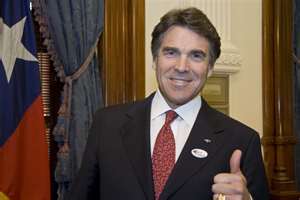
Just when the storm concerning Cain’s plan has started to die down, rival Candidate Texas Governor Rick Perry finally announced his economic plan on Monday:

Republican presidential candidate Rick Perry unveiled a sweeping economic agenda Monday highlighted by a plan to level a voluntary 20 percent “flat tax” on all taxpayers who will accept it in place of what they’re paying now.

The plan, outlined in a Wall Street Journal op-ed column a day before the Texas governor was set to unveil it in South Carolina, also calls for capping federal spending at 18 percent of the country’s GDP while allowing younger earners to privatize their Social Security accounts. Taxpayers who don’t want to pay a 20 percent flat income tax, he said, can keep their current rate.

Perry offers several proposals that appear designed to sweeten the offer – and to counter criticism that the flat tax is regressive, taking a proportionally bigger bite from smaller incomes. His plan would preserve popular deductions for mortgage interest and donations to charity for households earning less than $500,000 a year. It would increase the standard deduction to $12,500.

Calling his agenda “Cut, Balance and Grow” — a clear nod to congressional Republicans, who have proposed a “Cut, Cap and Balance” budget bill — Perry says his proposal is the best way to cure the nation’s ailing economy.

“Cut, Balance and Grow strikes a major blow against the Washington-knows-best mindset,” Perry said. “It takes money from spendthrift bureaucrats and returns it to families. It puts fewer job-killing regulations on employers and more restrictions on politicians. It gives more freedom to Americans to control their own destiny. And just as importantly, the Cut, Balance and Grow plan paves the way for the job creation, balanced budgets and fiscal responsibility we need to get America working again.”

Per forbes.com, just as with any economic proposal, there are pros and cons to a flat tax:

Proponents of the flat tax system claim that it would do away with the complicated tax code and tax forms. Using one form, you would add your income (pension, salary, other income) and pay 17% on the sum. Deductions and credits would be eliminated under this plan. Opponents of the flat tax system claim that it would favor the wealthy and could put a higher tax burden on those who earn less.

For example, person A makes $40,000 a year and would pay $6,800 in income taxes, leaving them with $33,200 of net income. A person making $250,000 would pay $42,500 in income taxes, leaving them with $207,500 of net income. There’s been discussion of establishing a taxable income floor so that individuals making less than a certain amount would not pay taxes.

The funny thing is…

Steve Forbes proposed a flat tax rate of 17% in his book, Flat Tax Revolution. However, everyone gets an exemption: $13,200 for adults ($17,160 for single mothers) and $4,000 for dependents. A family of four would not pay taxes if they made less than $46,000. The estate tax and the Alternative Minimum tax would be done away with. In addition, any income that is saved or invested is tax exempt. That means no taxes on capital gains, Social Security benefits, interest, or dividends. Corporations could expense all investments, doing away with depreciation schedules, and would only be taxed on American-made products.

Forbes wanted to implement a Flat Tax because…

The current U.S. tax system is so complicated, it costs taxpayers a lot just to implement it. On average, it takes 28 hours and 30 minutes to figure out what you owe – whether you do your own taxes, or you work the hours needed to pay someone else to do the taxes. The cost in lost productivity is $200 billion. That’s not counting the 97,440 IRS employees’ salaries.

A fictional tax return given by Money magazine to 45 tax preparers resulted in 45 different tax calculations. Even a Treasury Department study found that callers to the IRS toll-free help lines got the wrong answers 25% of the time.(Source: MISES)

Governor Perry evidently believes that endorsing a Flat Tax will make him competitive in the Republican Primary Race, once again.

He has to do something.  His rapid, inexorable decline in the popularity polls has taken him from number one among the Republican Contenders to third place.

When the Houston Chronicle asked him about his decline in the public polls back on October 14th, Gov. Perry blew it off by calling it “a distraction,” saying Americans are worried about jobs and not candidates’ standing in the endless surveys.

…“Polls are going to go up and down – this is going to be a long race,” the three-term governor said on NBC News’ “Today Show.” “I don’t worry much about polls.”

Perry downplayed comments by his wife Anita in South Carolina on [the previous] Thursday that he had been “brutalized” by Republican rivals and the news media. “Family members always take these campaigns a little more personally than the candidates do,” Perry said. “I have been shot at and then missed, shot at and hit for 20 years running for public office… We have ups and downs.”

Perry dubbed the tumult of the presidential campaign “just distractions” for most Americans, adding: “They want to hear a conversation about who is going to get this country back working again and that’s what I’m staying focused on.”

Okay.  But wouldn’t lessening the corporate tax  rate, in order to encourage businesses to start hiring again, thus jump-starting the economy, be the first step to get Americans working again, before announcing a Flat Tax? 

Or, are you just trying to outdo Herman Cain and become the flavor of the month again?

And, by the way, how does the Texas Dream Act get Americans working again?

Inquiring minds want to know.

Libya to Embrace Radical Sharia Law

The other day, I wrote an article concerning how the Muslim Brotherhood was waiting in the wings to take over Libya, now that Moammar Gadhafi has assumed room temperature.

I hate it when I’m right.

Per telegraph.co.uk:

Mustafa Abdul-Jalil, the chairman of the National Transitional Council and de fact president, had already declared that Libyan laws in future would have Sharia, the Islamic code, as its “basic source”.

But that formulation can be interpreted in many ways – it was also the basis of Egypt’s largely secular constitution under President Hosni Mubarak, and remains so after his fall.

Mr Abdul-Jalil went further, specifically lifting immediately, by decree, one law from Col. Gaddafi’s era that he said was in conflict with Sharia – that banning polygamy.

In a blow to those who hoped to see Libya’s economy integrate further into the western world, he announced that in future bank regulations would ban the charging of interest, in line with Sharia. “Interest creates disease and hatred among people,” he said.

Gulf states like the United Arab Emirates, and other Muslim countries, have pioneered the development of Sharia-compliant banks which charge fees rather than interest for loans but they normally run alongside western-style banks.

In the first instance, interest on low-value loans would be waived altogether, he said.

Libya is already the most conservative state in north Africa, banning the sale of alcohol. Mr Abdul-Jalil’s decision – made in advance of the introduction of any democratic process – will please the Islamists who have played a strong role in opposition to Col Gaddafi’s rule and in the uprising but worry the many young liberal Libyans who, while usually observant Muslims, take their political cues from the West.

What is Sharia Law? According to the official website of the Council on Foreign Relations, cfr.org:

Also meaning “path” in Arabic, sharia guides all aspects of Muslim life including daily routines, familial and religious obligations, and financial dealings. It is derived primarily from the Quran and the Sunna–the sayings, practices, and teachings of the Prophet Mohammed. Precedents and analogy applied by Muslim scholars are used to address new issues. The consensus of the Muslim community also plays a role in defining this theological manual.

Sharia developed several hundred years after the Prophet Mohammed’s death in 632 CE as the Islamic empire expanded to the edge of North Africa in the West and to China in the East. Since the Prophet Mohammed was considered the most pious of all believers, his life and ways became a model for all other Muslims and were collected by scholars into what is known as the hadith. As each locality tried to reconcile local customs and Islam, hadith literature grew and developed into distinct schools of Islamic thought: the Sunni schools, Hanbali, Maliki, Shafi’i, Hanafi; and the Shiite school, Ja’fari. Named after the scholars that inspired them, they differ in the weight each applies to the sources from which sharia is derived, the Quran, hadith, Islamic scholars, and consensus of the community.

Wait a minute. Didn’t Obama say that brighter days were ahead in Libya after the killing of Gadhafi?

 So this is a momentous day in the history of Libya. The dark shadow of tyranny has been lifted. And with this enormous promise, the Libyan people now have a great responsibility — to build an inclusive and tolerant and democratic Libya that stands as the ultimate rebuke to Gaddafi’s dictatorship. We look forward to the announcement of the country’s liberation, the quick formation of an interim government, and a stable transition to Libya’s first free and fair elections. And we call on our Libyan friends to continue to work with the international community to secure dangerous materials, and to respect the human rights of all Libyans –- including those who have been detained.

Oops.  I think you missed that prediction, Kreskin.

The problem is, according to The Council of Foreign Relations, the jury is still out as to whether Democracy and Sharia Law can co-exist:

In a 2007 University of Maryland poll (PDF), more than 60 percent of the populations in Egypt, Morocco, Pakistan, and Indonesia responded that democracy was a good way to govern their respective countries, while at the same time, an average of 71 percent agreed with requiring “strict application of [sharia] law in every Islamic country.” Whether democracy and Islam can coexist is a topic of heated debate. Some Islamists argue democracy is a purely Western concept imposed on Muslim countries. Others feel Islam necessitates a democratic system and that democracy has a basis in the Quran since “mutual consultation” among the people is commended (42:38 Quran). John L. Esposito and John O. Voll explain the debate in a 2001 article in the journal Humanities.

Noah Feldman, a former CFR adjunct senior fellow, writes in a 2008 New York Times Magazine article that the full incorporation of Islamic law is viewed as creating “a path to just and legitimate government in much of the Muslim world.” It places duplicitous rulers alongside their constituents under the rule of God. “For many Muslims today, living in corrupt autocracies, the call for [sharia] is not a call for sexism, obscurantism or savage punishment but for an Islamic version of what the West considers its most prized principle of political justice: the rule of law,” Feldman argues.

On the other hand, some Muslim scholars say that secular government is the best way to observe sharia. “Enforcing a [sharia] through coercive power of the state negates its religious nature, because Muslims would be observing the law of the state and not freely performing their religious obligation as Muslims,” says Abdullahi Ahmed An-Na’im, a professor of law at Emory University and author of a book on the future of sharia.

That  makes two countries in the volatile Middle East, Egypt and Libya,  who have headed straight toward a fervent embrace of radical Sharia Law, after disposing of their secular despots, cheered on by President Barack Hussein Obama and his State Department practitioners of Smart Power!

And this helps the United States, how?