Requiem for a Bad Dog: John McCormack 1955-2011 (One Year Anniversary Edition)

Today marks the one year anniversary of the death of a Mid-South legend, larger-than-life Radio Personality John “Bad Dog” McCormack.  Here is a tribute which I wrote, upon hearing of his passing.  He is truly missed.

If, when we’re standing before God, the amount of good we do with our lives, and the amount of joy and happiness that we are able to bring to this world of pain is brought up, then, Thursday afternoon, the Pearly Gates shook with the infectious laughter of one giant of a man.

John “Bad Dog” McCormack lost his long battle with AML late Thursday Afternoon at Methodist University Hospital in his hometown of Memphis, Tennessee.  Bad Dog was an on-air personality for 22 years at WEGR Rock 103, a Classic Rock Station.

Bad Dog began as a part of the Wake-up Crew with Tim Spencer and Bev Hart.  Dog was basically a 14-year-old kid in a man’s body.  He was a natural-born prankster, and became known for his creation of “The Twilight Phone”, an anonymous prank call he would make to unsuspecting citizens.

In one memorable call, he impersonated an Apartment Manager, calling a guy who dumped his fiance’s dead pet Piranhas into the apartment lake, claiming that they came back to life and the poor sap had to reimburse the apartment $2,8000 for draining and restocking the lake.  And then, there was Bad Dog”s possibly most famous call, where he talked to an older gentleman named Mr. Lannum, impersonating a collector attempting to collect on a  past-due cable bill.  Mr. Lannum went ballistic, cussing a blue streak that is still talked of in hushed tones to this day, 20 tears later:

When he finally clued the individuals in to whom they had been talking to, each one of them eventually forgave him, because, after all, it was Bad Dog.

Another routine that Bad Dog came up with, was remarkable.  In a city known for racial polarization, he came up with the idea of numbering their show’s Black listeners, thinking that actual black listeners would be few and far between.  Well, Bad Dog received a big surprise.

The routine became very popular among Memphis’  Black Community, as people called in to talk to Bad Dog.  He would make up a hilarious “oath” for the listener to say, and from then on, whenever this individual would call in to talk about the subject of the day, they would self-identify as Black Listener Number So-and-So.  Everyone loved Bad Dog.

However, the most incredible thing that this man accomplished during his time with us started when he, Spencer, and Hart decided to begin a yearly Radiothon in support of St. Jude Hospital’s Ronald McDonald House.

Over the last 20 years, Bad Dog and his co-workers have raised over $7 million dollars to help build and maintain the refuge for cancer-stricken kids and their families, so they could have some semblance of normal life while they undergo treatment at St. Jude.

Bad Dog McCormack was diagnosed with Acute Myelogenous Leukemia in late October 2009.  He was still working mornings, though his new partner was Ric Chetter.  Clear Channel Communications, in their infinite wisdom, had split up the popular Wake Up Crew in November of 2006, firing Newsperson Bev Hart, and, eventually moving Rock 103 Program Director Tim Spencer to mid-days.

Bad Dog continued to work as he underwent treatment, as he felt that this was the best medicine for him and was what God had called him to do.  His courage in the face of his own mortality was an inspiration to the entire Mid-South, as his barrel-house laugh continued to reverberate through the car speakers of the Mid-South every morning.  He also continued to work the annual Rock103 Radiothon, letting nothing stand in his way of helping the kids.

Bad Dog underwent a bone marrow transplant in November of 2010.  He seemed to be doing better, and, in December, an online poll of Memphians voted him The Most Noteworthy Memphian of the Year.

On February 10-11th, Bad Dog was at the mic, around the clock, for the 20th Annual Rock103 Radiothon.  When it was over, he announced that more Leukemia had been found.  He remained upbeat, and said that this was just par for the course.

Meanwhile, Clear Channel Communications, again in its infinite wisdom, fired Ric Chetter, and moved Bad Dog and Tim Spencer to afternoons, while bringing in a morning show named Free Beer and Hot Wings, 5 guys syndicated out of the Great White North, whose humor about hockey games is about as relevant to the Mid-South as hunting moose.

Bad Dog took this change in his usual good-natured stride, happy to be back with his old partner-in-crime, Tim.

Then, last Thursday, Bad Dog took a turn for the worse.  He was rushed to Methodist University Hospital in Downtown Memphis, where he passed away from an aneurysm, brought about by his Leukemia.

In an interview with the Commercial Appeal, Bad Dog made this comment about his battle against Leukemia and his love for the kids at St. Jude:

When I see what they are going through, I have no reason to complain. They are so young and have so much pain. I’ve lived a blessed life. If I died tomorrow, I’d go with a smile on my face.

He also, in his usual big-hearted, gentle way, left a statement to be released after his death:

I have gone to be with God and he is holding me tightly and I am surrounded by many of the Ronald McDonald’s House kids. Do not say you have lost a friend… One is only lost when you don’t know where they are… you know where I am. I thank each and every one of you for your support and prayers. I love all of you and that will never go away. When you are having a bad day… think of my laugh or a Twilight phone or the time we met. None of us is guaranteed tomorrow, make every day great, be the spiritual leader of your family. May peace be with you. Your friend, Bad Dog.

John”Bad Dog” McCormack, 55,  leaves behind his two sons, Buck and Tucker, a huge family, and thousands of fans.

As one of those fans, please allow me to say thank you, Bad Dog, for brightening up a lot of dreary mornings.

A sign currently on display outside  a local jewelry store says it all:

BAD DOG MADE MEMPHIS A BETTER PLACE.

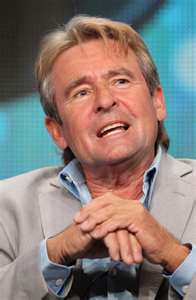
R.I.P. Davy Jones – December 30, 1945 – February 29, 2012

I remember it as if it was yesterday.  I was 8 years old, and this cool new television show was coming on.

It was about the adventures of an American Rock ‘n Roll Band, who lived in a beachfront house and drove a GTO convertible.  I mean, what could be cooler than that?

The guys were all American boys, except for one little short feller.  This guy quickly became one of the biggest teen idols of all time. The girls, old and young, went nuts for him.

And on top of that, he sang with such a pure voice, you just knew that he had some training, somewhere.

And now, today, some 46 years later, I found out that he has passed away from a heart attack…much too soon.  You guessed it.  The band was The Monkees.  The man was Davy Jones.

Here’s some information you may not know about him, courtesy of Biography.com:

…A member of the Monkees, Davy Jones became a popular teen idol of the late 1960s. He started his acting career at the age of 11, winning a role on the popular British soap opera Coronation Street.

For a time, Jones trained to become a jockey but he gave it up to perform in the theater. He played the Artful Dodger in a London production of the musical Oliver! In 1963, Jones reprised the role for his Broadway debut. He received a Tony Award nomination for his performance that same year.

Jones landed a few television guest appearances and other roles before getting his big break. Along with Michael Nesmith, Peter Tork, and Mickey Dolenz, he was selected for a new television series about a rock group modeled after the Beatles. The Monkees debuted in September 1966 and audiences adored the humorous antics of this manufactured band. Jones especially attracted a lot of attention from fans for his charm and boyish good looks.

It wasn’t long before the Monkees scored on the music charts. Their version of Neil Diamond’s “I’m a Believer” and “Last Train to Clarksville” were their first number one hits. More successful singles followed, including another Neil Diamond tune, “Little Bit Me, Little Bit You,” Gerry Goffin and Carole King’s “Pleasant Valley Sunday”, and “Daydream Believer” by John Stewart of the Kingston Trio. Their albums sold millions of copies.

The Monkees even starred in their own feature film, Head (1968). Unfortunately for the so-called Pre-Fab Four, it was a dud at the box office. That same year, their series was canceled and Tork left the group. Jones and the remaining members soldiered on for a while, releasing 1969’s Instant Replay before splitting up.

After the Monkees, Jones continued acting and singing. He released a self-titled album in 1971. That same year, Jones made a memorable appearance on the hit family sitcom The Brady Bunch as himself. He was teenager Marsha Brady’s dream date for the prom. Jones had guest roles on a number of other shows, trading in on his popularity as a teen idol.

Returning to music, Jones teamed up with Dolenz and former Monkees songwriters Tommy Boyce and Bobby Hart. They released one album together in 1976, which failed to make much of an impression on the music buying public.

There was a renewed interest in the Monkees, however, in the 1980s. Some of their original recordings returned to the charts and Dolenz, Tork, and Jones reunited for a concert tour in 1986. That same year, the group released a greatest hits collection, Then and Now, which featured a new track, “That Was Then, This Is Now.” Reruns of the group’s series started airing on MTV in 1987, giving the band even more of a boost. That same year, the Monkees released the album Pool It!

Nesmith returned to the group in the mid-1990s for a successful tour and a new album, 1996’s Justus. While the new recording failed to make the charts, the Monkees previous albums have remained strong sellers over the years. The Best of the Monkees reached number 51 on the Billboard 200 chart in 2003.

Outside of his activities with the Monkees, Jones continued to act. He had a cameo in The Brady Bunch Movie (1995) and appeared on such shows as Boy Meets World, The Single Guy, and Sabrina, the Teenage Witch. On the London stage, Jones appeared in Oliver!—this time around playing Fagin. He also starred in a revival of Godspell as Jesus.

Known for his wit and warm sense of humor, Jones wrote several autobiographies, including 1987’s They Made a Monkee Out of Me. He also owned several thoroughbred race horses. Music, however, has remained his main passion. He has recorded several solo albums, including 2001’s Just Me.

In his later years, Jones spent much of the year on tour with his band. He released a collection of his most requested songs entitledIncredible Revisited in 2008. Jones also made numerous personal appearances to meet up with fans and participated in a number of sporting events for charity.

In 2009, Davy Jones was named Number 2 of the list of All Time Best Teen Idols

Active until the end, Jones died today of a heart attack, in Florida, at the age of 66.  He is survived by his wife Jessica; his four daughters from previous relationships, Annabel, Talia, Jessica, and Sarah; and several grandchildren.

As somebody who carried a Monkees lunch box to Elementary School and had a toy Monkeemobile in his bedroom, I just want to say thank you, Davy, for all those evenings I spent glued to the television and all of those hours I spent listening to my Monkees albums.

One of my step-sons gave me the Essential Monkees CD for Christmas, a few years ago.  I think I will go listen to it.

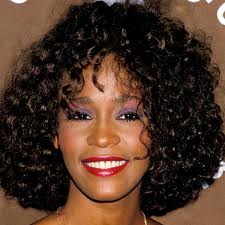
Whitney: A Musical Journey Ended, Much Too Soon

I love music.  Good music.  Growing up with a father who sang in the church choir and two sisters who took years of piano lessons, I was raised to the sound of hymns from the Cokesbury Hymnbook being sung to me, while my Daddy made my breakfast and the sound of my sisters playing the piano in the living room at night.

As I got older, I remember listening to Rick Dees and Ron Jordan on WMPS 680 AM in Memphis, Tennessee, hearing songs such as “The Night Chicago Died”  and “Hold On, I’m Coming.”

Then came the glorious afternoon in 1974: my step-sister had an extra ticket for the top row of the Mid-South Coliseum, where we got to see The King himself –  Elvis Presley –  in front of a hometown crowd.  He wore a blue jumpsuit and had not yet begun to gain weight or diminish in talent. He was awesome.

Among the back-up singers performing with The King that afternoon was a trio of beautiful Black ladies named the Sweet Inspirations.  Their voices were amazing.  For a shining example of their work, I suggest you listen to one of Elvis’ greatest hits, “In the Ghetto,” written by Mac Davis.

The Sweet Inspirations were founded by Cissy Houston, who now faces the horrible reality of out-living her daughter.

Whitney Houston, who ruled as pop music’s queen until her majestic voice was ravaged by drug use and her regal image was ruined by erratic behavior and a tumultuous marriage to singer Bobby Brown, died Saturday. She was 48.

Beverly Hills police Lt. Mark Rosen said Houston was pronounced dead at 3:55 p.m. in her room on the fourth floor of the Beverly Hilton. A Los Angeles County coroner’s official said the body remained in the building late Saturday. “There were no obvious signs of any criminal intent,” Rosen said.

Rosen said police received a 911 call from hotel security about Houston at 3:43 p.m. Saturday. Paramedics who were already at the hotel because of a Grammy party were not able to resuscitate her, he said.

The Los Angeles Times provides more details:

Investigators probing the death of Whitney Houston are trying to determine whether she drowned while in a bathtub at the Beverly Hilton on Saturday shortly before she was set to attend a pre-Grammy Awards gala, according to a source who has been briefed about the case.

The source, who spoke to the Los Angeles Times on the condition of anonymity because the case was ongoing, stressed investigators still have many unanswered questions, particularly about what Houston was doing in the hours before her death. Investigators are also interviewing family members and friends to determine whether Houston had any underlying medical conditions, a practice common in death investigations.

The Los Angeles County coroner’s office is expected to perform an autopsy Sunday, but it’s likely that a final cause of death will be deferred until toxicology test results come in. The source said drowning is one of several scenarios that investigators are examining as they gather evidence.

Beverly Hills police said there was no indication of foul play in Houston’s death but also said it was premature to say that she had died of natural causes.

Houston had drug and alcohol problems for years, and last May her spokeswoman said she was going back into rehab.

The Times reported that days before her death Houston had been acting strangely, skipping around a ballroom and reportedly doing handstands near the hotel pool. According to The Times’ Gerrick D. Kennedy, Houston greeted people with a warm smile but appeared disheveled in mismatched clothes and hair that was dripping wet.

Police said that so far they do not have evidence that drugs played a role in Houston’s death.

The New York Times elaborates on this gifted vocalist:

Ms. Houston was R&B’s great modernizer, slowly but surely reconciling the ambition and praise of the church with the movements and needs of the body and the glow of the mainstream. Her voice was clean and strong, with barely any grit, well suited to the songs of love and aspiration that were the breakthrough hits from her first two albums, “Whitney Houston” and “Whitney,” the post-quiet-storm ballads “You Give Good Love” and “Saving All My Love for You”; and the naïve, bopping, flush-of-love dance tracks “I Wanna Dance With Somebody (Who Loves Me)” and “So Emotional.” Only a few of her 1980s hits — “Didn’t We Almost Have It All” and “Where Do Broken Hearts Go” chief among them — explored love’s dark side.

Hers was a voice of triumph and achievement, and it made for any number of stunning, time-stopping vocal performances: her version of Dolly Parton’s “I Will Always Love You,” from the soundtrack to “The Bodyguard,” which topped the Billboard singles chart for 14 weeks; her dazzling “Star-Spangled Banner,” sung before the 1991 Super Bowl; and huge, authoritative songs like “Greatest Love of All” and “One Moment in Time,” which sounded as if they could have been national anthems too.

Ms. Houston’s signature was to let her Brobdingnagian voice soar unfettered. From a lesser vocalist that would have been a gimmick, but from her it was par for the course, just a freakishly gifted athlete leapfrogging everyone around her.

And now that voice has been silenced.  Not by old age, but the lifestyle she chose – one that ranged from the summit of her unforgettable rendition of the National Anthem to the slo-mo train wreck abyss of her drug-addled marriage to Bobby Brown.

In the wake of this tragedy, an addle-brained, uber-liberal, octogenarian singer with a flair for blabbering the wrong thing at the wrong time just had to throw his two cents in:

When Tony Bennett took the stage at Clive Davis’ pre-Grammy gala on Saturday, he offered more than just happy memories of the late Whitney Houston.

Bennett used the opportunity to ask that the U.S. government re-evaluate its stance on drugs, using Amsterdam as an example of a successful policy.

“First it was Michael Jackson, then Amy Winehouse, now the magnificent Whitney Houston,” he began. “I’d like every person in this room to campaign to legalize drugs.”

He continued: “Let’s legalize drugs like they did in Amsterdam. No one’s hiding or sneaking around corners to get it. They go to a doctor to get it.”

Sure, Tony – except that Whitney likely died after overdosing on legal drugs prescribed by her doctor…just like Elvis.

Football, Politics, and The Economy

It’s Super Bowl Sunday….A lot will be happening today, per yahoo.com:

According to Hallmark Cards, Inc., The Super Bowl represents the No. 1 at-home party event of the year. Believe it or not, it’s even bigger than New Year’s Eve. (One wonders when we might see cards celebrating the event not to mention Super Bowl Monday sympathy editions for the losing team’s fans.) Hallmark also figures the average number of people attending a Super Shindig to be 17 so, calculating with reference to per capita beer consumption, hosts should probably buy … a lot.

No matter how much the economy slumps, the week before the ‘Bowl sees a deluge of shoppers that could damn well carry the entire national economy. No fewer than $55 million is expected to be spent on food for The Big Game. After spending an estimated ten million man-hours (give or take a couple of seconds) preparing all that grub, Americans are expected to consume the lot within approximately fifteen minutes, well before the first touchdown is scored.

Yessir, the country will come to a virtual standstill, around 5:30 p.m. Central.

We’ll all watch as our modern-day gladiators meet on the field of battle, reminiscent of the halcyon days of the Roman Coliseum, without the lions. (Especially the ones from Detroit, who never make the Superbowl.)

Americans hold these football heroes in such esteem, I’ll bet one could even run for president.  Reuters.com was thinking along the same lines:

Asked which NFL playoff quarterback they would choose for president of the United States in the coming election, more than one in four voters go for Tebow, according to the results of a new Reuters/Ipsos poll of likely voters released on Friday.

Tebow’s success on the field in the past few months helped to make him a media sensation as he turned a struggling Denver Broncos team around. His open and oft-professed religious faith gained him huge support in the evangelical community.

But perhaps it is his famous post-touchdown knelt-in-prayer pose – known as “Tebowing” – that has most inspired fans around the world. Many have posted pictures of themselves “Tebowing” on sites such as Tebowing.com.

The online survey of 2,475 people was conducted earlier this week, just ahead of the Super Bowl, the annual championship for America’s most popular sport.

The precision of the Reuters/Ipsos online polls is measured using a credibility interval. In this case, the poll has a credibility interval of plus or minus 2.3 percentage points.

Tebow managed to do something in the poll he could not quite manage on the field – easily beat New England Patriots quarterback Tom Brady.

Brady, who is married to super model Gisele Bundchen, came third, one percentage point behind New York Giants quarterback Eli Manning, ironic since they face each other this Sunday in the Super Bowl.

The only other quarterback to start in the playoffs this year who got into double digits in the poll was New Orleans’ Drew Brees, at 15 percent.

Of course, at 24, Tebow is too young by the standards of the U.S. Constitution to be president (you have to be at least 35). There might also be questions over whether he could be disqualified because he was born in the Philippines – his parents were American missionaries.

But this isn’t real life, this is football.

The way this presidential election is shaping up, it’s bearing no resemblance to real life, either.

As we are entering the home stretch, all of the sudden, unemployment percentages are going down….and the economy is, at least according to the Administration’s Propaganda Machine, improving.

Unfortunately, out here in the Heartland, things are still tough all over.  

Americans are looking desperately for work (those who haven’t given up) and scores of small businesses are closing their doors, while other businesses are laying off valued employees, just to keep their doors open.

One-sixth of Americans are still receiving SNAP (food stamps), while other adults have moved back in with their parents, children, pets, and all.

Robert Reich,  a professor of public policy at the University of California at Berkeley and, previously, the secretary of labor during the Clinton administration, writes on marketplayground.com that

Our working-age population has grown by nearly 10 million since the recession officially began in December 2007 but many of these people never entered the workforce. Millions of others are still too discouraged to look for work.

The most direct way of measuring the jobs deficit is to look at the share of the working-age population in jobs. Before the recession, 63.3 percent of working-age Americans had jobs. That employment-to-population ratio reached a low last summer of 58.2 percent. Now it’s 58.5 percent. That’s better than it was, but not by much. The trend line here isn’t quite as encouraging.

Given how many people have lost their jobs and how much larger the total working-age population is now, we’ve got a long road ahead. At January’s rate of job gains – 243,000 – the nation wouldn’t return to full employment for another seven years.

No wonder Americans participated in a survey comparing NFL Quarterbacks as president.  At least, they know how to reach a goal (line)…and it doesn’t take them 7 years, either.

Seriously, though, the next president, Scooter, Mittens, or whomever, needs to attack this horrible economy with a vengeance.  The dark clouds of despair are hanging over the shining city on the hill.

Americans deserve better than this.

The Dream Lives On…

Today, a lot of Americans, including me, have the day off.  Why?  America is observing a national holiday in observance of a civil rights pioneer:

Martin Luther King, Jr., (January 15, 1929-April 4, 1968) was born Michael Luther King, Jr., but later had his name changed to Martin. His grandfather began the family’s long tenure as pastors of the Ebenezer Baptist Church in Atlanta, serving from 1914 to 1931; his father has served from then until the present, and from 1960 until his death Martin Luther acted as co-pastor. Martin Luther attended segregated public schools in Georgia, graduating from high school at the age of fifteen; he received the B. A. degree in 1948 from Morehouse College, a distinguished Negro institution of Atlanta from which both his father and grandfather had graduated. After three years of theological study at Crozer Theological Seminary in Pennsylvania where he was elected president of a predominantly white senior class, he was awarded the B.D. in 1951. With a fellowship won at Crozer, he enrolled in graduate studies at Boston University, completing his residence for the doctorate in 1953 and receiving the degree in 1955. In Boston he met and married Coretta Scott, a young woman of uncommon intellectual and artistic attainments. Two sons and two daughters were born into the family.

In 1954, Martin Luther King became pastor of the Dexter Avenue Baptist Church in Montgomery, Alabama. Always a strong worker for civil rights for members of his race, King was, by this time, a member of the executive committee of the National Association for the Advancement of Colored People, the leading organization of its kind in the nation. He was ready, then, early in December, 1955, to accept the leadership of the first great Negro nonviolent demonstration of contemporary times in the United States, the bus boycott described by Gunnar Jahn in his presentation speech in honor of the laureate. The boycott lasted 382 days. On December 21, 1956, after the Supreme Court of the United States had declared unconstitutional the laws requiring segregation on buses, Negroes and whites rode the buses as equals. During these days of boycott, King was arrested, his home was bombed, he was subjected to personal abuse, but at the same time he emerged as a Negro leader of the first rank.

In 1957 he was elected president of the Southern Christian Leadership Conference, an organization formed to provide new leadership for the now burgeoning civil rights movement. The ideals for this organization he took from Christianity; its operational techniques from Gandhi. In the eleven-year period between 1957 and 1968, King traveled over six million miles and spoke over twenty-five hundred times, appearing wherever there was injustice, protest, and action; and meanwhile he wrote five books as well as numerous articles. In these years, he led a massive protest in Birmingham, Alabama, that caught the attention of the entire world, providing what he called a coalition of conscience. and inspiring his “Letter from a Birmingham Jail”, a manifesto of the Negro revolution; he planned the drives in Alabama for the registration of Negroes as voters…

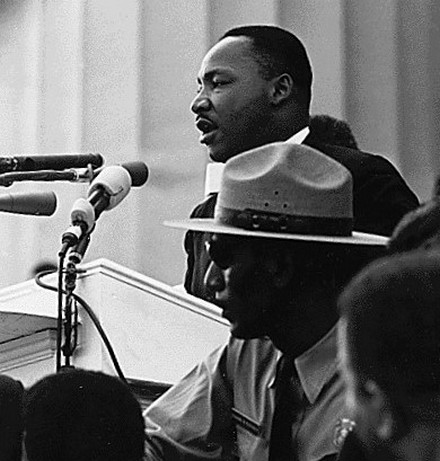
And he directed the peaceful march on Washington, D.C., of 250,000 people to whom he delivered his address, “l Have a Dream”, on August 28, 1963, in front of the Lincoln Memorial:

I have a dream that one day this nation will rise up and live out the true meaning of its creed: “We hold these truths to be self-evident: that all men are created equal.” I have a dream that one day on the red hills of Georgia the sons of former slaves and the sons of former slaveowners will be able to sit down together at a table of brotherhood. I have a dream that one day even the state of Mississippi, a desert state, sweltering with the heat of injustice and oppression, will be transformed into an oasis of freedom and justice. I have a dream that my four children will one day live in a nation where they will not be judged by the color of their skin but by the content of their character. I have a dream today.

Also during those years…

He conferred with President John F. Kennedy and campaigned for President Lyndon B. Johnson; he was arrested upwards of twenty times and assaulted at least four times; he was awarded five honorary degrees; was named Man of the Year by Time magazine in 1963; and became not only the symbolic leader of American blacks but also a world figure.

At the age of thirty-five, Martin Luther King, Jr., was the youngest man to have received the Nobel Peace Prize. When notified of his selection, he announced that he would turn over the prize money of $54,123 to the furtherance of the civil rights movement.

As I wrap up today’s blog, allow me to share a vivid memory, of a life ended way too soon:

It’s the night of April 4, 1968.  A 9 (and almost 1/2) year old boy is watching a program on a black and white television set in his home in the mid-town area of Memphis, Tennessee.  Suddenly, the screen changes to the Civil Defense logo and he hears a voice saying:

Will all members of the National Guard, please report to the Armory and all police and fire personnel please report to their stations.

Normal programming resumed.  Then, all of the sudden, or so it seemed, President Lyndon Baines Johnson came on the television saying:

I come to you tonight with a heavy heart…

And everything changed.

But, the Dream lives on.

Tim Tebow: Forever a Winner

I received this picture in an e-mail from a friend the other day and it asks a very good question:

Tim Tebow, former starting quarterback for the University of Florida, and, presently, starting quarterback for the Denver Broncos of the National Football League, is the most controversial figure in professional sports today.

Tebow is a devout Christian.  He is someone who talks the talk and walks the walk….a very rare quality for a professional athlete to have.

Because he dares to be a witness for his faith, he is  a huge target for Liberals in this country, who would rather Christians sit down and shut up, while at the same time hollering at the top of their lungs that Conservative Americans are intolerant, because we refuse to embrace Sharia.

For example, on December 28th, 2011, abc.com reported the following:

A tweet from liberal firebrand Bill Maher has incurred the wrath of conservatives across the U.S., who are now calling for a boycott of the political commentator’s HBO series after he slammed Denver Broncos quarterback Tim Tebow.

Maher, after the Broncos lost 40-14 to the Buffalo Bills Saturday, tweeted, “Wow, Jesus just f***ed #TimTebow bad! And on Xmas Eve! Somewhere in hell Satan is tebowing, saying to Hitler “Hey, Buffalo’s killing them.”

Tebow, who has left sports fans in awe of his prowess on the football field, is known to be devoutly religious, and has popularized the term “tebowing” – as in getting down on a knee and praying as events, such as a football game, still unfold around you.

The comment by Maher, who is an atheist and took world religions to task in his 2008 documentary “Religulous,” led to some colorful backlash, notable from Fox News’ Eric Bolling: “Bill Maher is disgusting vile trash. I can’t even repeat what he just tweeted about Tebow..on Christmas Eve. #straighttohellBill,” a tweet from Bolling read.

Meanwhile, a movement to boycott Maher’s HBO current events show “Real Time with Bill Maher” is developing across Twitter. The comedian has yet to comment on the controversy.

Maher’s tweet must have been missed by Tebow himself, who after the game wrote on Twitter, “Tough game today but what’s most important is being able to celebrate the birth of our Savior, Jesus Christ. Merry Christmas everyone GB2.”

What is it about a Christian man giving thanks to God during a professional football game that is so controversial?  Last Sunday, the Pittsburgh Post-Gazette asked a couple of “experts”:

…What is it about him that has drawn so much attention and controversy?

One thing may be how visible Mr. Tebow is, said Brian Miller, an assistant professor of sociology at Wheaton College, a well-known evangelical school in Illinois. His practice of singing gospel songs while on the sidelines, taking a knee in prayer at the conclusion of the game, thanking Jesus Christ in postgame interviews and telling reporters “God bless,” before leaving all are hard to ignore.

“I think that ties to his outspokenness,” Mr. Miller said. “Any time someone talks about religion that strongly, people will react strongly.”

By contrast, players like Mr. Polamalu are quieter in the way they signal their faith or discuss it.

“When he crosses himself, he isn’t really talking to anybody, he’s not necessarily on camera,” said Mr. Miller.

The concept of “civil religion” helps explain the reaction to Mr. Tebow, Mr. Miller said. Civil religion is a term used in the sociology of religion field, he said, in which “you can invoke God sort of vaguely in American life” without spurring many objections. Examples would be a politician saying “God bless America” at the end of the speech or the phrase “one nation under God” in the Pledge of Allegiance.

But “when you get to specifics, like mentioning Jesus,” you have crossed a boundary from the socially acceptable “generic Christian culture” and into the realm where people become uncomfortable, or angry, Mr. Miller said.

Others see Mr. Tebow as courageous and a representative of what faithful Christians should do.

“If you believe in God, if you believe in Christ, and you want to show it, that’s what you’re supposed to do,” Mr. Clark said. “I think sometimes people criticize what they don’t understand. I think he takes a little bit of negative criticism that’s unwarranted. Also, I think sometimes they make it like he’s the only Christian in the NFL. And that’s not right, either.”

A University of Pittsburgh religion professor said that it’s what Mr. Tebow says, as well as his style, that attracts criticism.

“I would first point out that if God exists, it seems unlikely that she spends her time worrying about the results of football games,” said Paula M. Kane, Marous Chair of Catholic Studies at Pitt, in an email response to questions.

She said that Mr. Tebow “represents a certain tendency among American Christians to adopt or opt for that kind of evangelical model of being highly (some would say obsessively) focused upon Jesus and imagining that only those who embrace his style of Christianity are true members of the faith” and who “see others as prospective converts because they are somehow defective.”

Mr. Tebow said he is not trying to make a grand statement with his words and actions; he simply wants to be a good Christian.

“I’m just somebody that has a relationship with Jesus Christ, and if they view that in me, then that would be a huge honor,” Mr. Tebow said. “Hopefully they just see someone that loves other people, loves what he does, tries to get better every day and tries to be someone that goes out there and makes other peoples’ lives a little better.”

Often, he said, his religious expressions are as much for him as they are other people, to “humble myself and continually tell myself who I’m putting as No. 1 in my life.”

In a telephone survey conducted by Poll Position, 1,076 Americans who are familiar with the player were asked, “Do you believe that any of Tim Tebow’s success can be attributed to Divine Intervention?” Forth-three percent of respondents said yes, 42 percent disagreed, and 14 percent expressed no opinion.

Tebow and the Broncos lost their Play-off Game last night, 45 – 10, to a strong bunch of New England Patriots.  I’m sure there will be some idiots out there today, questioning the sovereignty of God, and the entire efficacy of Christianity, over the outcome of one professional football game, a myopic view of egregious proportions.

What the critics don’t understand is, that when it comes to the game of life, Tim Tebow has already won…even when his team loses a game.

HBO Vs. Palin: If You Can’t Attack the Message…

I remember back in 1981, when I started working for the local Cablevision franchise and got to watch HBO for the first time.  I thought it was soooo cool.  I was 22 and was so caught up in the rapture of having the ability to watch movies at home that I went to Radio Shack and bought a stereo tuner to hook up between my stereo and the “slide” cable box, in order to have movie theater-style sound at home.

You need to remember, back then, computer work was done on Apple 2E computers with VisiFile and VisiCalc programs,  and the computer handling all of the customer information took up a whole sterilized, pressurized room.

Back then, watching HBO was enjoyable…and nonpolitical.  

Now, they are nothing more than a Liberal Propaganda machine.  For example, there’s the obnoxious Real Time with Bill Maher, where the unfunny, shrieking, washed-up, Liberal comedian interviews other unfunny, shrieking Libs about how stupid Conservatives are.

And now, HBO presents this made-for-Cable Masterpiece:

At today’s TCA panel on HBO’s movie Game Change [which premieres March 10th], director/executive producer Jay Roach said he tried to get Sarah Palin’s cooperation for the film about the 2008 presidential election, which is based on the book by Mark Halperin and John Heilemann. “On behalf of the (film), I wrote a long letter explaining that I thought it would ‑‑ we would just do better at getting the story right if she would talk to us,” said Roach, also the director of HBO’s Recount, about the 2000 presidential race. “And I got a very quick email back from her attorney saying, ‘I checked. She declines.’ So I took that as, you know, the final answer.” Still, Game Change writer Danny Strong (who also penned Recount) said he was able to interview 25 people connected with the 2008 campaign. He did not get John McCain or his speechwriter Mark Salter but said, “I got everybody else, including people who are not portrayed in the film.”

Strong called Game Change nonpartisan and added that Republican politicians were very receptive to Recount (“James Baker threw us a premiere,” he said). Although the book focuses on the entire campaign, including much material on the Obamas, the movie focuses on Palin. Strong and Roach said the choice made sense for the movie because Palin’s rise from political obscurity was one of the great political stories of all time. Julianne Moore plays Palin, Ed Harris plays McCain and Woody Harrelson plays McCain’s campaign chief Steve Schmidt. The actors appeared on the panel today with Strong, while Roach was onscreen via satellite. Moore said she hired a voice coach to help her achieve Palin’s distinct speech patterns. When asked whether playing the controversial politician changed her opinion about the former Alaska governor, Moore said: “I have a profound respect for the historical nature of her candidacy.” Harrelson cracked that “he became a Republican” in the process of researching the role.

During the session, Strong said that the movie’s point is to examine how politics is intersecting with entertainment. “A USA Today story referred to the Republican primaries as American Idol,” he said. “It doesn’t matter, it’s ephemera, you are supposed to forget the next day.” After the panel, Strong told Deadline that the recent Republican debates have set the scene for Game Change to be appreciated. “The debates perfectly express what the film is about — seeing the electoral process become a reality,” he said. “Celebrity is more important than the issues, we wait for the candidates to be voted off the island. I think the 2008 campaign was the birth of that.” Asked whether he would have been as willing to take on a Democrat, Strong said: “Absolutely. I was dying to do the John Edwards movie, but Aaron Sorkin swooped in and bought up the rights.”

Per the New York Daily News critic David Hinckley, “It’s not a particularly flattering portrayal.”

I’ll bet.

It has been a long time since I’ve seen a political figure attacked by both the opposite political party and their own, with the ferocity of the attacks that have been launched against Sarah Palin.

Here’s some of the things I remember that the critics said about the last guy:

“He’s a B-movie actor who should have stuck with making movies with a chimp.”

” He’s a doddering old man who would be a total disaster as president.”

“He will never accomplish anything in the field of Foreign Affairs.”

” He’s just too old.”

Of course, I’m referring to the greatest president in our lifetime, Ronald Wilson Reagan.

What did this “old man” accomplish?

Well, immediately after he was sworn in, he got the American hostages released in Iran.

Carter left office with hostages in Iran, an inflation rate of 12%, unemployment 11%, and Prime interest of 21% Reaganomics, including tax cuts, tax reform, reduction in welfare, reduced all three, inflation, unemployment, and interest, which all dropped during his Presidency.

Reagan then guided America through Black Monday, the greatest single day loss and crash of the stock market.  (And we did not lose our Credit Rating.)

He deregulated the airline industry, including breaking the air traffic controllers union, and deregulated transportation.

He created 15 million new jobs during his Presidency.

He rebuilt America’s Armed Forces.

His strong Foreign Policy was built upon the important phrase, “Trust But Verify”.

He is credited with bringing down the Soviet Union, along with the Berlin Wall, through forcing them to over spend on their military and through intelligent, unyielding diplomacy.

President Ronald Reagan restored America’s faith in government, relieved fears, and made America strong and proud again.  He also restored America’s place as the Leader of the Free World.

If Gov. Palin wishes to continue in a national leadership role, she needs to take her cue from President Reagan, who was famous for communicating directly to the American people.

For instance, she could publish blogs on Facebook, and, maybe, be a pundit on the leading cable news network.

Oh, wait…

When Did I Turn Into My Parents?

What made the “Greatest Generation” great?  Was it the technology available to them?  No.  Was it, as with today’s generation, worship of shallow politicians and movie stars?  No.  Per valuesofamerica.com, it was something else:

As this generation came of age, their future seemed to crash around their shoulders as the economies of the world collapsed. But this generation, following the leads of their parents and the entire heritage of America, would not surrender. They did not bow their heads in misery and despair.

During the Great Depression, the Greatest Generation, with their parents, accomplished whatever tasks opened before them. They built Hoover Dam, the Golden Gate Bridge, the Empire State Building under budget and under schedule.

Hundreds of CCC projects around the nation were completed creating many of the courthouses of the nation, many improvements to the national parks and all manner of public work.

The burden of the Second World War fell almost entirely upon the shoulders of the Greatest Generation. Their backbones had become as strong as steel, their shoulders wide enough to carry the republic through the turmoil of complete war, through rationing, past defeat and into the atomic age.

I’ve written about my Daddy (Southern colloquialism for male parental unit) before. He was a member of the Greatest Generation.  He was a Master Sergeant in World War II, who landed at Normandy, during the D-Day Invasion, as a part of an Army Engineering Unit.  They went on to help clear out the concentration camps.

He never talked about the Invasion.  All I knew was that he was in Europe during World War II, and his first wife sent him a “Dear Ned” letter while he was over there.  When he got back, he worked at various jobs, including being a car salesman, and driving a truck for a beer distributor.

One of those jobs was as a furniture salesman for Sears.  It was there where he met my Mother.  She worked in Unit Control, where she ordered women’s shoes.  She, too, was divorced and had a young daughter, whom my Daddy proceeded to raise as his own.

They had a daughter together, my sister, and settled into the day-to-day-business of living, believing their child raising days would soon be over.

The Lord, as he often does, had other plans.  I arrived 9 years after my sister was born, and 3 days before my Mother’s 40th birthday.   To this day, I believe that they were going to name me “Oops”.

I had a typical American childhood, being raised by 2 Middle Class Working Parents, in a Christian home.  My parents were a little different from others.  My Daddy sang in church, had a joke or story for every occasion, and made friends with every one he met.  My mother was a sports fan, who loved  St. Louis Cardinals Baseball and Memphis State University Tiger Basketball.  She’s the one who pushed me as a child.  So much so, that I wound up graduating high school 30th out of a class of 360.   Our couch always seemed to have one of my sister’s friends camped out on it, who was having trouble at home.  They knew where they could find a sympathetic ear.

My parents were Southern Democrats…until Ronald Wilson Reagan came along.  It’s funny, looking back.   I was experiencing a political awakening, while working as the Campus Radio News Director as a 20-something collegian, and so were they.  As the Democratic Party they knew and loved all those years, morphed into an unrecognizable Liberal imposter of its former self, my parents bid adieu and became Republicans.  So did I.

This joint political conversion should have given me a clue.

I eventually married and gained a step-son, then a daughter of my own.  Looking back, as I was holding and loving my special child, I was mimicking my Daddy.  My special girl is 24 now, and I value every moment I get to spend with her.

I went on to have two more step-sons, both remarkable young men now.  My current step-son and his wife have presented my bride and I with a wonderful grandson, now 4 years old, as a playmate to keep around the house and send him back home when we’re through spoiling him, or, he wears us out, whichever comes first.  I truly believe that his first words were:

Grandpa…cookie!

Looking at the way I relate to him, and the way I related to my step-sons, my darling daughter, and even my niece and nephews, I look in the mirror and see my Daddy.  In my 30 years of singing in churches and leading services, I’ve heard him standing right beside me, singing in my ear.

Every time I watch my Alma Mater, the University of Memphis, play basketball, or watch the St.Louis Cardinals play baseball, I think of my mother.

So, when did I turn into my parents?

It happened the moment I started accepting responsibility for those other lives that God gave me stewardship over.

And I wouldn’t have it any other way.

Miley and Barry: Failures to Live Up to the Hype

Over the years, as we grow in age and wisdom, we usually learn the hard way about the difficult consequences of placing our faith in, or “worshiping” a flawed human being.

These individuals are usually presented to us as the greatest thing since sliced bread.  Unfortunately, time and time again, they fail to live up to the hype.

Example #1:

On June 3, 2008, Democratic Candidate for President, Barack Hussein Obama spoke the following words to an audience in St. Paul, Minnesota:

America, this is our moment. This is our time, our time to turn the page on the policies of the past…

(APPLAUSE) … our time to bring new energy and new ideas to the challenges we face, our time to offer a new direction for this country that we love.

The journey will be difficult. The road will be long. I face this challenge — I face this challenge with profound humility and knowledge of my own limitations, but I also face it with limitless faith in the capacity of the American people.

Because if we are willing to work for it, and fight for it, and believe in it, then I am absolutely certain that, generations from now, we will be able to look back and tell our children that this was the moment when we began to provide care for the sick and good jobs to the jobless…

(APPLAUSE)

… this was the moment when the rise of the oceans began to slow and our planet began to heal…

(APPLAUSE)

… this was the moment when we ended a war, and secured our nation, and restored our image as the last, best hope on Earth.

(APPLAUSE)

This was the moment, this was the time when we came together to remake this great nation so that it may always reflect our very best selves and our highest ideal.

That was then.  This is now (yesterday).

Fitch Ratings kept its pristine AAA rating on the U.S. on Monday, but the credit-ratings company downgraded its outlook to “negative” in the wake of the Supercommittee’s failure to find $1.2 trillion in spending cuts.

The development, which had been hinted at last week, could have been worse for the U.S. as McGraw-Hill’s (MHP: 41.20, +0.66, +1.63%) Standard & Poor’s slashed its credit rating for the first time ever in August.

However, the negative outlook indicates a “slightly greater” than 50% chance that Fitch downgrades the U.S. over the next two years.

“Failure to reach agreement in 2013 on a credible deficit reduction plan and a worsening of the economic and fiscal outlook would likely result in a downgrade of the U.S. sovereign rating,” David Riley, a managing director at Fitch, said in the report.

Fitch warned that its revised fiscal projections call for federal debt held by the public to exceed 90% of gross domestic product and debt interest payments making up more than 20% of total tax revenues by the end of the decade.

“In Fitch’s opinion, such a level of government indebtedness would no longer be consistent with the U.S. retaining its ‘AAA’ status despite its underlying strengths,” Riley said.

Example #2:

Miley Cyrus became a TV star at the age of 13 as the title character in the Disney Channel series Hannah Montana. Cyrus is the oldest daughter of country music star Billy Ray Cyrus, who topped the charts in 1992 with “Achy Breaky Heart.” Miley Cyrus began performing at an early age, and by the age of 9 was embarking on a professional career. Prior to Hannah Montana she had a handful of jobs, most notably a small part in Tim Burton’s Big Fish (2003, starring Ewan McGregor). After a series of auditions that began when she was 11, Cyrus landed the lead role of Hannah Montana, a teen pop star who leads a double life as an average schoolgirl. Her dad, Billy Ray, was chosen to play her widowed father in the TV series, and the entire Cyrus family moved from Nashville, Tennessee to southern California to encourage Miley’s career. The show was a hit during its long run from 2006 to 2011. The instant success of her television series led to a record deal for Cyrus, whose husky singing voice was often featured in the show. In October of 2006 the soundtrack to Hannah Montana, featuring eight songs by Miley and a duet with her father, debuted at number one on Billboard’s Top 200 chart. The album Hannah Montana 2: Meet Miley Cyrus was released in 2007, and Cyrus toured the country in a successful Hannah Montana concert series. The 2008 film Hannah Montana/Miley Cyrus: Best of Both Worlds Concert Tour was a hit, and Hannah Montana: The Movie took in $34 million on its opening weekend in 2009, proving that Cyrus was still a very popular star. Also in 2009, at age 16, she published the memoir Miles to Go.

Once again, that was then.  This is now.

Cyrus stunned well-wishers at her 19th-birthday party, happily telling them she’s a pot-loving “stoner.”

“You know you’re a stoner when your friends make you a Bob Marley cake,” said the “Hannah Montana” star during her the bash last week at Hollywood’s Roosevelt Hotel.

“You know you smoke way too much f–king weed!” she exclaims on footage from the birthday bash obtained and first aired yesterday by the iPad newspaper The Daily.

But her rep insisted “It’s all been taken out of context.”

In an interview with Us Weekly, her rep said “The cake was a joke and Miley’s response was intended to be sarcastic.”

Cyrus, who turned 19 Wednesday, caught heat last year when video emerged of her using a bong to inhale what she claimed was salvia, the controversial — but legal — hallucinogenic herb.

The singer’s pal and party host, Kelly Osbourne, was standing next to the birthday gal when she made her unexpected pot proclamation. Osbourne laughed and chirped: “I thought salvia was your problem!’

The new “Britney Spears” is finding her star fading fast as her last movie tanked and her latest album’s sales are very disappointing.

However, Ms. Cyrus’ failures pale in comparison to that of example #1’s.

And they’re also not nearly as hazardous to America’s future.

What It Was, Was Not Football

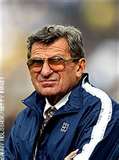
America has been rocked by the news of pedophilia in the football locker room of Penn State University, where living legend, Coach Joe “Joe Pa” Paterno  had strode the sidelines for 47 years.

Notice I said “had”.

Reuters.com gives us the latest developments:

Penn State University students were warned by local police not to take to the streets on Saturday at the football team’s final home game to protest the sacking of legendary coach Joe Paterno amid a sexual abuse scandal.

State College Police Department Captain John Gardner said he plans to have every officer working at the game against Nebraska, where some fear students may protest the ouster of Paterno after 46 years in charge of the team.

“It you truly support Coach Joe or Penn State, this is not the way,” Gardner told a news conference. “Stay off the street. The behavior of last night will not be tolerated.”

Chanting “Hell no, Joe won’t go” and “We want Joe back,” thousands of students took to the streets overnight to protest the decision, overturning a television van during a demonstration which some police dispersed using pepper spray.

Gardner said more than a dozen people were arrested when as many as 5,000 students protested on Wednesday evening in what he said degenerated into a “riotous mob.”

Pennsylvania State Police and the university police force will assist the town’s police on Saturday, Gardner said.

A child sexual abuse scandal brought down Paterno, one of the most iconic names in American sports, amid criticism he did not do enough to stop crimes allegedly committed by his long-time former assistant coach Jerry Sandusky.

Paterno, winner of two national championships and in his 46th year as head coach of the Nittany Lions, was criticized for not doing more to intervene when incidents of Sandusky’s abuse were brought to his attention in 2002.

Sandusky, 67, is accused of sexually abusing at least eight boys over more than a decade. Two other university officials have been charged with not reporting an incident in 2002 when Sandusky allegedly was seen sexually assaulting a child.

Lawyers for all three men have said they deny the charges and maintain their innocence.

Graham Spanier, Penn State’s president for 16 years and a family therapist by training, was also sacked on Wednesday.

Former athletic director Tim Curley and former finance official Gary Schultz were charged on Monday with failing to alert police after they were told Sandusky was seen molesting a young boy in the locker room showers in 2002. They were also charged with perjury in their statements to a grand jury.

Things are getting curiouser and curiouser.  Rumors abound, including one started by Pittsburgh radio host Mike Madden yesterday morning on the Dennis and Callahan Radio Show.

Madden wrote a remarkably accurate story about Sandusky and the problem at Penn State last April.

He told John Dennis and Gerry Callahan:

I can give you a rumor and I can give you something I think might happen. I hear there’s a rumor that there will be a more shocking development from the Second Mile Foundation — and hold on to your stomachs, boys, this is gross, I will use the only language I can — that Jerry Sandusky and Second Mile were pimping out young boys to rich donors. That was being investigated by two prominent columnists even as I speak.

What is the Second Mile Foundation?  According to their website:

The Second Mile is a nonprofit organization serving the youth of Pennsylvania. At The Second Mile, we are committed to helping young people achieve their potential as individuals and as community members and providing education and support for their parents and youth service professionals.

…The most recent reports we’ve read this past weekend state that Mr. Sandusky met the alleged victims through The Second Mile. To our knowledge, all the alleged incidents occurred outside of our programs and events. However, we are encouraging anyone with information regarding this investigation to contact investigators from the Office of Attorney General at 814-863-1053 or Pennsylvania State Police at 814-470-2238.

…The Second Mile was first contacted by the Attorney General’s office in early 2011. Since then, we have done everything in our power to cooperate with law-enforcement officials and will continue to do so.

Our highest priority always has been and will continue to be the safety and well-being of the children participating in our programs. We encourage program participants to report any allegations of abuse and/or inappropriate sexual activity wherever it has occurred, and we take any such reports directly to Child Protective Services. We have many policies and procedures designed to protect our participants, including employee and volunteer background checks, training and supervision of our activities.

The Second Mile has helped thousands of Pennsylvania’s children to lead better lives, and we remain committed to that mission. Our success is a result of the trust placed in us by the families and professionals with whom we partner, and we will take any steps needed to maintain their confidence in us.

There seems to be a lot of blame to be shared in this sorry, heinous, tragic situation.

As a college football fan, it grieves me to see it happen.  As a father and grandfather, I wish I had been there instead of that 28 year old Graduate Assistant who caught Sandusky with a little boy in the locker room shower.

I remember my father, who loved to laugh , buying a 45 rpm featuring a spoken word performance by Andy Griffith.  The title was “What It Was, Was Football”.

Andy, playing the same type of character he played to perfection in” No Time for Sergeants”, described his experiences while attending his very first football game.  At the end of the narrative, Andy said:

An’ I don’t know, friends, until this day what it was that they
was a-doin’ down there, but I have studied about it, and I think it’s
some kindly of a contest where they see which bunch-full of them
men can take that punkin an’ run from one end of that cow pasture
to the other’n without either gettin’ knocked down—
‘er steppin’ in somethin’ !

Penn State stepped in somethin’…and the depraved stench of it ain’t goin’ away anytime soon.