Last night, I had an epiphany. Looking back, I realize it was probably just gas. Anyway, I was going to write a dramatic piece for Good Friday from the Roman Centurion’s point-of-view. So I “binged” for information. I found this homily written by a Air Force Chaplin. It’s better than I ever could have done. It’s very fitting that this day when we remember Christ’s blood sacrifice for our sins, than we also need to remember the sacrifice of American men and women are making to preserve our freedom. May God Bless our fighting men and women and may God Bless America.
Christ and the Cross
From A Centurion’s Perspective
Chaplain Shannon K. Philio
Osan Air Base Chapel, Republic of South Korea – 1 April 2001
Arrival In Jerusalem
Were you there? I was there. I’m a Roman centurion, a military officer in charge of 100 soldiers. I have more pride than a pilot of an F-16, A-10, and U2 combined. I’m a soldier’s soldier. You talk about your men and women of the ASOG or the “Jolly Greens” of the Rescue Squadron. Mmph! I’m a soldier’s soldier. Deployed for one week in the Middle East, in Jerusalem. I didn’t want to be. But the Jews were having a special holiday, Passover, and Rome thought there might be trouble because of the crowds and because of a certain man and His followers, one Jesus of Nazareth. I had heard of this man. A friend of mine, another centurion, told me how his servant was miraculously healed by Him. I was curious. But I was also in no mood for these people’s religion. I didn’t want to be there, and I didn’t want trouble. We were peacekeepers. I arrived on Saturday, the Sabbath. Everything was quiet. I went to bed with the pleasant thought that one more week and I would be gone.
The Triumphal Entry
Sunday morning came quickly. I decided to explore the town, talk to people, see if there was any trouble floating around. Sitting in a downtown Jerusalem café, all of the sudden I noticed people running down the street. Then someone came in and yelled, “He’s coming. He’s coming.” Everyone ran out, and so I followed. We ran to the east side of Jerusalem, toward the Mount of Olives, which rose 200 feet higher than the city. And there, coming down the path was a man on a donkey, a symbol of humility, peace, and royalty. The people were throwing their cloaks on the road, an act of royal homage. The man even sat on some cloaks. And the crowds were yelling, “Hosanna! Hosanna!” which means, “Save now, O Lord.” The people were waving palm branches, used in celebrations of victory.
I asked, “Who is that man? What is His name?” and some little boy next to me cried out, “Why it’s Jesus! It is Jesus!” And as he said that name, I looked up again to the Mount, the name still ringing in my ears, and I could have sworn, in that brief moment, this man whom I had heard so much about was looking right at me, as if He looked straight into my heart, as if He had known me since all of eternity, as if He knew that over the next few days, my life would be changed forever.
I noticed the Jewish leaders were upset at this triumphal entrance. “Rebuke your disciples!” they commanded Jesus, because the people were calling Him king and lord. And Jesus replied, “I tell you the truth, if they keep quiet, these very stones will cry out.”
But then something strange occurred. This man, this king, started weeping. I was curious. What type of man enters as a king and yet is found to be weeping? I moved closer toward Him. He was looking over the city of Jerusalem when I heard Him say, “If only you had known this day what would bring you peace.” My heart lunged toward Him. “I want peace. Can you give me peace?” I wondered silently.
The Cleansing Of The Temple
Monday morning came quickly. I awoke to a shout. “Centurion, wake up! We have trouble in the temple!” I ran. And there He was, the weeping King, overturning tables of buyers and sellers in the Court of the Gentiles. “My house will be called a house of prayer for all nations!” He cried as he drove the merchants out. I wasn’t much of a praying man, but it did make me angry that the Jews made the only place we Gentiles were allowed into a noisy, smelly marketplace. People were driving their flocks through because it was a shortcut to the Mount of Olives. I would have stopped Him, but I agreed with Him. In the commotion, as I was trying to prevent a riot, I turned back toward Him, and He looked right at me, as if to say, “I cleared this for you.” This Jesus was winning my affection.
People brought the blind and the lame to Him, and He healed them. Before I thought He was just a man, but now, as I watched people who never walked, walk, and who couldn’t see, see, I knew there was something more to Him.
The children in the temple were praising Him as He did these miracles. “Hosanna to the Son of David.” The priests and scribes rebuked Him, and Jesus replied, “Haven’t you heard, from out of the mouths of babes and infants, You have ordained praise.” I asked someone next to me why that saying so upset the Jewish leaders, and someone said, “He is quoting Psalm 8 where God ordains worship for Himself from the lips of children, and now Jesus is claiming that prerogative, that He is God.”
“He is God!? He is God!?”
And then I heard the chief priests and teachers whispering, “We have to kill Him!”
That got my attention. Now I had a reason for being here in Jerusalem.
The Teachings
Tuesday passed quickly and peaceable. I kept an eye on the Jewish leaders and on Jesus. They questioned His authority as He taught in the temple. One of His teachings caught my ear because it involved my boss, Caesar. The Pharisees asked Him, “Teacher, is it right to pay taxes to Caesar or not?” If He said yes, He upset the people. If He said no, He upset me. I would have to act. What would He do? What would He say? He took a coin and asked whose inscription was upon it. Someone answered, “Caesar’s.” “Then give to Caesar what is Caesar’s and to God what is God’s.” Everyone was amazed, including myself. He taught with such authority and truth. He taught about loving God and loving neighbor. I wanted to stay and listen all day, but I had a job to do.
The Betrayal
On Wednesday, my job paid off. I saw one of His own disciples, one named Judas Iscariot, going to the chief priests and officers of the temple guard. I moved in close enough to hear their conversation. Judas was discussing ways how he might be able to betray Jesus, how he might hand Jesus over to them, perhaps when Jesus was alone and the people were not around so as not to cause a riot. They gave him thirty silver coins. I wrote on my scroll, “Keep an eye on Judas.”
The Garden
Thursday evening came. I heard Jesus and His disciples were eating in an upper room of a certain house, so I posted guard. Late into the evening, I saw the one called Judas running out of the house, looking half crazed, almost demon possessed. I followed him. He went to the chief priests and the elders. I overheard him saying, “Jesus will be in the Garden of Gethsemane this evening praying. No one will be around except for His disciples, and they will probably be sleeping. Now is the perfect time to capture Him.”
They began working on forming a lynch mob. I used the time to run ahead, to warn Him, not so much because I liked Him, that I had bought wholeheartedly into His message, but because I had a duty to uphold the peace. If something happened to Him now, the people, the city, might riot. But deep in my heart I knew the latter reason was not the real reason. I ran to the Garden because I did like Him, because something was pulling my heart toward Him.
And there He was, kneeling, by Himself, in prayer. He couldn’t see me. I was behind some bushes, watching. As I moved closer, I could have sworn, but no, it must have been the lighting, but I could have sworn, He was sweating blood. I was awestruck, paralyzed by the sight. And then, I knew I shouldn’t have had that second glass of wine, but I thought I saw an angel. I had heard about them, but never believed in them, but there it was, strengthening this man who was in so much pain, anguish, agony. Moving closer, I stepped on a twig. It snapped. I looked down and cursed. Looking back up, the angel had disappeared. And now, eye to eye, Jesus was looking at me. I wanted to run out to Him, to help Him, to tell Him what was about to happen. But I couldn’t move. It seemed as if eternity had passed, as if we were staring at each other forever, as if He were looking right into my soul, knowing everything about me. The grief on His face, the sorrow, and yet love, mixed into one face, and then the words within my head, “Stay where you are. Don’t worry. I’m in control. This is something I must do!” I was mesmerized.
The Arrest
And then I heard voices, a mob. I snapped to as I saw Judas approaching with a detachment of soldiers and a large crowd, including officials, carrying torches, lanterns, swords, and clubs. They stayed their distance as Judas went ahead into the Garden, right up to Jesus, and kissed Him. And then they moved.
Jesus approached them and asked, “Who is it that you want?” And they answered, “Jesus of Nazareth.” “I am He,” Jesus replied and with such authority and power that the mob drew back and fell to the ground. I thought, “What fools. They are playing right into His hands. Jesus was in full control of the situation.” What was His game?” I wondered.
One of Jesus’ disciples, a rash sort of man, cut off one of the men’s ears. And what happened next astounded me. “Put your sword back in its place,” Jesus stated, “for all who draw the sword will die by the sword.” Those words pierced my heart. For I lived by the sword. And then Jesus took the ear, put it back in place, and healed him.
They took Jesus to Annas, who used to be the high priest in Jerusalem. We Romans deposed him in AD 15, but the Jews still looked to him for spiritual guidance. Annas questioned Jesus, and Jesus replied, “I was always in the temple or synagogues. Ask the Jews your questions about me.” At which point one of the officials struck Him in the face. “Is this how you answer the high priest.” And then they took Him, still bound, to Caiaphas, the high priest at the time.
Caiaphas commanded Jesus, “I charge you under the oath of the living God: Tell us if you are the Christ, the Son of God.” Jesus replied, “I am.” And then it got crazy. Caiaphas yelled, “Blasphemy!” and tore his clothes. They began spitting on Jesus and struck Him with their fists. The soldiers guarding Him blindfolded Him and slapped Him, mocking, “Prophecy to us Christ. Who hit you?” And they beat Him.
The Denial
Thursday night was quickly becoming Friday morning. The dawn was beginning to break. They were taking Jesus from Caiaphas’ to a meeting of the Sadducees and Pharisees and teachers of the law called the Sanhedrin. As they were crossing the courtyard, Jesus being shoved and spat upon, a rooster crowed. And time stopped for that moment as Jesus turned His head and stared at one of His disciples, the same one who had cut off the man’s ear in the Garden, and I didn’t understand, but there was such sorrow and disappointment and yet love in Jesus’ eyes as He looked straight into His disciple’s eyes. “What happened?” I wondered. The disciple ran out quickly, weeping.
To The Sanhedrin
The Jewish high priest and the leaders, called the Sanhedrin, on Friday morning, all assembled, asked Jesus one more time, “Are you the Son of God?” and He replied, “You rightly say that I am.” And they sent Him off to Pilate, the Roman governor of Judea.
You see, the Jews had no power to put anyone to death. Only the Roman government could do that. So they sent Him to Pilate hoping for such a sentencing. What a sight. This innocent man, being led by all the Jewish religious leaders, right up to Pilate’s front door.
At Pilate’s
It was chaos. The Jews were yelling. Pilate was trying to figure out what was the problem. I was there to protect Pilate, a Roman government official. I heard Pilate ask, “Are you the king of the Jews?” Jesus replied, “It is as you say.” “I find no charge against this man,” Pilate later said, which drove the Jews crazy. “He stirs up trouble by His teaching, from Galilee all the way to here.” On hearing Jesus was from Galilee, he sent Him down the street to Herod Antipas who was the Jewish governor of Galilee at the time, visiting Jerusalem for the Passover feast. “Better to pass this one off,” Pilate reasoned. “TGIF.”
To Herod
On the way to Herod’s, I heard people talking. “The one name Judas has hung himself.” The situation was beginning to get out of hand. When we arrived at Herod’s, he asked Jesus lots of questions. Jesus answered none of them. Completely silent. I thought to myself, “Say something. Defend yourself.” The Jewish leaders were there mocking Him. Herod and his men of war ridiculed and mocked Him, dressing Him with a purple robe and then sent Him back to Pilate, hoping for a death penalty.
Back To Pilate
Pilate told them, “I can find no charge against Him and neither could Herod.” He asked the crowds, “What do you want me to do with Him?” and they replied, “Crucify Him!” “For what crime? I’ll have Him flogged and then release Him,” he said. Pilate handed Him over to the soldiers, to my soldiers, to be flogged.
The Flogging And Mocking
Roman floggings were brutal, so much so that sometimes the victims died before the crucifixion. The flogging was done with a multi-stranded leather whip. On the ends of the whip were tied bits of bone and lead. The whip would be struck against the bare back of the accused. The Jews had a limit of 40 lashes and so would only count to 39 lest they made a mistake. We Romans had no limit.
I thought to myself, “Surely now He’ll make His move.” But He didn’t. There was no rescue party. I could do nothing now but my job. All I could do was watch as my man scourged Him something fierce. His flesh was ripped apart.
Afterwards, weakened by the blows, Jesus was further mocked by the soldiers. They stripped Him of His clothing and put the purple robe back on Him. They put a crown of thorns upon His head and a staff in His right hand and mocked Him, “Hail, King of the Jews! Hail, King of the Jews!”
And then I watched as one of the soldiers took the staff from Him and struck Him again and again upon the head, pressing the thorns further into His scalp, the blood trickling down His face. They spit on Him. They struck Him in the face. And then they took Him back to Pilate.
Pilate brought Him out before the people, “Behold the man! Behold your king!” hoping that the flogging would appease them. Then he asked whom he should release, for he was allowed during the Passover to release a prisoner to the crowd. “Who should I release, Barabbas, a murderer, or Christ?” and with one voice the people answered, “Release Barabbas!” “And what about Jesus, what should I do with Him?” and the crowds went crazy, yelling, “Crucify Him! Crucify Him!”
They pulled the robe off of Jesus and put His own clothes back on Him. When they pulled the robe off, the wounds were reopened as the robe had stuck to the already dried blood. They led Him away to be crucified, down the Via Dolorosa, the Way of Suffering and Sorrow.
The time was the third hour, about 9 a.m., on Friday morning.
The Crucifixion And Death Of Christ
Jesus was weakened by the flogging. He couldn’t carry the crossbeam which weighed about thirty to forty pounds for the cross He would be crucified upon. A man named Simon was conscripted to carry it. The crowds were crazy. Women were following, wailing, mourning. We took Him to Golgatha, the place of the skull. Golgotha is Aramaic for skull. The Latin word for skull is Calvaria, thus the name of the place, Calvary.
We Romans crucified the basest of criminals, slaves, and enemies of Rome. Crucifixions were cruel. We would take heavy, wrought, iron nails and drive them through the victim’s wrists onto the crossbeam and the feet onto the vertical beam. And then we would lift the victim up so that the weight caused difficulty breathing. To ease the pain, the victims would lift with their feet, easing breathing but bringing great agony to the feet. Sometimes the pain would prolong for days.
I was amazed as I heard Jesus say as they drove the nails into His wrists and heels, “Father, forgive them, for they know not what they do.”
The people, the chief priests and rulers, and the teachers of the law mocked Him. They heaped insults upon Him and spat upon Him. Two rebels, insurrectionists, charged with treason against Rome, were also crucified with Him, one on each side, and they heaped insults upon Him. “Save yourself if you are the Son of God,” the crowds mocked. One of the criminals later repented. “This man has done nothing wrong.” And I thought as I sat under the cross, “Yes, he is right!” “Jesus, remember me when You come into Your kingdom,” the criminal said. And Jesus answered, “I tell you the truth, today you will be with me in paradise.”
And then Jesus looked at me, and I thought as I stared at Him, “I want to be in paradise too.”
The women were wailing. There were four of them nearby, one of them being His mother, Mary. And next to her was a disciple whom Jesus seemed to have loved very much. And when He saw them both, He said, “Woman, behold your son!” And then to the disciple, “Behold, your mother!”
And I thought to myself, “Incredible! Even in the midst of dying on the cross, in a time of intense physical pain and mental anguish, this Jesus was thinking of others.” And the words came back to my mind, “Father, forgive them, they know not what they do.” Still in control. Still strong. Still ministering and thinking of others.
Three hours had passed. It was noon on that Friday. For the next three hours, it was completely dark. “What was happening?”
At the ninth hour, about 3 p.m., after hanging on that cross for six hours, He cried, “Eloi, Eloi, lama sabachtani,” – “My God, my God, why have You forsaken Me?” Such agony, such pain, as if He were experiencing Hell, as if all the sins of the world were placed upon Him. I later learned that at this moment His Father’s face was turned away from Him, this Jesus who from all eternity knew nothing but perfect, infinite, joyful bliss and communion with His Father, and now His Father had turned His face away from His Son. He who knew no sin had become sin in our place. I tried to close my ears. I tried to close my eyes. And then it stopped.
I looked at Him. He seemed tired, exhausted.
“I am thirsty,” He said. They gave Him wine mixed with gall, a bitter, sour vinegar, to mock Him and to keep Him revived to prolong the suffering.
Afterwards, Jesus said, “It is finished.” “What is finished?” I wondered. He seemed to be speaking about something more than His life.
And then in a loud voice, He cried out, “Father, into Your hands I commit My spirit.” He didn’t go out weak. As was apparent by His voice, He was still strong. And He was still in control, as if He were waiting for all things to be fulfilled before He gave up His life, not anybody taking it from Him.
He breathed His last.
The curtain in the temple, which separated the Holy Place from the most Holy Place, was torn in two from top to bottom. There was a big earthquake. Rocks split open. Tombs were broken open. Later, bodies of many holy people who had died would rise to life and walk through the city.
I was terrified. I thought the end of the world had come. And I looked up at this man who days before was entering the city with palm branches waving, a man now at peace, as if He had a smile upon His lips, such beauty, such love, and I praised God and then exclaimed, “Surely this was a righteous man, surely He was the Son of God!”
The Sabbath was quickly approaching that Friday afternoon. The Jews didn’t want the bodies left on the crosses. Pilate gave them permission to remove them. Before taking Jesus down, one of my men took a spear before I could stop him and pierced it through Jesus’ side. To the end, even while He was dead, brutality and cruelty were shown Him. The blood flowed like crazy, some splattering upon my forehead. Lots of water flowed as well. I was tired. Exhausted. I wiped the blood with my hand and looked at it, shaking my head as I walked away to let my men do their job, thinking to myself, “Here was one, fully man and fully God, who loved the world so much as to die on an old rugged cross.”
Conclusion
My name is Shannon Philio. Some 2000 years ago . . .
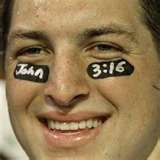
John 3:16 – God the Father so loved the world that He sent His only begotten Son that whosoever should believe in Him shall not perish but have everlasting life.
Romans 3:23 – For all have sinned and fallen short of the glory of God.
Romans 6:23 – For the wages of sin is death, but the gift of God is eternal life in Christ Jesus our Lord.
Romans 10:9 – If you confess with your mouth, “Jesus is Lord,” and believe in your heart that God raised Him from the dead, you will be saved.
Acts 4:12 – Salvation is found in no one else, for there is no other name under Heaven given to men by which we must be saved than the name Jesus Christ, our Lord and Savior.
Let us pray.
-Capt. Shannon K. Philio, Chaplain, USAF
This sermon may be used in any way that is useful to proclaim the Gospel of Jesus Christ. To ask about the sermon or to seek further resources, Contact Chaplain Philio.

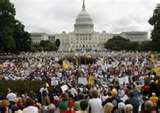
 This past Thursday, we had two rulings aimed at Christians that made the national news. The first ruling came from U.S. District Judge Barbara Crabb (a Clinton appointee), who ruled that the National Day of Prayer, scheduled for May 6th, was unconstitutional. Crabb wrote in her ruling (excerpt):