
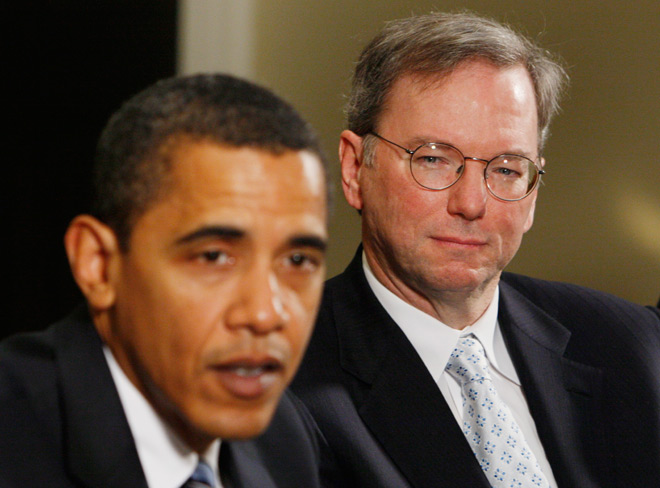
 Barack Hussein Obama (mm mmm mmmm) and his minions want the FBI to have the power to make companies turn over records of an individual’s Internet activity without a court order if agents deem the information relevant to a terrorism or intelligence investigation.
It comes down to just four words which the administration wants to add to a list of items that the law says the FBI may demand without a judge’s approval. Those words are electronic communication transactional records. According to government lawyers this would include the addresses to which an Internet user sends e-mail; the times and dates e-mail was sent and received; and possibly a user’s browser history. The lawyers are very quick to point out that it would not include the “content” of e-mail or other Internet communication. Uh Huh.
While Obama and the gang are trying to portray this breach of freedom as a technical clarification designed to remedy a legal ambiguity, industry lawyers and privacy advocates say this would be an expansion of the power the government wields through national security letters. The letters, which can be issued by an FBI field office on its own authority, require the recipient to provide the requested information and to keep the request secret. These letters are how the government would obtain the electronic records.
Stewart A. Baker is a former senior Bush administration Homeland Security official who practices national security and surveillance law. According to him, the proposed change would broaden the bureau’s authority:
It’ll be faster and easier to get the data. And for some Internet providers, it’ll mean giving a lot more information to the FBI in response to an NSL.
A lot of Internet service providers have resisted the government’s demands to turn over electronic records. They argue that surveillance law as written does not allow them to do so, advised by industry lawyers . One anonymous senior administration government official countered that “most” Internet or e-mail providers do turn over such data.
As seen by disillusioned Liberals, the move is another example of an administration retreating from campaign pledges to enhance civil liberties in relation to national security.
Michelle Richardson, American Civil Liberties Union legislative counsel said that the proposal is:
…incredibly bold, given the amount of electronic data the government is already getting.
Of course, if Scooter gets his wish, the effect would be to greatly expand the amount and type of personal data the government can obtain without a court order. Liberals can not believe what they are hearing.
Michael Sussmann, a Justice Department lawyer under President Bill Clinton who now represents Internet and other firms, states the obvious:
You’re bringing a big category of data — records reflecting who someone is communicating with in the digital world, Web browsing history and potentially location information — outside of judicial review.
If hindsight is 20/20, how valuable would the ability to chart future activities accurately from internet chatter be?
The investment arms of the CIA and Google are both supporting Recorded Future, a company that monitors the web in real time — and says it uses that information to predict the future.
The goal is to figure out for each incident the actors, the location, and when it’s going down. The company then analyzes the online information, showing “momentum” for any given event.
According to company CEO Christopher Ahlberg, a former Swedish Army Ranger with a PhD in computer science:
The cool thing is, you can actually predict the curve, in many cases.
And that’s the reason the 16-person Cambridge, Massachusetts, firm now has two ardent suitors in Google Ventures, the search giant’s investment division, and in In-Q-Tel, which handles similar duties for the CIA and the wider intelligence community.
This is not the first time Google has done business with America’s spy agencies. Long before it reportedly enlisted the help of the National Security Agency to secure its networks, Google sold equipment to the secret signals-intelligence group. In-Q-Tel backed the mapping firm Keyhole, which was bought by Google in 2004 — and then became the backbone for Google Earth.
But this is the first time that the intelligence community and Google have provided the money for the same startup company at the same time. Nobody’s saying that Google is buddy-buddy with the CIA. However, the investments are going to feed the theories of the critics of Google, who believe the search giant is in some sort of business arrangement with the U.S. government.
America’s espionage agencies have become more focused in using “open source intelligence”. That’s information that’s available to everyone, but often hidden in the daily avalanche of TV shows, newspaper articles, blog posts, online videos and radio reports.
Then CIA-director General Michael Hayden told a conference in 2008:
In fact, there’s a real satisfaction in solving a problem or answering a tough question with information that someone was dumb enough to leave out in the open.
Secret information isn’t always the brass ring in our profession.
Google’s fans claim that just because Google and In-Q-Tel have both invested in Recorded Future doesn’t mean Google is working with the Obama Administration. Goggle’s critics insist that the Obama Administration and the Mountain View, California, company joined forces a long time ago.
Google CEO Eric Schmidt hosted a town hall at company headquarters in the early days of Obama’s presidential campaign. Senior Obama administration officials like economic chief Larry Summers give speeches at the New America Foundation, the left-of-center think tank chaired by Schmidt. Former Google public policy chief Andrew McLaughlin is now the White House’s deputy CTO, and was publicly (if mildly) reprimanded by the administration for continuing to hash out issues with his former colleagues. Nope, not involved with each others at all.
Thirty seven state Attorneys General are demanding answers from the company after Google gathered up 600 gigabytes of data from open Wi-Fi networks as it snapped pictures for its Street View project. (The company swears the incident was an accident.) Uh Huh.
John M. Simpson, professional corporate critic, told a Congressional hearing in a prepared statement:
Assurances from the likes of Google that the company can be trusted to respect consumers’ privacy because its corporate motto is ‘don’t be evil’ have been shown by recent events such as the ‘Wi-Spy’ debacle to be unwarranted.
Steven Aftergood of the Federation of American Scientists says he isn’t worried about the Recorded Future deal. Yet:
To me, whether this is troublesome or not depends on the degree of transparency involved. If everything is aboveboard, from contracts to deliverables, I don’t see a problem with it. But if there are blank spots in the record, then they will be filled with public skepticism or worse, both here and abroad, and not without reason.
It this weren’t so scary, it would be funny. Under the administration of a guy who hung out all his life with revolutionary radicals who railed against The System, America is being threatened with the loss of Freedom of Speech, one of the very freedoms that those hippies were fighting The Man for, so long ago.
Sources: drudgereport.com, wired.com, washingtonpost.com
 Kingsjester's Blog
Hey KJ, passing it on. Thanks for all your hard work.
LikeLike
I’m confused. I thought the left hated the Patriot Act because they felt it violated privacy rights…
…Where the heck is the ACLU?
LikeLike
Hey Liberal voters, wake up!!!!! Your freedom is going down the toilet too.
LikeLike
First, the Won continues the evil Boooooosh’s policies…Then, like a good little Alinskyite, he takes them farther, much farther…
LikeLike
“It this weren’t so scary, it would be funny. Under the administration of a guy who hung out all his life with revolutionary radicals who railed against The System, America is being threatened with the loss of Freedom of Speech, one of the very freedoms that those hippies were fighting The Man for, so long ago.”
But. but Bush….???
Another excellent blog!
LikeLike
This doesn’t just go to our freedom of speech, it attacks our freedom of association.
LikeLike
“technical clarification” So cleverly worded… but the fact that the lawyers are tripping over themselves to justify it and to “calm” our worries, petrifies me.
LikeLike