
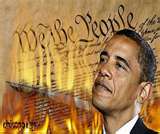
 This past Thursday the Federal Communications Commission made a big move towards adopting new regulations for the broadband industry. Internet for everybody! The reaction to this move will probably be the launch of one of the most expensive lobbying campaigns ever to hit Capitol Hill by major telecommunications and cable providers.
Democrats at the FCC, in a 3-2 vote along party lines, decided that they would start formal consideration to adopt new rules for high- speed internet companies such as AT&T and Comcast. Until now, these companies have done business practically free of oversight from the FCC. In political technical terms, the Democrat majority in the FCC passed a motion to “open for comment” new broadband rules. This is the first step to passing the rules.
This move puts the White House in opposition to the Democrats in Congress, a lot of whom support AT&T, Verizon and others and are against the FCC’s plan. This will also be a test of the lobbying machine of Google and other Liberal technology groups. These groups are gung-ho for greater regulation of broadband companies. However, they have less experience in Washington than the communications industry.
FCC chairman Julius Genachowski had previously announced that the FCC only wanted limited enhancement to its regulatory powers. But the legal change Mr Genachowski is going after, changing the classification of broadband providers from Title I information services to Title II telecommunications services, would legally give the FCC far greater authority to enforce rate changes and unbundling.
Obama’s minions in the FCC face a bunch of Lobbyists from the communications industry who have a whole lot of friends on Capitol Hill.
Thursday, ATT spoke out against the FCC proposal, saying it created “investment uncertainty at a time when certainty is most needed” and could cost jobs. They also said it was all for handing the issue to Congress, a prospect “far less risky to jobs and investment than the FCC’s current path”.
The Democratic chairman of the Senate commerce committee, which oversees the FCC, Senator Jay Rockefeller, said he supported the FCC, but added:
In the short-term, this is the right course and the right thing to do. In the long-term, I believe we need to develop consensus to update the law, further safeguard consumers, and spur universal broadband deployment.
In a related issue, the nation’s homeland security chief said Friday that fighting homegrown terrorism by monitoring Internet communications is a civil liberties trade-off the U.S. government must make to beef up national security.
Homeland Security Secretary Janet “Big Sis” Napolitano said:
As terrorists increasingly recruit U.S. citizens, the government needs to constantly balance Americans’ civil rights and privacy with the need to keep people safe. Uh Huh.
But, according to Liberals, finding that “balance” has become more complex since homegrown terrorists have used the Internet to reach out to extremists abroad for inspiration and training. Contacts over the Internet are being blamed for a recent upswing in U.S.-based terror plots and incidents. Gosh, could it just be that we have President Pantywaist in office?
Napolitano told a gathering of the American Constitution Society for Law and Policy:
The First Amendment protects radical opinions, but we need the legal tools to do things like monitor the recruitment of terrorists via the Internet.
Napolitano and the rest of the administration are trying to assure its Far Left Moonbat Base that this effort to monitor the Internet will not lead to the government confiscation of American rights. If you believe this, Libs, there’s a well in the Gulf of Mexico I want to sell you.
Here comments seem to back up concerns over all the recent terror attacks over the past year, under Obama’s watch, where legal U.S. residents such as Times Square bomber Faisal Shahzad and Fort Hood, Texas, shooter Maj. Nidal Hasan, are believed to have been, at least partially, inspired by the Internet postings of violent Islamic extremists.
However, the fact that these are U.S. citizens or legal residents raises many legal and constitutional questions.
“Big Sis” proclaimed that it is wrong to believe that if security is embraced, liberty is sacrificed.
We can significantly advance security without having a deleterious impact on individual rights in most instances. At the same time, there are situations where trade-offs are inevitable.
She cited the struggle to use full-body scanners at airports caused worries that they would invade people’s privacy as an example.
The scanners we put in place after explosives were successfully brought on board the Detroit-bound airliner on Christmas Day by Nigerian Umar Farouk Abdulmutallab. Luckily, his underwear-hidden bomb failed to detonate.
Napolitano said that the government has worked to put in place a number of restrictions on the scanners’ use in order to minimize that. The scans cannot be saved or stored on the machines, and Transportation Security Agency workers can’t have phones or cameras that could capture the scan when near the machine.
If it was anybody other than this administration attempting this, I would probably feel better. This administration is getting desperate in their bid to turn the Internet into a public utility. By doing so, they can monitor it, in a style reminiscent of Hugo Chavez. They will put their “boot on the throat” of Conservative websites, while allowing Liberal propagandist websites, like Media Matters and Huffington Post, just 2 of the 597 Liberal websites that George Soros funds, to spread their lies and propaganda unopposed. For extensive information about all these websites, please visit discoverthenetworks.org.
The United States Bill of Rights, introduced by James Madison in 1789 as a series of constitutional amendments, came into effect on December 15, 1791. Its First Amendment states:
Congress shall make no law respecting an establishment of religion, or prohibiting the free exercise thereof; or abridging the freedom of speech, or of the press; or the right of the people peaceably to assemble, and to petition the Government for a redress of grievances.
Make no mistake about it, if this administration is successful in their quest to turn the Internet into a public utility, it will cease to be a forum for Free Speech, and become nothing by a propaganda tool.
Chavez will whole-heartedly approve.
Sources: ft.com, foxnews.com, discoverthenetworks.org, newworldencyclopedia.org


Wake up Liberals!!!!! If GW would have gone this far, everyone, including Conservatives would have been up in arms.
LikeLike
This is nothing but a power grab. What the libs seem to forget is they won’t always have the Executive Branch…
LikeLike
Pingback: Never Too Late To Learn
Like I’ve been saying, everyone needs to prepare mentally for the loss of this type of communication. If China can censor the net,…
LikeLike
LikeLike
Yet another step as the government tries to push through the whole concept of the fairness doctrine. This will most certainly prove to be nothing more than a thinly disguised means for the government to start taking control of information. In the end, it will be just one step closer to completely undermining the power of a democracy.
LikeLike