
 Do you remember the end of the third “Terminator” movie? John Connor was watching helplessly from a mountain bunker as a fully autonomous software system launched nuclear missles and devastated the planet.
Far-fetched, you say? Au contraire.
The Washington Post reports that
The United Nations, looking to modernize its peacekeeping operations, is planning for the first time to deploy a fleet of its own surveillance drones in missions in Central and West Africa.
The U.N. Department of Peacekeeping has notified Congo, Rwanda and Uganda that it intends to deploy a unit of at least three unarmed surveillance drones in the eastern region of Congo.
The action is the first step in a broader bid to integrate unmanned aerial surveillance systems, which have become a standard feature of Western military operations, into the United Nations’ far-flung peacekeeping empire.
But the effort is encountering resistance from governments, particularly those from the developing world, that fear the drones will open up a new intelligence-gathering front dominated by Western powers and potentially supplant the legions of African and Asian peacekeepers who now act as the United Nations’ eyes and ears on the ground.
“Africa must not become a laboratory for intelligence devices from overseas,” said Olivier Nduhungirehe, a Rwandan diplomat at the United Nations. “We don’t know whether these drones are going to be used to gather intelligence from Kigali, Kampala, Bujumbura or the entire region.”
Developing countries fear Western control over intelligence gathered by the drones. Some of those concerns are rooted in the 1990s, when the United States and other major powers infiltrated the U.N. weapons inspection agency to surreptitiously collect intelligence on Iraqi President Saddam Hussein’s military.
The growing American use of drones in Pakistan, Yemen and elsewhere to identify and kill suspected terrorists has only heightened anxieties about their deployment as part of multilateral peacekeeping missions.
U.N. officials have sought to allay the suspicions, saying there is no intention to arm the drones or to spy on countries that have not consented to their use.
The U.N. drones would have a range of about 150 miles and can hover for up to 12 hours at a time. They would be equipped with infrared technology that can detect troops hidden beneath forest canopy or operating at night, allowing them to track movements of armed militias, assist patrols heading into hostile territory and document atrocities.
“These are really just flying cameras,” said one U.N. official who spoke on condition of anonymity because of the sensitivity of the topic. “Our best method of protection is early warning. We recently had a patrol ambushed in Darfur. If you had a drone ahead of the patrol, it could have seen the ambush party.”
“If you know armed groups are moving in attack or battle formation early enough, you can warn civilians,” the official added.
The United Nations, which manages a force of more than 100,000 blue helmets in 15 peacekeeping missions, views drones as a low-cost alternative to expensive helicopters for surveillance operations.
Wait a cotton-pickin’ minute. Did that report say that unmanned drones were in use in OUR country, the good ol’ U.S.A.?
You betcha, Red Ryder.
As foxnews.com reported on May 14th, 2012
Unmanned drones could soon be buzzing in the skies above many U.S. cities, as the federal government green-lights the technology for local law enforcement amid widespread privacy concerns.
The Federal Aviation Administration on Monday began to explain the rules of the sky for these newly licensed drones at potentially dozens of sites across the country. The agency, on its website, said that government “entities” will have to obtain a special certificate in order to fly the aircraft, adding that the FAA is “streamlining the process for public agencies to safely fly (drones) in the nation’s airspace.”
In doing so, the government is taking a tool that has become synonymous with U.S. counterterror warfare in countries like Pakistan and Yemen — and putting it in the hands of U.S. law enforcement.
Unlike some of the drones used overseas, these will not be equipped with missiles. They are to be used purely for surveillance. But that alone has raised serious privacy concerns on Capitol Hill and beyond.
“Our Founding Fathers had no idea that there would be remote-control drones with television monitors that can feed back live data instantaneously — but if they had, they would have made darn sure … that these things were subject to the Fourth Amendment (protecting individual privacy),” Rep. Joe Barton, R-Texas, told Fox News.
Drones have already been employed domestically. In what was described as the first case where an unmanned drone was used to arrest an American citizen on U.S. soil, a North Dakota SWAT team reportedly borrowed a Department of Homeland Security drone to monitor Rodney Brossart — who was involved in a 16-hour standoff at his North Dakota farm over six cattle that had wandered onto his property and which he claimed as his own. The SWAT team apparently used the drone to make sure it was safe to arrest him, though his lawyer has since claimed Brossart was subjected to guerrilla-like police tactics and had his constitutional rights violated.
Advocates, though, say the drones are a force-multiplier for local cops.
“They’re not going to be used for constant surveillance — typically they can stay in the air for about 30 minutes, so they’re only going to be used for specific missions,” said Gretchen West, executive vice president of the Association for Unmanned Vehicle Systems International.
She said the drones would help law enforcement have “more eyes in the sky to help … assist them when they’re going into potentially volatile situations.”
Lawmakers like Barton say there are “legitimate uses” for drones on U.S. soil, but that strict privacy standards will be needed.
“It would be okay for a drone to be used in order to make sure that all the cattle on a ranch are identified on an ongoing basis. It’s okay … to survey a forest to make sure there are no forest fires. But it would not be okay if that individual who purchased the drone then decided ‘I think I’ll go and check and see what’s going on over in my neighbor’s backyard’,” Rep. Ed Markey, D-Mass., said. “That would be wrong and that has to be protected against.”
And, if the thought of spies in the sky is not enough to scare you, how’s this story reported by the BBC grab ya?
A laser weapons system that can shoot down two drones at a distance of over a mile has been demonstrated by Rheinmetall Defence.
The German defence firm used the high-energy laser equipment to shoot fast-moving drones at a distance.
The system, which uses two laser weapons, was also used to cut through a steel girder a kilometre away.
The company plans to make the laser weapons system mobile and to integrate automatic cannon.
The 50kW laser weapons system used radar and optical systems to detect and track two incoming drones, the company said. The nose-diving drones were flying at 50 metres per second, and were shot down when they reached a programmed fire sector.
If these lasers can shoot down unmanned drones, what, or who else can they be aimed at?
Waging war by pushing buttons. How…sanitary.
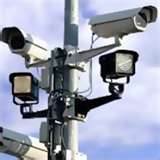
Unmanned Drones watching our every move. Will “Skynet become self aware”?
Until He Comes,
KJ
 Kingsjester's Blog