Smart Power! Vs. Jihad: Guess Which is Winning?

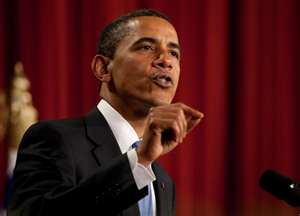
muslimredbeardBack on May 20, 2011, President Barack Hussein Obama (mm mmm mmmm) made a speech before a select group (and the television cameras, of course) gathered in the offices of the U.S. State Department. The purpose of the speech was to outline his wonderful Foreign Policy of Smart Power! and how he intended to had the ongoing “Arab Spring” and the growing tension between Israel and the Palestinians.

…The question before us is what role America will play as this story unfolds. For decades, the United States has pursued a set of core interests in the region: countering terrorism and stopping the spread of nuclear weapons; securing the free flow of commerce and safe-guarding the security of the region; standing up for Israel’s security and pursuing Arab-Israeli peace.

We will continue to do these things, with the firm belief that America’s interests are not hostile to people’s hopes; they’re essential to them. We believe that no one benefits from a nuclear arms race in the region, or al Qaeda’s brutal attacks. We believe people everywhere would see their economies crippled by a cut-off in energy supplies. As we did in the Gulf War, we will not tolerate aggression across borders, and we will keep our commitments to friends and partners.

Yet we must acknowledge that a strategy based solely upon the narrow pursuit of these interests will not fill an empty stomach or allow someone to speak their mind. Moreover, failure to speak to the broader aspirations of ordinary people will only feed the suspicion that has festered for years that the United States pursues our interests at their expense. Given that this mistrust runs both ways –- as Americans have been seared by hostage-taking and violent rhetoric and terrorist attacks that have killed thousands of our citizens -– a failure to change our approach threatens a deepening spiral of division between the United States and the Arab world.

And that’s why, two years ago in Cairo, I began to broaden our engagement based upon mutual interests and mutual respect. I believed then -– and I believe now -– that we have a stake not just in the stability of nations, but in the self-determination of individuals. The status quo is not sustainable. Societies held together by fear and repression may offer the illusion of stability for a time, but they are built upon fault lines that will eventually tear asunder.

So we face a historic opportunity. We have the chance to show that America values the dignity of the street vendor in Tunisia more than the raw power of the dictator. There must be no doubt that the United States of America welcomes change that advances self-determination and opportunity. Yes, there will be perils that accompany this moment of promise. But after decades of accepting the world as it is in the region, we have a chance to pursue the world as it should be.

Unfortunately for the safety of our nation, Obama’s policy of Smart Power! has been, and continues to be, an utter failure. The four brave Americans who were savagely murdered the night of September 11, 2012 at the US Embassy Compound in Benghazi, Libya would agree, if they were still alive  to do so.

Obama’s sucking up to the Radical Muslim Brotherhood in Egypt and elsewhere in the Middle East has not won the barbarians over to our side. They still want to destroy “The Great Satan”.

And, judging from the following statement, I would wager to say, that they believe that our President is a wuss.

Why should they be different?

Al-Qaeda’s military chief in Yemen warned Americans in an audio message posted online Sunday that the Boston bombings revealed a fragile security as he urged Muslims to defend their religion.

Qassim al-Rimi, the military chief of Al-Qaeda in the Arabian Peninsula, said making bombs such as the ones used in the twin blasts in Boston in April, is within “everyone’s reach”.

“The Boston events… and the poisoned letters (sent to the White House), regardless of who is behind them, show that your security is no longer under control, and that attacks on you have taken off and cannot be stopped,” he said, in the message entitled: “A letter to the American people.”

“Every day you will be hit by the unexpected and your leaders will not be able to defend you,” warned the man whose organisation is considered by Washington the world’s most dangerous Al-Qaeda branch.

Rimi said the killing of Al-Qaeda’s founder Osama bin Laden in May 2011 and top Yemeni-American cleric Anwar al-Awlaki in September 2011, had not ended the struggle.

“Have you eliminated the jihadist groups that have spread everywhere after they had only been in Afghanistan? Today, they are in your land or close to it,” he warned.

To the Muslims in the United States, he said: “We encourage you to carry on with this way, be steadfast in your religion.

“Carry out your obligations, defend your religion and follow in the footsteps of those who supported their religion and Ummah (Muslim nation) while they are in their enemy’s den,” he said.

The “religion of peace”, my hindquarters.

Perhaps Obama should send that Federal Attorney from Tullahoma, Tennessee, who is warning us all about talking mean about Muslims on the Internet,  over to Yemen to talk to this Mad Mullah.

I am sure that the attorney would be just as effective as Smart Power!

God protect us.

Until He comes, KJ

“Smart Power” + North Korea = Kaboom!?

obamaunRonald Reagan once famously asked, while running for President,

Are you better off than you were 4 years ago?

After 5 years of “Smart Power”, is America better off in the field of Foreign Policy?

No.

Let’s examine the wherefores and the whys, shall we?

I first knew that “Smart Power” was going to be neither smart, nor powerful, shortly after Obama was inaugurated.

On June 4, 2009, Obama spoke to the Muslim World at the University of Cairo, where he said,

I’ve come here to Cairo to seek a new beginning between the United States and Muslims around the world, one based on mutual interest and mutual respect, and one based upon the truth that America and Islam are not exclusive and need not be in competition. Instead, they overlap, and share common principles — principles of justice and progress; tolerance and the dignity of all human beings.

I do so recognizing that change cannot happen overnight. I know there’s been a lot of publicity about this speech, but no single speech can eradicate years of mistrust, nor can I answer in the time that I have this afternoon all the complex questions that brought us to this point. But I am convinced that in order to move forward, we must say openly to each other the things we hold in our hearts and that too often are said only behind closed doors. There must be a sustained effort to listen to each other; to learn from each other; to respect one another; and to seek common ground. As the Holy Koran tells us, “Be conscious of God and speak always the truth.” (Applause.) That is what I will try to do today — to speak the truth as best I can, humbled by the task before us, and firm in my belief that the interests we share as human beings are far more powerful than the forces that drive us apart.

Now part of this conviction is rooted in my own experience. I’m a Christian, but my father came from a Kenyan family that includes generations of Muslims. As a boy, I spent several years in Indonesia and heard the call of the azaan at the break of dawn and at the fall of dusk. As a young man, I worked in Chicago communities where many found dignity and peace in their Muslim faith.

That speech, and the resulting perception that Obama was an appeaser, set the stage for “Arab Spring”.

“Arab Spring” busted out all over the Middle East in late 2010. Arab nations throughout North Africa and the Middle East saw Muslim Fundamentalist-led “grass-roots movements” “spring” up in an effort to replace their Moderate Muslim dictatorial governments with Muslim Fundamentalist-led groups, promising to install democratic systems within their countries. Some of these movements have been more successful than others, and overs are still blossoming, but, there is no doubt that the so-called “Arab Spring” has fundamentally transformed the Middle East.

Several factors led up to the Arab Spring. These factors include economic conditions, demographic trends, and the more obvious social and political influences.

These factors brought a newfound opportunity for the Muslim Brotherhood, giving them political leverage which they never had before.

The “Arab Spring” movement was sparked by a young Tunisian street vendor named Muhammad Bouazizi on 17 December 2010. Bouazizi, out of desperation over his harassment by local police, set himself on fire in front of the municipal building of Sidi Bouzid, the town where he lived.

From there, the revolution traveled to Egypt. And, the rest, as they say, is history…

Had the Arab Spring moved in the right direction, Obama would have been hailed as a strategic genius for his smart, low-cost management from the sidelines. The brutal reality, is, that it has moved toward instability, violence, dashed hopes, and the strengthening of the Muslim Brotherhood. As a result, people saw Barack Hussein Obama react as a president who became strangely disconnected and who at best just seemed to have other things to do. At worst, he seemed to have simply stopped caring about the volatile situation in the Middle East, almost as if the takeover of the Muslim Brotherhood was what he wanted to happen in the first place.

So, now that Obama has succeeded in getting our Middle Eastern Ally, Israel, surrounded by Muslim Extremists, what will he do for an encore?

Well, it appears that he is going to reunite North and south Korea…under the flag of Communism.

Kim Jong-il’s successor in December 2011, his third son Kim Jong-un,has turned to out to be just as big an unstable goofball, as his old man was.

He agreed to suspend long-range missile tests in order to receive US food aid in February 2012, only to turn right around and challenge the US by announcing that they were going to fire a “rocket-launched satellite” for April, to celebrate Kim Il-Sung’s birthday.

The launch failed, but in October 2012, the “Norks” responded to the unveiling of a new missile deal between Seoul and Washington by claiming to have missiles capable of hitting our shores. A December satellite launch served as a forewarning that North Korea is developing such rocket technology, and brought immediate condemnation from the UN, US, Japan and China.

In January 2013, right after the UN Security Council condemned the launch, North Korea announced that it planned to conduct a third “high-level nuclear test” and rehearse more long-range rocket launches aimed at the US “arch-enemy”. It proceeded to perform a third nuclear test in February 2013, followed swiftly by another set of UN Security Council sanctions on cash transfers and travel for its diplomats.

Undeterred, North Korea threatened South Korea and the USA with war and announced that it would restart all facilities at its main Yongbyon nuclear complex, including a reactor mothballed in 2007.

According to an Obama Administration official, the Norks may test fire mobile ballistic missiles at any time, based on the most recent intelligence showing Pyongyang probably has completed launch preparations.

According to a CNN Poll, 4 in 10 Americans view North Korea as an imminent threat to the United States.

However, just as he proved during “Arab Spring”, Obama does not “walk softly and carry a big stick”.

This wuss of a president speaks loudly and carries autograph DVDs of his speeches as peace offerings.

God protect us.

Until He Comes,

KJ

Morsi: Obama Version 2.0?

Last Wednesday, the President of these United States, Barack Hussein Obama, let the world know his feelings concerning the ruler of Egypt:

President Barack Obama on Wednesday spoke with Egyptian President Mohammed Morsi, praising his efforts to help broker a ceasefire in the conflict flaring in the Middle East, the White House said.

Under the Egyptian-brokered agreement, Israel and Hamas agreed to a ceasefire after more than a week of fighting in the Gaza Strip that has killed more than 140 Palestinians and five Israelis. (Reuters)

Unfortunately for Morsi, his own countrymen don’t feel the same way about him.

The Jerusalem Post Reports

Protesters stormed the headquarters of the Muslim Brotherhood’s party in Alexandria on Friday, throwing chairs and books into the street and setting them alight, after the Egyptian president granted himself sweeping new powers.

Supporters of Egyptian President Mohamed Morsi and opponents also threw stones at each other near a mosque in the city, Egypt’s second largest, a witness said.

Two cars had glass smashed as the clashes moved away from the area.

In Port Said, another port on the Mediterranean, hundreds of protesters gathered outside the Brotherhood’s Freedom and Justice party headquarters and pelted it with rocks. Some tried to storm it but did not enter, another witness said.

In Cairo, thousands demonstrated against the decree issued on Wednesday night.

Morsi’s decree exempting all his decisions from legal challenge until a new parliament was elected caused fury amongst his opponents on Friday who accused him of being the new Hosni Mubarak and hijacking the revolution.

Morsi’s aides said the decree was to speed up a protracted transition that has been hindered by legal obstacles but Morsi’s rivals were quick to condemn him as a new autocratic pharaoh who wanted to impose his Islamist vision on Egypt.

“Morsi a ‘temporary’ dictator,” was the headline in the independent daily Al-Masry Al-Youm and hundreds of protesters in Tahrir Square, the heart of the 2011 anti-Mubarak uprising, demanded Morsi quit, accusing him of launching a “coup”.

Buoyed by accolades from around the world for mediating a truce between Hamas and Israel, Morsi on Thursday ordered that an Islamist-dominated assembly writing the new constitution could not be dissolved by legal challenges.

Morsi, an Islamist whose roots are in the Muslim Brotherhood party, also gave himself sweeping powers that allowed him to sack the unpopular general prosecutor and opened the door for a retrial for Mubarak and his aides.

The president’s decree aimed to end the logjam and push Egypt, the Arab world’s most populous nation, more quickly on its democratic path, the presidential spokesman said.

“President Morsi said we must go out of the bottleneck without breaking the bottle,” Yasser Ali told Reuters.

The president said any decrees he issued while no parliament sat could not be challenged, moves that consolidated his powers but look set to polarize Egypt further, threatening more turbulence in a nation at the heart of the Arab Spring.

“The people want to bring down the regime,” shouted protesters in Tahrir, echoing one of the chants that was used in the uprising that forced Mubarak to step down.

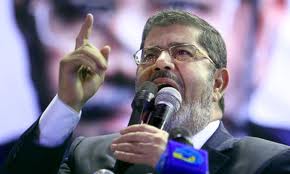
So, who is this Mohammed Morsi, anyway? According to The Times of Israel:

The bespectacled and bearded Morsi squeaked to victory in the freest election in Egypt’s history, and now the 60-year-old university professor must prove his mettle by standing up to the ruling generals who in recent days have stripped the presidency of real power.

For 35 years, Morsi obediently followed the Muslim Brotherhood’s strict rules, abiding by the principle of unquestioned obedience to its supreme leader — a position that changed hands five times during that period and currently is held by Mohammed Badei.

Morsi has dutifully mirrored the group’s strategy of couching a hardline doctrine with short-term pragmatism. In an example that looms large now that he has been elected, Morsi is anti-Israel but he does not call for annulling Egypt’s 1979 peace treaty.

His history makes clear he will not be the comfortable interlocutor for Israel that Mubarak was. His first active role in the Brotherhood was through membership in an “anti-Zionist” committee in his Nile Delta province of Sharkiya in late 1980s, promoting rejection of normalization with the Jewish state. Brotherhood officials have said he will not meet with Israelis, but also will not prevent other officials from doing so.

Morsi helped build the Brotherhood constituencies in Nile Delta provinces at a time the group’s meetings were held in secret, away from the eyes of security forces that waged crackdowns and sent thousands to prison for “belonging to prohibited group” during Mubarak’s three-decade rule. To this day, the 84-year-old organization relies on a disciplined network of cadres backing a leadership whose strategies are formulated behind closed doors.

Unlike other group members who spent years in prison, Morsi was only detained for eight months in 2008 along with 800 Brotherhood members for showing solidarity with independent judges. He was also rounded up along with 34 other Brotherhood members in the first few days of the 2011 uprising. He says he fled the prison with the help of people who helped demolish its walls.

Morsi, who served in the parliament, is said to have never been the ideas man in the Brotherhood. Instead, he served as an implementer of policy. Critics say Morsi is solidly part of the hard-line wing of the Brotherhood that has shown little of the flexibility or willingness to compromise. Throughout his rise in the group, Morsi has been closest to the two figures who are now the Brotherhood’s powerful deputy leaders, Mahmoud Ezzat and Khairat el-Shater.

“Morsi has no talents but he is faithful and obedient to the group’s leaders, who see themselves as above the other Muslims,” said Abdel-Sattar el-Meligi, a former senior Brotherhood figure who broke with the group, particularly because of el-Shater’s grip on the organization. “Morsi would play any role the leaders assign him to, but with no creativity and no uniqueness.”

As a result of this reputation, Egyptians widely assume Morsi’s presidency will be unofficially subordinate to the Brotherhood’s strongman and chief strategist, el-Shater, who was the group’s first choice for pesident. But he was disqualified by election authorities because of his prison conviction during the Mubarak regime. Morsi served only as a backup candidate, earning him the unflattering nickname, “Spare Tire.”

So, basically the Egyptian people are upset that the fella that they elected to be in charge of their nation, who promised them “Hope and Change”, turned out to be a lightweight, is now in the process of passing executive orders and taking all of their freedoms away, and has become a despot.

No wonder Obama likes him.

Until He comes,

KJ

Obama: From Cairo to Arab Spring

On June 4, 2009, President Barack Hussein Obama, spoke the following words of reconciliation to representatives of the Muslim World, who were gathered at the University of Cairo in Egypt:

I have come here to seek a new beginning between the United States and Muslims around the world; one based upon mutual interest and mutual respect; and one based upon the truth that America and Islam are not exclusive, and need not be in competition. Instead, they overlap, and share common principles – principles of justice and progress; tolerance and the dignity of all human beings.

I do so recognizing that change cannot happen overnight. No single speech can eradicate years of mistrust, nor can I answer in the time that I have all the complex questions that brought us to this point. But I am convinced that in order to move forward, we must say openly the things we hold in our hearts, and that too often are said only behind closed doors. There must be a sustained effort to listen to each other; to learn from each other; to respect one another; and to seek common ground. As the Holy Koran tells us, “Be conscious of God and speak always the truth.” That is what I will try to do – to speak the truth as best I can, humbled by the task before us, and firm in my belief that the interests we share as human beings are far more powerful than the forces that drive us apart.

Part of this conviction is rooted in my own experience. I am a Christian, but my father came from a Kenyan family that includes generations of Muslims. As a boy, I spent several years in Indonesia and heard the call of the azaan at the break of dawn and the fall of dusk. As a young man, I worked in Chicago communities where many found dignity and peace in their Muslim faith.

As a student of history, I also know civilization’s debt to Islam. It was Islam – at places like Al-Azhar University – that carried the light of learning through so many centuries, paving the way for Europe’s Renaissance and Enlightenment. It was innovation in Muslim communities that developed the order of algebra; our magnetic compass and tools of navigation; our mastery of pens and printing; our understanding of how disease spreads and how it can be healed. Islamic culture has given us majestic arches and soaring spires; timeless poetry and cherished music; elegant calligraphy and places of peaceful contemplation. And throughout history, Islam has demonstrated through words and deeds the possibilities of religious tolerance and racial equality.

Fast forward to April of 2012, where Michael Hirsh, writing the following post for nationaljournal.com, seems to believe that Obama’s predilection for reconciliation with the Muslim World is something new:

In an article in the current National Journal called “The Post Al Qaida Era,” I write that the Obama administration is taking a new view of Islamist radicalism. The president realizes he has no choice but to cultivate the Muslim Brotherhood and other relatively “moderate” Islamist groups emerging as lead political players out of the Arab Spring in Egypt, Tunisia and elsewhere. (The Muslim Brotherhood officially renounced violence decades ago, leading then-dissident radicals such as Ayman al-Zawahiri to join al Qaida.)

It is no longer the case, in other words, that every Islamist is seen as a potential accessory to terrorists. “The war on terror is over,” one senior State Department official who works on Mideast issues told me. “Now that we have killed most of al Qaida, now that people have come to see legitimate means of expression, people who once might have gone into al Qaida see an opportunity for a legitimate Islamism.”

The new approach is made possible by the double impact of the Arab Spring, which supplies a new means of empowerment to young Arabs other than violent jihad, and Obama’s savagely successful military drone campaign against the worst of the violent jihadists, al Qaida.

Some of the smarter hardliners on the Right, like Reuel Marc Gerecht, are coming to realize that the Arab world may find another route to democracy–through Islamism. The question is, how will this play politically at a time when Obama’s GOP rival, Mitt Romney, is painting the president as a weak accommodationist?

According to a senior advisor to Romney, the campaign is still formulating how to approach the new cuddle-up approach to Islamists. But the spectacle of an administration that is desperately trying to catch up to the fast-evolving new world of the Mideast fits into the Romney narrative of a president who “has been outmatched by events,” the adviser said. “Obama came to power with a view of the region that would make progress in the Arab world and get the Iranians back to the table. He would deal with the Israeli-Palestinian issue, and the key to that was dealing with settlements. Instead it’s been chaos.”

The president may have no choice but to preside over chaos at this point–a chaos that may not be the disaster that critics say and may in fact be the Arab world’s only path to modernity — but it won’t play well in the seven months between now and election day.

No choice?  It seems to me that this may have been his choice all along.

Smart Power? $4 Per Gallon Gas, Bankrolling Barbarians, and Ignoring Our Friends

Tonight, in celebration of Valentine’s Day, a lot of American couples will be using their cars to go out to dinner.

Enjoy going out while you can still afford to, Americans.

ABC.go.com has the story:

Gasoline prices could soon hit $4 a gallon, a threshold they haven’t flirted with since last spring.

The average price paid by U.S. drivers for a gallon of regular now stands at $3.52, according to the U.S. Energy Information Administration, which released its latest figures this afternoon. That price represents an increase of 0.04 percent from a week ago and 0.38 percent from a year ago.

Experts expect prices to spike another 60 cents or more, with the $4 mark being touched—or exceeded—sometime this summer, probably by Memorial Day weekend, the peak of the summer driving season. The last time the U.S. saw $4 gasoline was back in the summer of 2008.

“I think it’s going to be a chaotic spring,” says Tom Kloza of the Oil Price Information Service. He expects average prices to peak at $4.05, though he and other industry trackers say prices could be sharply higher in some markets.

Historically, $4 a gallon has been the upper limit of what consumers have been willing to pay. Last April, national prices peaked at about $3.98 a gallon before receding. “It’s going to be tough to sustain that level,” thinks Brian Milne of energy tracker Televent DTN. “People will drive less.”

Andrew Lipow, president of Lipow Oil Associates in Houston, says where prices will go long-term is anybody’s guess. He has been following gas prices one way or another for more than 30 years. He distinguishes between those forces affecting prices that are predictable, and others that are not.

Chief among the unknowns is war in the Middle East–or if not war, increased tensions. It’s such worries, he says, that are most responsible now for the run up in prices at the pump. Also boosting prices is the higher seasonal demand that comes with summer vacations, plus a federally mandated switch from winter gas formulations to costlier ones for summer. The summer ones, designed to reduce emissions, require further refining steps.

Where could gas be by year’s end? “It depends if the Middle East blows up in a war or not,” says Lipow. “That’s really the big headline out there: Whether or not geopolitical events disrupt supply. We see that affect already.”

We all know that the Middle East is a powderkeg.  Revolution is in the air, and all of the secular despots that America was used to dealing with, are being replaced by Muslim despots, who believe that we are all infidels, and who rather kill us than look at us.

So…what is our president, the Leader of the Free World doing?  Is he negotiating with Ali Baba and his forty thieves in order to drive our oil prices down, thereby stimulating our stagnant economy?

Nope.  This yutz wants to bankroll the barbarians.

Reuters.com reports:

The White House announced plans on Monday to help countries swept by “Arab Spring” revolutions with more than $800 million in economic aid, while maintaining U.S. military assistance to Egypt despite a crisis triggered by an Egyptian crackdown on U.S. democracy activists.

In a year marked by fierce debate over U.S. budget deficits, President Barack Obama sought to maintain the core of U.S. spending on overseas aid and development while squeezing savings out of existing programs and scaling back proposals to build new embassies and hire more diplomats.

In his annual budget message to Congress, Obama asked that military aid to Egypt be kept at the level of recent years – $1.3 billion – and sought $250 million in regular economic aid for the country as it makes its shaky transition away from autocratic rule following the overthrow of President Hosni Mubarak last year.

The proposals are part of Obama’s budget request for fiscal year 2013, which begins Oct. 1. His requests need the approval of Congress. Some lawmakers have urged cuts to overseas spending to address U.S. budget shortfalls and are particularly angry at Egypt.

Obama proposed $51.6 billion in funding for the U.S. State Department and foreign aid overall, when $8.2 billion in assistance to war zones is included.

The White House sought a 1.6 percent increase in the State Department’s budget, excluding spending for Iraq and Afghanistan, which was tallied up separately.

Most of the new economic aid for the Arab Spring countries – $770 million – would go to a new “Middle East and North Africa Incentive Fund,” the president said in his budget plan.

Officials said the bulk of this would be new money, and would be spent on initiatives to support long-term economic, political, and trade reforms for countries in transition such as Egypt, Tunisia and Yemen.

“We’re in a new world. The Arab Spring has come,” said Deputy Secretary of State Tom Nides, Secretary of State Hillary Clinton’s chief budget official.

“We need to make sure we have the tools and flexibility in which to fund these initiatives. … The world is evolving as we see it, and we felt it was important to have a pool of money.”Obama continued the practice of putting proposed foreign assistance for war zones in a separate account. This account, known as the “Overseas Contingency Operations,” includes $8.2 billion for the State Department and foreign aid.

It includes $3.3 billion for Afghanistan, $1 billion for Pakistan, and $4 billion for Iraq, where U.S. troops have left the country but the State Department has picked up some of their functions such as police training.

Overall funding for Iraq declined about 10 percent from the 2012 fiscal year to $4.8 billion.

Assistance for Israel was steady at around $3.1 billion.

Let me try to wrap my head around this.  While Americans face the propect of $4 per gallon gas, the Obama Administration’s  Middle East Policy is to reward the people jacking around with the gas prices, a bunch of murderous barbarians, and ignore our greatest ally?

And they call this Smart Power?