It’s Still the Economy, Stupid.

Barack Obama said the following about the “Recession” we’ve experienced for the last three and a half years, at a campaign rally in Seattle, Washington, yesterday:

It was a house of cards and it collapsed in the most destructive, worst crisis that we’ve seen since the Great Depression. And sometimes people forget the magnitude of it. You know, you saw some of that in the video that was shown. Sometimes I forget.

Mitt Romney’s press secretary, Andrea Saul, responds: “It’s not surprising that a president who forgot to create jobs, forgot to cut the debt, and forgot to change Washington has now admitted that he’s forgotten about the recession. In fact, it seems that the President has forgotten that he’s been in office for the last three-and-a-half years. In November, the American people won’t forget.”

Per Gallup,

64% of Americans are employed full-time, 18.2% are underemployed, and 8.3% are unemployed.

Also, per Gallup:

Registered voters are more likely to say Mitt Romney, if elected president, would do a very good or good job of handling the economy than they are to say President Obama would, if re-elected — 61% vs. 52%. While the two men earn about equal “very good” ratings, 22% of voters think Obama would do a “very poor” job, more than twice as many as say the same about Romney (10%).

Voters were asked to rate Obama and Romney separately on the economy in the May 1-2 USA Today/Gallup poll. However, when forced to choose between the two in a follow-up question, voters were split about evenly, with 47% saying Romney and 45% Obama.

Voters’ greater likelihood to say Obama would do a “very poor” job with the economy comes partly from the large percentage of Republicans who say this — 46%. This compares with a much smaller 20% of Democrats who say the same about Romney. This could partly reflect the fact that Obama has been in office for more than three years in troubled economic times, while Romney has no track record on the economy at the national level. In total, 81% of Republicans say Obama would do a very poor or poor job of handling the economy, while 58% of Democrats give Romney the same ratings.

Independents also give Romney much better ratings than Obama on handling the economy. Twenty-one percent of independents believe Obama would do a very poor job with the economy over the next four years, while 7% say the same about Romney. They are more likely to say Romney than Obama would do a very good or good job — 64% vs. 52%.

Independents’ views on the forced-choice question are similar, with 50% saying Romney would do a better job and 40% saying Obama would. Democrats and Republicans overwhelmingly choose their respective party’s candidate as better able to manage the economy — at almost identically high levels.

And, while the American Economy continues to sink deeper into a socialist swamp, what is the 44th President of the United States doing about it?

Per  Sen. Marco Rubio, in an interview on Laura Ingraham’s Radio Show on Thursday, not a whole heck of a lot.  In fact, he’s trying his darnedest to cover it up:

According to Florida’s Republican junior U.S. senator, the economy should be the focus, but there seems to be a different issue every week brought to the forefront by the president and his party.

“Every single week, whether it’s the student loan issue this week, or this gay marriage issue — next week it’ll be something else; every single week they will trot out another issue to avoid having to talk about the economy because this election is about the economy, which is what it should be about. He can’t win and they know that. They’re smart enough to know that.”

As for the issue itself, Rubio said it was an important one, but one that was preferably done at the state level.

“I’m not saying this isn’t an issue we shouldn’t have an opinion on,” Rubio said. “I’m not saying it isn’t an important issue. But obviously you’re seeing this issue being litigated and voted on across the country at the state level. We did so in Florida. You saw so in North Carolina. But in terms of our president, what we really want to focus on is getting jobs and the economy growing again and keeping America safe. He doesn’t want to talk about the issue — especially the economy.”

But Rubio said whether it be the student loan issue, the contraception mandate or the same-sex marriage issue, Obama has managed to use these issues to divide people for political purposes.

“Every week, it is an effort by this president to divide one group of Americans against another group of Americans for the purposes of getting him reelected,” Rubio said. “It’s very, very sad.”

Obama is simply following Rule #8 of Saul Alinsky’s Rules for Radicals, which states:

“Keep the pressure on. Never let up.” Keep trying new things to keep the opposition off balance. As the opposition masters one approach, hit them from the flank with something new. (Attack, attack, attack from all sides, never giving the reeling organization a chance to rest, regroup, recover and re-strategize.)

While Obama’s Far Left Base is jumping for joy, the overwhelming majority of average Americans out here in the Heartland are not amused.
Obama: Smarter Than Us “Common” Folks

President Barack Hussein Obama yesterday reaffirmed his personal belief that he is wiser than the average American voter.

GMA.yahoo.com has the story:

President Obama today announced that he now supports same-sex marriage, reversing his longstanding opposition amid growing pressure from the Democratic base and even his own vice president.

In an interview with ABC News’ Robin Roberts, the president described his thought process as an “evolution” that led him to this decision, based on conversations with his staff members, openly gay and lesbian service members, and his wife and daughters.

“I have to tell you that over the course of several years as I have talked to friends and family and neighbors, when I think about members of my own staff who are in incredibly committed monogamous relationships, same-sex relationships, who are raising kids together; when I think about those soldiers or airmen or marines or sailors who are out there fighting on my behalf and yet feel constrained, even now that ‘don’t ask, don’t tell’ is gone, because they are not able to commit themselves in a marriage, at a certain point I’ve just concluded that for me personally it is important for me to go ahead and affirm that I think same sex couples should be able to get married,” Obama told Roberts in an interview to appear on ABC’s “Good Morning America” Thursday.

Excerpts of the interview will air tonight on ABC’s “World News With Diane Sawyer” and “Nightline.”

The president stressed that this is a personal position, and that he still supports the concept of states’ deciding the issue on their own. But he said he’s confident that more Americans will grow comfortable with gays and lesbians getting married, citing his own daughters’ comfort with the concept.

Of course, this announcement came the day after North Carolina Voters overwhelmingly voted for a resolution declaring marriage to be “one man and one woman”, becoming the 31st state to pass such a law.

If you watched the MSM yesterday, you would have thought that this was the greatest announcement since Moses brought the tablets down from Mount Sinai.

One would have thought that Obama would have learned a lesson from both the North Carolina vote and the defeat of long-time Indiana Senator Richard Lugar.

Washingtontimes.com reports that

Dark clouds had been gathering over Mr. Lugar for months after tea party groups made the elder statesman, a moderate Republican, their chief congressional target this year.

The GOP primary quickly turned into a nationally scrutinized showdown as the Club for Growth and other Mourdock supporters poured some $3 million into ads lambasting Mr. Lugar for voting for the automakers bailout and tax hikes over his six terms, while groups supporting Mr. Lugar spent half that.

Mr. Mourdock pounded his core message that the 80-year-old senator had turned into a Washington insider, slamming him for living away from Indiana for years, highlighting Mr. Lugar’s congenial relationship with Mr. Obama and criticizing the senator for voting to confirm Mr. Obama’s liberal Supreme Court nominees.

Suddenly, Mr. Lugar found himself struggling to defend things he once touted as accomplishments; among them, working with Democrats on foreign policy and earning the title of one of the two longest-serving Republicans in the Senate. Mr. Lugar and Mr. Hatch were both first elected in 1976.

In a blistering letter, written after his defeat, Sen. Lugar came off as a bitter, pompous, old RINO:

Ultimately, the re-election of an incumbent to Congress usually comes down to whether voters agree with the positions the incumbent has taken. I knew that I had cast recent votes that would be unpopular with some Republicans and that would be targeted by outside groups.

These included my votes for the TARP program, for government support of the auto industry, for the START Treaty, and for the confirmations of Justices Sotomayor and Kagan. I also advanced several propositions that were considered heretical by some, including the thought that Congressional earmarks saved no money and turned spending power over to unelected bureaucrats and that the country should explore options for immigration reform.

It was apparent that these positions would be attacked in a Republican primary. But I believe that they were the right votes for the country, and I stand by them without regrets, as I have throughout the campaign.

…Unfortunately, we have an increasing number of legislators in both parties who have adopted an unrelenting partisan viewpoint. This shows up in countless vote studies that find diminishing intersections between Democrat and Republican positions. Partisans at both ends of the political spectrum are dominating the political debate in our country. And partisan groups, including outside groups that spent millions against me in this race, are determined to see that this continues. They have worked to make it as difficult as possible for a legislator of either party to hold independent views or engage in constructive compromise. If that attitude prevails in American politics, our government will remain mired in the dysfunction we have witnessed during the last several years. And I believe that if this attitude expands in the Republican Party, we will be relegated to minority status. Parties don’t succeed for long if they stop appealing to voters who may disagree with them on some issues.

Legislators should have an ideological grounding and strong beliefs identifiable to their constituents. I believe I have offered that throughout my career. But ideology cannot be a substitute for a determination to think for yourself, for a willingness to study an issue objectively, and for the fortitude to sometimes disagree with your party or even your constituents. Like Edmund Burke, I believe leaders owe the people they represent their best judgment.

Too often bipartisanship is equated with centrism or deal cutting. Bipartisanship is not the opposite of principle. One can be very conservative or very liberal and still have a bipartisan mindset. Such a mindset acknowledges that the other party is also patriotic and may have some good ideas. It acknowledges that national unity is important, and that aggressive partisanship deepens cynicism, sharpens political vendettas, and depletes the national reserve of good will that is critical to our survival in hard times. Certainly this was understood by President Reagan, who worked with Democrats frequently and showed flexibility that would be ridiculed today – from assenting to tax increases in the 1983 Social Security fix, to compromising on landmark tax reform legislation in 1986, to advancing arms control agreements in his second term.

Except that, Reagan, in the end, would always stand behind Conservative principles.  Lugar spent his career reaching across the aisle and patting himself on the back at the same time.

Obama should have paid attention to what was happening around him yesterday.

The American people spoke very clearly.

The death of the Tea Party Movement has been greatly exaggerated.

Don’t Ask. Obama Won’t Tell. Update: He Did!

Last night, the voters of the Tar Heel State joined the citizens of 30 other American states in making their voices heard plainly and clearly on an issue that President Barack Hussein Obama (mm mmm mmmm) is avoiding like the plague.

North Carolina voters have approved a constitutional amendment defining marriage solely as a union between a man and a woman, making it the 30th U.S. state to adopt such a ban.

With 35 percent of precincts reporting Tuesday, unofficial returns showed the amendment passing with about 58 percent of the vote to 42 percent against.

In the days before the vote, members of President Barack Obama’s cabinet expressed support for gay marriage and former President Bill Clinton recorded phone messages urging voters to reject the amendment

Meanwhile, supporters ran their own ad campaigns and church leaders urged Sunday congregations to vote for the amendment. The Rev. Billy Graham was featured in full-page newspaper ads supporting the amendment.

So, what does the “Leader of the Free World” say about the controversial subject?

Don’t ask.  He won’t tell.

Education Secretary Arne Duncan broke ranks with the White House on Monday, stating his unequivocal support for same-sex marriage one day after Vice President Joe Biden suggested that he supported gay marriage as well.

Obama aides worked to manage any political fallout. They said the back-to-back remarks by two top administration officials represented personal viewpoints and were not part of a coordinated effort to lay groundwork for a shift in the president’s position. Obama aides also tried to use the latest flare-up in the gay-marriage debate to shine a light on GOP rival Mitt Romney’s history of equivocating on some gay-rights issues, an attempt to turn a potential political problem into an opportunity.

Obama, who supports most gay rights, has stopped short of backing gay marriage. Without clarification, he’s said for the past year and a half that his personal views on the matter are “evolving.”

The White House held firm on Monday to that position, which polls show puts the president increasingly at odds with his party and the majority of Americans on gay marriage. But with Biden and Duncan’s comments reinvigorating the debate, Obama is likely to face renewed pressure to clarify his views ahead of the November election.

Throughout his first term, he has sought to walk a fine line on same-sex marriage. He’s trying to satisfy rank-and-file Democrats by supporting a range of gay rights issues without alienating crucial independent voters who could be turned off by the emotional social issue.

The president’s aides acknowledge that his position can be confusing. In states where gay marriage already is legal, the president says married gay couples should have the same rights as married straight couples. But he does not publicly support the right of gay couples to enter into a marriage in the first place.

Duncan, a longtime friend of the president as well as a member of his Cabinet, made clear Monday that his position on gay marriage was not in lockstep with the White House. Asked in a television interview whether he believed gay couples should legally be allowed to marry, Duncan said simply, “Yes, I do.”

His comments followed Biden’s assertion Sunday that he was “absolutely comfortable with the fact that men marrying men, women marrying women and heterosexual men and women marrying one another are entitled to the same exact rights, all the civil rights, all the civil liberties.”

Obama aides said Duncan was speaking about his personal views on the issue and was not under orders from the White House or the campaign to take his position.

As for Biden, White House and campaign officials said the vice president’s remarks were no different from what he and Obama have said in the past.

“They were entirely consistent with the president’s position, which is that couples who are married, whether they are gay or heterosexual couples are entitled to the very same rights and very same liberties,” said David Axelrod, a senior adviser to the Obama campaign. “When people are married, we ought to recognize those marriages.”

So, what is the president’s position?  Jay Carney, WH Press Secretary, was asked that during yesterday’s daily press briefing, per politico.com.

Pay attention to this dance recital.  Fred Astaire would be proud.

Q: On the gay marriage issue, Jay, has the intensity of interest in this and the statements from some of the President’s supporters led him to consider clarifying his position? And considering that his views are evolving, does he want to maybe consider his views more thoroughly?

MR. CARNEY: Well, I don’t have a readout of any conversations involving the President on that issue. I can tell you that I’m sure it is the case that he will be asked again at some point when he gives interviews or press conferences about this issue, and I’ll leave it to him to describe his personal views.

I think it’s important to note, as I attempted to do yesterday, that what is abundantly clear is this President’s firm commitment to the protection of and securing of the same rights and obligations for LGBT citizens as other Americans enjoy. He has been a strong proponent of LGBT rights, and I think that’s demonstrated by his record, which is unparalleled, as President in support of those rights.

Q: Jay, you said yesterday on this issue in reference to Vice President Biden’s remarks and the President’s, that the President’s personal views obviously were evolving, and you stressed the personal views. I guess is there maybe a disconnect between his policies and his personal views in terms of maybe his policies are ahead of his personal views on this?

MR. CARNEY: No, I don’t think so. I think the President’s absolute commitment to the rights of LGBT citizens demonstrated by the path he took to ensure the repeal of “don’t ask, don’t tell,” the opposition that he and his administration have expressed towards DOMA and the fact that he believes it ought to be repealed. It is also the case that the President and the Attorney General believe that Section 3 of DOMA is unconstitutional, which is why the federal government no longer defends Section 3. And from hate crimes legislation to hospital visitation rights, the list of accomplishments is quite long and I think demonstrates his feelings about, broadly, this issue.

Q: Do you think he’ll talk about it with Cuomo considering he’s received a lot of plaudits from the LGBT community?

MR. CARNEY: Well, I think — I don’t know what their conversations will contain. I know that they’ll focus on the issue that the President has come to discuss in upstate New York. I think the President has taken a position on some of these state issues, and I think he did on New York and he has in North Carolina. And I think the position he takes has — the positions he has taken are consistent with his belief that it is wrong to take actions that would deny rights to LGBT citizens or rescind rights already provided to LGBT Americans. And that’s a position that you can fully expect him to maintain.

Since when has marriage been a right?  

I’ve never seen the word “marriage” listed in the Constitution under “inalienable rights”, nor in the Bill of Rights itself.

With 62% of America’s population (31 states) voting against Gay Marriage, I believe other Americans haven’t either.

KJ Update:  Today, in an interview with ABC’s Robin Roberts, Obama said:

I have to tell you that over the course of several years as I have talked to friends and family and neighbors, when I think about members of my own staff who are in incredibly committed monogamous relationships, same-sex relationships, who are raising kids together; when I think about those soldiers or airmen or marines or sailors who are out there fighting on my behalf and yet feel constrained, even now that ‘don’t ask, don’t tell’ is gone, because they are not able to commit themselves in a marriage, at a certain point I’ve just concluded that for me personally it is important for me to go ahead and affirm that I think same sex couples should be able to get married.

The interview will air on Thursday’s Good Morning America.

After all, the American public’s opinion doesn’t mean squat to “The Lightbringer”.

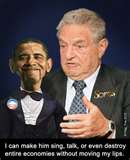
The Return of the Puppet Master

Obama’s re-election bid is not going as smoothly as was predicted by all of the political prognosticators. In response, the Democratic Powers-That-Be are calling in the Big Guns.

After months on the sidelines, major liberal donors including the financier George Soros are preparing to inject up to $100 million into independent groups to aid Democrats’ chances this fall. But instead of going head to head with the conservative “super PACs” and outside groups that have flooded the presidential and Congressional campaigns with negative advertising, the donors are focusing on grass-roots organizing, voter registration and Democratic turnout.

But in interviews, donors and strategists involved in the effort said they also did not believe they could match advertising spending by leading conservative groups like American Crossroads and Americans for Prosperity, and instead wanted to exploit what they see as the Democrats’ advantage in grass-roots organizing.

…In a move likely to draw in other major donors, Mr. Soros will contribute $1 million each to America Votes, a group that coordinates political activity for left-leaning environmental, abortion rights and civil rights groups, and American Bridge 21st Century, a super PAC that focuses on election-oriented research. The donations will be Mr. Soros’s first major contributions of the 2012 election cycle.

“George Soros believes the Supreme Court’s decision in Citizens United opened the floodgates to special interests’ paying for political ads,” said Michael Vachon, a spokesman for Mr. Soros. “There is no way those concerned with the public interest can compete with them. Soros has always focused his political giving on grass-roots organizing and holding conservatives accountable for the flawed policies they promote. His support of these groups is consistent with those views.”

What a noble, giving guy Mr. Soros is, huh?  Wrong.

Two years ago today, I posted an article titled, “Black Thursday…Almost” about an unexpected dive in the Stock Market.  Within that post, I included a short summary of how George Soros made his money:

George Soros set up the now famous Quantum Fund as one of the world’s first Hedge Funds. It took money from the wealthy and invested in risky but potentially highly profitable international deals.

It did very well out of the collapse of fixed exchange rates in the 1970s and the deregulation of global capital markets. By 1980, George Soros was worth more than £16.5 million and his fund £67 million. The stage was set for his intervention in the Exchange Rate Mechanism, a system established in 1979 for controlling exchange rates within the European Monetary System of the European Union(EU) that was intended to prepare the way for a single currency.

Around spring 1992, Soros had decided that the pound would have to be devalued because it had been pushed into the Exchange Rate Mechanism at too high a rate.

He knew that the Bundesbank was in favor of a devaluation of both sterling and the Italian lira and believed it would have to happen because of the disastrous impact that high British interest rates were having on asset prices.

Soros spent the next few months in preparation to profit from that devaluation. He borrowed sterling heavily, reportedly to the tune of £6.5 billion, and converted that into a mixture of Deutschmarks and French francs.

On Black Wednesday, September 16, 1992, Soros won his bet.  The UK Conservative government was forced to withdraw the Pound from the European Exchange Rate Mechanism (ERM) due to pressure by currency speculators, most notably Soros himself.

In the following days, he took care of business, paying back what he borrowed and ending with a profit of around £1 billion.  At the same time, Soros bought as much as £350 million of British shares, gambling that equities often rise after a currency devalues.

He later admitted that his actions had benefited no one but himself.

There are several culprits in the American Stock Market Crash of 2008 that helped cost John McCain the Presidency, but one key source of the problem escaped almost everyone’s attention:  an economic index that can be easily manipulated by Hedge Funds and whose erratic movements have shaken the foundation of Wall Street: the ABX index, launched in 2007 by the Markit Group, aLondon-based company that specializes in credit derivative pricing and that administers the index.

The heart of the mortgage mess we are still recovering from was uncertainty regarding the value of subprime securities. The ABX Index is used to determine the value of these securities: it is a benchmark of the market for all the home loans issued to borrowers with weak credit . A collapse of this index led to home loans being marked down in value.

Looking back, it’s pretty clear that the ABX was manipulated by Hedge Funds. As the ABX subprime mortgage index crashed, so did much of our economy.

Some investors made out like bandits. George Soros for one. Soros had become a political powerbroker of unrivaled influence within the Democratic Party (see The Shadow Party: How George Soros, Hillary Clinton and Sixties Radicals Seized Control of the Democratic Party) and, even now, has an empire of politically active 527 groups, of which he is the number one donor, by far, in America.

There is a now infamous lunch whispered about between Soros and John Paulson, a Hedge Fund Manager who made millions during the collapse.  Soros invited Paulson for lunch, “asking for details of how he laid his bets, with instruments that didn’t exist a few years ago”.

Soros’s Hedge Fund, like most Hedge Funds, is based overseas and escapes much scrutiny and regulation.
Especially, during this Administration.

The European Socialist Slide

Americans have watched as Europe has teetered on the brink of economic chaos, reminiscent of a Buddhist monk preparing to set himself on fire.

It appears that the match has been lit.

French socialist Francois Hollande has won a clear victory in the country’s presidential election.

Mr Hollande – who got an estimated 52% of votes in Sunday’s run-off – said the French had chosen “change”.

Admitting defeat, centre-right incumbent Nicolas Sarkozy wished “good luck” to Mr Hollande.

Analysts say the vote has wide implications for the whole eurozone. Mr Hollande has vowed to rework a deal on government debt in member countries.

Shortly after polls closed at 20:00 (18:00 GMT), French media published projections based on partial results giving Mr Hollande a lead of almost four points. Turnout was about 80%.

Jubilant Hollande supporters gathered on Place de la Bastille in Paris – a traditional rallying point of the Left – to celebrate.

People drank champagne and chanted: “Sarko, it’s over!”

Mr Hollande – the first socialist to win the French presidency since Francois Mitterrand in the 1980s – gave his victory speech in his stronghold of Tulle in central France.

He said was “proud to have been capable of giving people hope again”.

He said he would push ahead with his pledge to refocus EU fiscal efforts from austerity to “growth”.

“Europe is watching us, austerity can no longer be the only option,” he said.

Mr Hollande has called for a renegotiation of a hard-won European treaty on budget discipline championed by German Chancellor Angela Merkel and Mr Sarkozy.

Meanwhile, in Greece…

Greece’s former finance minister and Socialist party leader called for a broad coalition government of pro-European parties, ruling out a two-party government with his conservative rivals after his party received a drubbing in Sunday’s parliamentary elections.

Official projected results showed Evangelos Venizelos’ PASOK party plunging to third place with 13.6 percent and 42 seats in the 300-member parliament. The conservative New Democracy was projected in the lead with 19.18 percent and 109 seats, far below the 151 needed to form a government. The margin of error was 0.5 percentage point.

“A coalition government of the old two-party system would not have sufficient legitimacy or sufficient domestic and international credibility if it would gather a slim majority,” Venizelos said. “A government of national unity with the participation by all the parties that favor a European course, regardless of their positions toward the loan agreements, would have meaning.”

If borne out by final results, the outcome is devastating for PASOK, which won a landslide victory in 2009 with more than 43 percent of the vote.

Voters outraged by Greece’s protracted financial crisis and the austerity measures imposed in return for international bailouts punished both main parties, turning to smaller anti-bailout groups instead. The leftist Syriza, which was projected in second place with 16.3 percent and 50 seats, has been strongly opposed to Greece’s bailout agreements.

“For us in PASOK, today is particularly painful,” Venizelos said. “We knew the price would be heavy and we had undertaken for a long time to bear it.”

Things aren’t  so peachy-keen in Germany, either:

German Chancellor Angela Merkel’s centre-right coalition lost power in the state of Schleswig-Holstein, first estimates showed Sunday, after a vote that could presage national elections next year.

Merkel’s Christian Democrats (CDU) scored 30.6 percent, according to ARD public television, with her junior partners at the national level, the Free Democrats (FDP), winning 8.3 percent – not enough to retain power in the northern state.

However, the opposition – combining the centre-left Social Democrats and ecologist Greens – also failed to gain sufficient support to form a government, with 29.9 percent and 13.6 percent respectively.

This left as a strong possibility a so-called “grand coalition” between the CDU and SPD, which many believe could be the final result of the national elections due in September or October 2013.

The big winners on the night were the Pirates, an upstart party that has shaken up the staid world of German politics with a campaign based on more transparency in the political process and internet freedom.

For the third consecutive regional election, they breached the five-percent mark needed to enter the state parliament, winning 8.2 percent of the vote.

But for the FDP, although they lost more than six percent compared to the last election in 2009, it was a better-than-expected result, given that they are polling nationally at around three percent.

Turnout was low, with around 60 percent of the 2.2 million registered voters casting their ballot, compared to more than two-thirds in 2009.

The socialist Left party failed to clear the five-percent hurdle, scoring around 2.4 percent. A party representing the state’s small Danish minority also fell below the threshold, with 4.5 percent.

The parties will now engage in days of horse-trading before the final make-up of the state parliament is determined.

However, the election will have little impact on the make-up of the Bundesrat, the upper house of parliament where Germany’s 16 states are represented, and Merkel’s personal popularity remains high.

Back on April 24th, Robin Wells reported on the effect of what was happening in European Politics on the markets, for guardian.co.uk:

When markets contemplate that it’s likely that another austerity-skeptic, François Hollande, will win the presidency in France, then the pattern becomes impossible to ignore: the “core” eurozone countries are fragmenting. While it would be foolish to make predictions, what is probable is that Germany’s political isolation within the eurozone will deepen, leaving German taxpayers unwilling to continue backstopping the whole system.

Unthinkable as it seems, the logical conclusion is that the eurozone cannot continue to exist, at least in its present form. Markets, which hate unquantifiable uncertainty, are sensing this. We are likely to be in for an extended period of gut-wrenching turbulence.

What are the implications for the US, economically and politically? Direct links between the US and eurozone economies are fairly minor: we don’t export that much to them, they don’t import that much from us, and US banks have had an extended time to cut their exposure to eurozone risk. Yet the collateral damage could still prove significant.

When the stock markets fall, consumer and business confidence falls, leading to cutbacks in spending – bad news for an American economy that is still mired in recession. In addition, crisis in Europe makes for a stronger US dollar, as investors flee to safer abodes. Again, bad for the economy as a stronger dollars hurts US exports.

The reality of the eurozone’s troubles should lend support to President Barack Obama’s campaign against GOP presidential nominee presumptive Mitt Romney and congressional Republicans. It provides a demonstration that austerity is self-defeating, that fiscal stimulus is needed in a deeply depressed economy, that recovery from a financial crisis is a slow and halting process, and that by grasping the nettle immediately, the Obama administration has succeeded in stabilizing its financial sector – while the Europeans have made a hash of it.

Ms. Wells’ thoughts about our economic plight are way off…unless she calls the Obama Administration embracing of European Socialist-style Big Government, spending like there’s no tomorrow, and keeping unemployment at over 8% “stabilizing the financial sector”.

It is imperative that America not follow Europe’s example, this November 6th.

One Nation, Under God

Here are a few quotes from American Presidents, expressing their love and reverence for the Almighty.

That is, all except one.

You do well to wish to learn our arts and ways of life, and above all, the religion of Jesus Christ. These will make you a greater and happier people than you are.

…While we are zealously performing the duties of good citizens and soldiers, we certainly ought not to be inattentive to the higher duties of religion. To the distinguished character of Patriot, it should be our highest glory to add the more distinguished character of Christian.

…The blessing and protection of Heaven are at all times necessary but especially so in times of public distress and danger. The General hopes and trusts that every officer and man will endeavor to live and act as becomes a Christian soldier, defending the dearest rights and liberties of his country.

…I now make it my earnest prayer that God would… most graciously be pleased to dispose us all to do justice, to love mercy, and to demean ourselves with that charity, humility, and pacific temper of the mind which were the characteristics of the Divine Author of our blessed religion.

GEORGE WASHINGTON

The doctrines of Jesus are simple, and tend all to the happiness of man.

The practice of morality being necessary for the well being of society, He [God] has taken care to impress its precepts so indelibly on our hearts that they shall not be effaced by the subtleties of our brain. We all agree in the obligation of the moral principles of Jesus and nowhere will they be found delivered in greater purity than in His discourses.

I am a Christian in the only sense in which He wished anyone to be: sincerely attached to His doctrines in preference to all others.

I am a real Christian – that is to say, a disciple of the doctrines of Jesus Christ.

– THOMAS JEFFERSON

If we shall suppose that American slavery is one of those offenses which, in the providence of God, must needs come, but which, having continued through His appointed time, He now wills to remove, and that He gives to both North and South this terrible war as the woe due to those by whom the offense came, shall we discern therein any departure from those divine attributes which the believers in a living God always ascribe to Him? Fondly do we hope, fervently do we pray, that this mighty scourge of war may speedily pass away. Yet, if God wills that it continue until all the wealth piled by the bondsman’s two hundred and fifty years of unrequited toil shall be sunk, and until every drop of blood drawn with the lash shall be paid by another drawn with the sword, as was said three thousand years ago, so still it must be said “the judgments of the Lord are true and righteous altogether.”

With malice toward none, with charity for all, with firmness in the right as God gives us to see the right, let us strive on to finish the work we are in, to bind up the nation’s wounds, to care for him who shall have borne the battle and for his widow and his orphan, to do all which may achieve and cherish a just and lasting peace among ourselves and with all nations.

-ABRAHAM LINCOLN

The general principles on which the fathers achieved independence were. . . . the general principles of Christianity.

JOHN ADAMS

[T]he teachings of the Bible are so interwoven and entwined with our whole civic and social life that it would be literally….impossible for us to figure to ourselves what that life would be if these teaching were removed.

-TEDDY ROOSEVELT

America was born a Christian nation – America was born to exemplify that devotion to the elements of righteousness which are derived from the revelations of Holy Scripture.

– WOODROW WILSON

American life is builded, and can alone survive, upon . . . [the] fundamental philosophy announced by the Savior nineteen centuries ago.

-HERBERT HOOVER

This is a Christian Nation. –

– HARRY TRUMAN

Let us remember that as a Christian nation . . . we have a charge and a destiny.

– RICHARD NIXON

We do not consider ourselves a Christian nation or a Jewish nation or a Muslim nation. We consider ourselves a nation of citizens who are bound by ideals and a set of values.

BARACK HUSSEIN OBAMA

In a unrelated matter, or is it related?  I certainly believe so.

Per Breitbart.com

Barack Obama launched his campaign in unspectacular fashion today at Ohio State University, the largest college in the crucial swing state. A photo posted to twitter by Mitt Romney’s campaign spokesman Ryan Williams reveals sparse attendance. The above image, according to Williams, was taken during the President’s first official campaign speech.

During the speech, Obama ripped into the presumptive GOP nominee and discussed nation building at home, but the most newsworthy item of the day was not the talking points Obama delivered: it was the crowd… or lack thereof. According to ABC News, the Obama campaign had expected an “overflow” of people. Instead, the arena looked half-empty. The Columbus Dispatch reports that Obama organizers even had people move from the seats to the floor of the gym in order to project a larger crowd on television.

According to the Toledo Blade, the venue for Obama’s rally seats 20,000 but “there were a lot of empty seats.” Comparatively, Obama drew a crowd of 35,000 at Ohio State when he campaigned for former Governor Ted Strickland in 2010.

The official Barack Obama Tumblr boasts a figure from ThinkProgress that 14,000 attended the event–70% of the stadium’s seating capacity.

To hold a campaign event in a room that you can’t fill is a mistake; to promise the media a more-than-capacity crowd then fall this far short of that promise is utter incompetence. In 2008, Obama ran a near-flawless campaign, buoyed by enthusiasm and effective organizing. But it’s not 2008 any more, and on day one of the 2012 campaign, Team Obama has already made an embarrassing blunder.

Yes, they have…they overestimated the crowd and underestimated the American people and the Solid Rock upon which this nation was built.

However, God always has a way of getting your attention.

A Tale of Two Julias

It was the best of women.  It was the worst of women.

Let’s compare a couple of famous “Julias”, shall we?

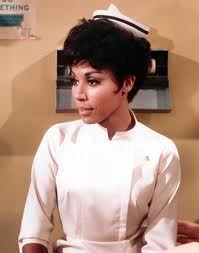
Julia, a half-hour comedy premiering on NBC in September 1968, was an example of American network television’s attempt to address race issues during a period of heightened activism and turmoil over the position of African-Americans in U.S. society. The series was the first to star a black performer in the leading role since Beulah, Amos ‘n’ Andy, and The Nat “King” Cole Show all left the air in the early and mid-1950s. By the mid-1960s, a number of prime-time series began featuring blacks in supporting roles, but industry fears of mostly southern racial sensibilities discouraged any bold action by the networks to more fully represent African-Americans in entertainment television. Series creator, Hal Kanter, a Hollywood liberal and broadcasting veteran whose credits included writing for the Beulah radio show in the 1940s, initiated Julia’s challenge to what remained of television’s colour bar. Kanter had attended a luncheon organized by the National Association for the Advancement of Colored People (NAACP) and been inspired enough to propose the project to NBC. The network agreed to run the show, but programmers did not expect it to do well since it was scheduled opposite the hugely popular Red Skelton Show. The show proved to be a surprise hit, however, jumping into the top ten list of most watched programs during its first year, and continuing to be moderately successful during its remaining two seasons on the air.

The series revolved around the lives of Julia Baker, (Diahann Carroll) a widowed black nurse and her young son, Corey (Marc Copage). Julia’s husband had been killed in a helicopter crash in Vietnam, and the series began with the now fatherless Baker family moving into an integrated apartment building in Los Angeles while Julia secured employment at the medical offices of Astrospace Industries. She worked with a gruff but lovable elderly white physician, Dr. Chegley (Lloyd Nolan), and a homely but spirited white nurse, Hannah Yarby. Julia’s closest friends were her white neighbors, the Waggedorns–Marie, a scatter-brained housewife; Len, a police officer; and Earl J. Waggedorn, their son and Corey’s pal. While Julia lived in an almost exclusively white environment, she managed to find a series of impeccably refined African-American boyfriends. Paul Winfield played one of her more long-standing romantic partners. Performed with elegance and dignity by Carroll, Julia represented a completely assimilated–and thoroughly non-stereotyped–African-American image to prime-time viewers.

This week, desperate to show how wonderful a socialist society under “The Lightbringer” would be, the Obama Administration, last week, presented for our edification and illumination,the fictional, err, I mean compressed, life story of a young lady named Julia.

Rich Lowry, writing for nationalreview.com, summarizes it:

Julia begins her interaction with the welfare state as a little tot through the pre-kindergarten program Head Start. She then proceeds through all of life’s important phases, not Shakespeare’s progression from “mewling and puking” infant to “second childishness and mere oblivion,” but the Health and Human Services and Education Departments version: a Pell grant (age 18), surgery on insurance coverage guaranteed by Obamacare (22), a job where she can sue her employers for more pay thanks to the Lilly Ledbetter Fair Pay Act (23), free contraception (27), a Small Business Administration loan (42) and, finally, Medicare (65) and Social Security (67). (In a sci-fi touch, these entitlements are presumed to be blissfully unchanged sometime off in the 2070s.)

No doubt, the creators of Julia — imagine a dour and featureless version of Dora the Explorer who grows old through the years — weren’t seeking to make a major philosophical statement. But they inadvertently captured something important about the progressive vision.

Julia’s central relationship is to the state. It is her educator, banker, health-care provider, venture capitalist, and retirement fund. And she is, fundamentally, a taker. Every benefit she gets is cut-rate or free. She apparently doesn’t worry about paying taxes. It doesn’t enter her mind that the programs supporting her might add to the debt or might have unintended consequences. She has no moral qualms about forcing others to pay for her contraception, and her sense of patriotic duty is limited to getting as much government help as she can.

Back in October of 2009, 35,000 people were waiting in line outside of Cobo Hall in Detroit, Michigan when trouble ensued. These people were so desperate for help with mortgage and utility bills that threats were made, fights broke out, and people were nearly trampled.

Ken Rogulski was there, reporting on WJR in Michigan. He decided to interview two people there in line for Obama cash.

ROGULSKI: Why are you here?

WOMAN #1: To get some money.

ROGULSKI: What kind of money?

WOMAN #1: Obama money.

ROGULSKI: Where’s it coming from?

WOMAN #1: Obama.

ROGULSKI: And where did Obama get it?

WOMAN #1: I don’t know, his stash. I don’t know. (laughter) I don’t know where he got it from, but he givin’ it to us, to help us.

WOMAN #2: And we love him.

WOMAN #1: We love him. That’s why we voted for him!

WOMEN: (chanting) Obama! Obama! Obama! (laughing)

I wonder if they were “Julia’s” Aunts?

In the span of 24 years, we have gone from a Julia who was a successful, self-sufficient, hard-working, single, American mom, to a “Julia” who is a leech, living off the money of American taxpayers, and doesn’t know what the words “self-sufficient” mean.

We have to boot the present occupant of 1600 Pennsylvania Avenue in Washington, DC out on his derriere on November 6th, 2012.

It will be a far, far better thing we do than we have ever done before.

More Chens Than a Chinese Phonebook

Domestic policy can only defeat us; foreign policy can kill us.

John F. Kennedy

Obama’s “Smart Power!” Foreign Policy is looking like anything but, in his handling of the case of a blind gentleman from China who wants to defect to America.

Thehill.com has the story.

The Chinese dissident at the center of a political firestorm called a hearing Thursday and told lawmakers he wants to meet with Secretary of State Hillary Clinton.

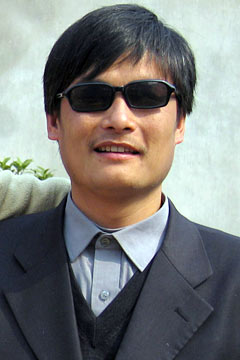
Chinese human rights activist Chen Guangcheng called a hearing set up to explore his efforts to leave China and escape persecution—apparently from a Chinese hospital room.

“I want to meet with Secretary Clinton,” he said on the phone. “I hope I can get more help from her. I also want to thank her face to face.”

Chen added that he is most concerned with his family, and said, “I really want to know what’s going on with them.”

“I want to thank all of you for your care and your love,” he added, through a translation by Pastor Bob Fu, Founder and President, ChinaAid Association. Fu was a witness at Thursday’s hearing of the Congressional-Executive Commission on China.

Chen is at the center of a diplomatic row between the U.S. and China that has become a political liability for President Obama.

Chen was under house arrest for several months for protesting China’s one-child policy, but escaped to the U.S. Embassy, where he stayed for several days.

The U.S. and China appeared to reach a deal Wednesday that allowed Chen to remain in China, where he said he wished to stay.

But after Chen was released to a Chinese hospital to have his injuries treated, the dissident said he did not want to stay in China and requested political asylum in the U.S.

Administration officials insisted they did not pressure Chen to stay in China and that he decided on his own initially that he wanted to remain in his country.

But the about-face has led to criticism from Republicans that U.S. officials never should have allowed him to leave the U.S. embassy.

Speaking of the Republicans, the unofficial/official Republican Nominee for President was not shy about voicing his opinion concerning this fiasco:

Mitt Romney condemned the Obama administration’s handling of blind Chinese dissident Chen Guangcheng, calling the episode “a dark day for freedom” and “a day of shame” for President Obama if, he couched, reports are true that American officials communicated threats to Chen’s family.

At the same time Romney was speaking about the Chen story, about which there are conflicting reports, CNN was reporting that Chen told the network that he blamed a “misunderstanding” with the U.S. government for impressions that the Americans abandoned him and expressed “deep gratitude” to American officials.

Several times on Thursday, Romney couched his comments with disclaimers like “if the reports are true,” but the takeaway was clearly intended that the incident is a black eye for President Barack Obama, Secretary of State Hillary Clinton and Treasury Secretary Timothy Geithner.

“Just in the last day or two we’ve heard some disturbing things from across the world that suggest that, potentially, if the reports are true, some very troubling developments there,” Romney said. “Where an individual, Mr. Chen, has sought freedom in a bastion of freedom, an embassy of the United States of America. Aren’t we proud of the fact that people seeking freedom come to our embassy to find it?”

Romney continued: “The reports are, if they’re accurate, our administration willingly or unwittingly communicated to Chen an implicit threat to his family. And also probably sped up, or may have sped up, the process of his decision to leave the embassy because they wanted to move on to a series of discussions that Mr. Geithner and our secretary of state are planning on having with China.”

The likely GOP presidential nominee added: “It’s also apparent, according to these reports, if they’re accurate, that our embassy failed to put in place the kind of verifiable measures that would assure the safety of Mr. Chen and his family. If the reports are true, this is a dark day for freedom and it’s a day of shame for the Obama administration. We are a place of freedom, here and around the world and we should stand up and defend freedom wherever it is under attack.”

But, according to the Twitter feed of CNN executive producer Ram Ramgopal, Chen offered praise to the Americans who helped him.

“Chen Guangcheng speaks to CNN; says he believes U.S. will help him, expresses “deep gratitude” to American officials in Beijing,” Ramgopal wrote. “Chen also blames a ‘misunderstanding’ for the impression that the U.S. govt. abandoned him in the hospital.”

Romney, who has made a get-tough attitude toward China a central part of his foreign policy, on Sunday released a statement professing concern for Chen’s treatment, but had not previously spoken about the case from the stump.

Good for Mitt.  Well done.

On the subject of freedom, the greatest president in my lifetime, Ronald Wilson Reagan,  said:

Freedom is never more than one generation away from extinction. We didn’t pass it to our children in the bloodstream. It must be fought for, protected, and handed on for them to do the same.

In 1974, in a speech titled, “The Shining City Upon a Hill”, Reagan said:

Standing on the tiny deck of the Arabella in 1630 off the Massachusetts coast, John Winthrop said, “We will be as a cityupon a hill.The eyes of all people are upon us, so that if we deal falsely with our God in this work we have undertaken and so cause Him to withdraw His present help from us, we shall be made a story and a byword throughout the world.”

Everyone’s watching, Mr. President.  It’s your move.

Of Lies and Compression

Fiction – something invented by the imagination or feigned;specifically: an invented story

President Barack Hussein Obama evidently assisted “Bomber” Bill Ayers in writing a work of fiction when they sat down to compose the supposed memoir “Dreams From My Father”.

Dylan Byars posted the following, yesterday, on politico.com:

One of the more mysterious characters from President Obama’s 1995 autobiography Dreams From My Father is the so-called ‘New York girlfriend.’ Obama never referred to her by name, or even by psuedonym, but he describes her appearance, her voice, and her mannerisms in specific detail.

But Obama has now told biographer David Maraniss that the ‘New York girlfriend’ was actually a composite character, based off of multiple girlfriends he had both in New York City and in Chicago.

“During an interview in the Oval Office, Obama acknowledged that, while Genevieve was his New York girlfriend, the description in his memoir was a “compression” of girlfriends, including one who followed Genevieve [Cook] when he lived in Chicago,” Maraniss writes in his new biography, an excerpt of which was published online today by Vanity Fair.

“In Dreams from My Father, Obama chose to emphasize a racial chasm that unavoidably separated him from the woman he described as his New York girlfriend,” Maraniss writes, offering a passage from the book in which they go to see a play by a black playwright:

One night I took her to see a new play by a black playwright. It was a very angry play, but very funny. Typical black American humor. The audience was mostly black, and everybody was laughing and clapping and hollering like they were in church. After the play was over, my friend started talking about why black people were so angry all the time. I said it was a matter of remembering—nobody asks why Jews remember the Holocaust, I think I said—and she said that’s different, and I said it wasn’t, and she said that anger was just a dead end. We had a big fight, right in front of the theater. When we got back to the car she started crying. She couldn’t be black, she said. She would if she could, but she couldn’t. She could only be herself, and wasn’t that enough.

“None of this happened with Genevieve,” Maraniss writes. “She remembered going to the theater only once with Barack, and it was not to see a work by a black playwright. When asked about this decades later, during a White House interview, Obama acknowledged that the scene did not happen with Genevieve. “It is an incident that happened,” he said. But not with her. He would not be more specific, but the likelihood is that it happened later, when he lived in Chicago. “That was not her,” he said. “That was an example of compression I was very sensitive in my book not to write about my girlfriends, partly out of respect for them. So that was a consideration. I thought that [the anecdote involving the reaction of a white girlfriend to the angry black play] was a useful theme to make about sort of the interactions that I had in the relationships with white girlfriends. And so, that occupies, what, two paragraphs in the book? My attitude was it would be dishonest for me not to touch on that at all … so that was an example of sort of editorially how do I figure that out?””

Broadway Books, a division of Random House’s Crown Publishing Group, did not immediately respond to a request for comment.

UPDATE: In the reissue of “Dreams from My Father,” Obama writes in the introduction that “some of the characters that appear are composites of people I’ve known.”

CORRECTION: An earlier version of this blog post stated that Obama had acknowledged using composite characters in the reissue. In fact, Obama acknowledged the use of composite characters in the first edition of the book.

Okay.  So, if he acknowledged that he…ummm…compressed, why is it considered an autobiography and not a work of fiction?

Especially, as this article from The American Thinker shows, even Google lists Bill Ayers as the author of the book, not President Barack Hussein Obama (mm mmm mmmm).

Google, which sits atop more data than anybody outside the NSA, is presenting Bill Ayers as the author of Barack Obama’s purported first autobiography, Dreams from My Father. Follow this link and see it while you can. If it is gone by the time you read this, a screen shot of the page, and a close-up on the Dreams entry are provided for posterity.

Google knows so much about us already that privacy activists are alarmed. What data are its algorithms sifting through to come to the conclusion that yes, the stylistic parallels to Ayers’ other books are formidable and Barry never showed any sign of an ability to write this way before or after, and yes, Christopher Anderson’s friendly biography includes the information that Obama found himself deeply in debt and “hopelessly blocked.” At “Michelle’s urging,” Obama “sought advice from his friend and Hyde Park neighbor Bill Ayers.”

So the company that supposedly knows more about us than we know ourselves also knows who wrote Dreams from My Father.

I thought that the only compression that “Bomber” Bill Ayers was familiar with was how to compress explosives into an innocent-looking container.

So, was Obama compressing when he called Ayers “just another guy in the neighborhood”?

Or, did Congressman Joe Wilson hit the proverbial nail on the head during that State of the Union speech in 2009, which now seems so long ago?

The Afghanistan Agreement…Thank You, Neville Chamberlain

Last night, at 6:30 p.m. Central, the 44th president of the United States of America, Barack Hussein Obama, gave a 15 minute address concerning the “end of the war” in Afghanistan.

The speech was given at Bagram Air Force Base, in front of a phony backdrop consisting of the machines of war, while our Brightest and Best were barred from the area.

And, with good reason.  Their CIC sounded more like he was repeating “Peace in Our Time” than the end to a successful military campaign.

He announced a five-step plan to end our military involvement in Afghanistan:

First, we’ve begun a transition to Afghan responsibility for security. Already, nearly half of the Afghan people live in places where Afghan security forces are moving into the lead. This month, at a NATO Summit in Chicago, our coalition will set a goal for Afghan forces to be in the lead for combat operations across the country next year. International troops will continue to train, advise and assist the Afghans, and fight alongside them when needed. But we will shift into a support role as Afghans step forward.

As we do, our troops will be coming home. Last year, we removed 10,000 U.S. troops from Afghanistan. Another 23,000 will leave by the end of the summer. After that, reductions will continue at a steady pace, with more and more of our troops coming home. And as our coalition agreed, by the end of 2014 the Afghans will be fully responsible for the security of their country.

Second, we are training Afghan security forces to get the job done. Those forces have surged, and will peak at 352,000 this year. The Afghans will sustain that level for three years, and then reduce the size of their military. And in Chicago, we will endorse a proposal to support a strong and sustainable long-term Afghan force.

Third, we’re building an enduring partnership. The agreement we signed today sends a clear message to the Afghan people: As you stand up, you will not stand alone. It establishes the basis for our cooperation over the next decade, including shared commitments to combat terrorism and strengthen democratic institutions. It supports Afghan efforts to advance development and dignity for their people. And it includes Afghan commitments to transparency and accountability, and to protect the human rights of all Afghans — men and women, boys and girls.

Within this framework, we’ll work with the Afghans to determine what support they need to accomplish two narrow security missions beyond 2014 — counter-terrorism and continued training. But we will not build permanent bases in this country, nor will we be patrolling its cities and mountains. That will be the job of the Afghan people.

Fourth, we’re pursuing a negotiated peace. In coordination with the Afghan government, my administration has been in direct discussions with the Taliban. We’ve made it clear that they can be a part of this future if they break with al Qaeda, renounce violence and abide by Afghan laws. Many members of the Taliban — from foot soldiers to leaders — have indicated an interest in reconciliation. The path to peace is now set before them. Those who refuse to walk it will face strong Afghan security forces, backed by the United States and our allies.

Fifth, we are building a global consensus to support peace and stability in South Asia. In Chicago, the international community will express support for this plan and for Afghanistan’s future. And I have made it clear to its neighbor — Pakistan — that it can and should be an equal partner in this process in a way that respects Pakistan’s sovereignty, interests and democratic institutions. In pursuit of a durable peace, America has no designs beyond an end to al Qaeda safe havens and respect for Afghan sovereignty.

“Peace in Our Time” was delivered by British Prime Minister Neville Chamberlain in 1938, in defense of the Munich Agreement, which he made with those infamous barbarians, German Chancellor Adolf Hitler and the National Socialist Party, or as the world came to call them, the Nazis, and Hitler’s good buddy, the Italian Fascist, Benito Mussolini.

The following is an excerpt:

…I would like to say a few words in respect of the various other participants, besides ourselves, in the Munich Agreement. After everything that has been said about the German Chancellor today and in the past, I do feel that the House ought to recognise the difficulty for a man in that position to take back such emphatic declarations as he had already made amidst the enthusiastic cheers of his supporters, and to recognise that in consenting, even though it were only at the last moment, to discuss with the representatives of other Powers those things which he had declared he had already decided once for all, was a real and a substantial contribution on his part. With regard to Signor Mussolini, . . . I think that Europe and the world have reason to be grateful to the head of the Italian government for his work in contributing to a peaceful solution.

In my view the strongest force of all, one which grew and took fresh shapes and forms every day war, the force not of any one individual, but was that unmistakable sense of unanimity among the peoples of the world that war must somehow be averted. The peoples of the British Empire were at one with those of Germany, of France and of Italy, and their anxiety, their intense desire for peace, pervaded the whole atmosphere of the conference, and I believe that that, and not threats, made possible the concessions that were made. I know the House will want to hear what I am sure it does not doubt, that throughout these discussions the Dominions, the Governments of the Dominions, have been kept in the closest touch with the march of events by telegraph and by personal contact, and I would like to say how greatly I was encouraged on each of the journeys I made to Germany by the knowledge that I went with the good wishes of the Governments of the Dominions. They shared all our anxieties and all our hopes. They rejoiced with us that peace was preserved, and with us they look forward to further efforts to consolidate what has been done.

Ever since I assumed my present office my main purpose has been to work for the pacification of Europe, for the removal of those suspicions and those animosities which have so long poisoned the air. The path which leads to appeasement is long and bristles with obstacles. The question of Czechoslovakia is the latest and perhaps the most dangerous. Now that we have got past it, I feel that it may be possible to make further progress along the road to sanity.

We all know what happened next:  World War II.

That’s what happens when you negotiate with barbarians.