 The Sequester has kicked in and Obama and his minions are still whining about how badly Sequestration with hurt our country. Evidently, great humanitarian that Obama is, he does not want to see his friends in Egyptian’s Musalim Brotherhood “hurting” as bad as we are.
U.S. Secretary of State John Kerry on Sunday rewarded Egypt for President Mohammed Morsi’s pledges of political and economic reforms by releasing $250 million in American aid to support the country’s “future as a democracy.”
Yet Kerry also served notice that the Obama administration will keep close watch on how Morsi, who came to power in June as Egypt’s first freely elected president, honors his commitment and that additional U.S. assistance would depend on it.
“The path to that future has clearly been difficult and much work remains,” Kerry said in a statement after wrapping up two days of meetings in Egypt, a deeply divided country in the wake of the revolution that ousted longtime President Hosni Mubarak.
Egypt is trying to meet conditions to close on a $4.8 billion loan package from the International Monetary Fund. An agreement would unlock more of the $1 billion in U.S. assistance promised by President Barack Obama last year and set to begin flowing with Kerry’s announcement.
“The United States can and wants to do more,” Kerry said. “Reaching an agreement with the IMF will require further effort on the part of the Egyptian government and broad support for reform by all Egyptians. When Egypt takes the difficult steps to strengthen its economy and build political unity and justice, we will work with our Congress at home on additional support.”
Kerry cited Egypt’s “extreme needs” and Morsi’s “assurances that he plans to complete the IMF process” when he told the president that the U.S. would provide $190 million of a long-term $450 million pledge “in a good-faith effort to spur reform and help the Egyptian people at this difficult time.” The release of the rest of the $450 million and the other $550 million tranche of the $1 billion that Obama announced will be tied to successful reforms, officials said.
Separately, the top U.S. diplomat announced $60 million for a new fund for “direct support of key engines of democratic change,” including Egypt’s entrepreneurs and its young people. Kerry held out the prospect of U.S. assistance to this fund climbing to $300 million over time.
Recapping his meetings with political figures, business leaders and representatives of outside groups, Kerry said he heard of their “deep concern about the political course of their country, the need to strengthen human rights protections, justice and the rule of law, and their fundamental anxiety about the economic future of Egypt.”
Those issues came up in “a very candid and constructive manner” during Kerry’s talks with Morsi.
“It is clear that more hard work and compromise will be required to restore unity, political stability and economic health to Egypt,” Kerry said.Ever since November 22nd, when President Morsi issued a declaration that granted him broad powers above the reach of any court, Egypt has become increasingly tense and politically fractured. After Morsi’s declaration, a Brotherhood-dominated constituent assembly rushed to finish a draft of a new constitution. More than a quarter of the assembly members resigned in protest, and there were clear violations of protocol, but the document was rammed through in a sixteen-hour voting session. Despite months of work, some articles were introduced only in that final session. The result is a slippery foundation for the future: a number of basic rights—including freedom of the press, due process for justice, and equality for women and minorities—aren’t adequately protected.
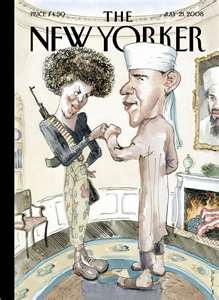
We’ve already seen just how unstable the Muslim Brotherhood-lead Egyptian Government is. On December 24th, 2012, the New Yorker Magazine reported that
…Ever since November 22nd, when President Morsi issued a declaration that granted him broad powers above the reach of any court, Egypt has become increasingly tense and politically fractured. After Morsi’s declaration, a Brotherhood-dominated constituent assembly rushed to finish a draft of a new constitution. More than a quarter of the assembly members resigned in protest, and there were clear violations of protocol, but the document was rammed through in a sixteen-hour voting session. Despite months of work, some articles were introduced only in that final session. The result is a slippery foundation for the future: a number of basic rights—including freedom of the press, due process for justice, and equality for women and minorities—aren’t adequately protected.
But the most revealing moment of the crisis occurred a week and a half ago. With protesters camped outside the Presidential Palace, in Cairo, Brotherhood members led a group of men who attacked peaceful demonstrators and tore down their tents. The violence kicked off an evening of escalating counterattacks; in the end, nine people died and more than a thousand were injured, with both sides sustaining heavy casualties. Some protesters, women among them, were detained and tortured by civilian groups that included members of the Brotherhood. Morsi, in a clumsy and dishonest speech to the nation, blamed it all on “thugs” and a “fifth column” organized by the remnants of Hosni Mubarak’s regime. But there was no question who had started the fighting. It was the first clearly documented case of political violence in more than fifty years of Muslim Brotherhood activity in Egypt.
Nonviolence has always been a point of pride for the organization. Some of its offshoot groups, like Hamas, have engaged in terrorism, but the Brotherhood never endorsed acts of violence in Egypt, despite decades of oppression under Mubarak that included the imprisonment of most of its leaders. That restraint, however, like the talk of coöperation, seems to have evaporated with the first taste of power. Sometimes an organization is nonviolent on principle, and sometimes it is nonviolent simply because it finds itself in a position of weakness.
For many Egyptians, it’s been a depressing month. The military seems to be aligned with Morsi, at least for the moment, and the country lacks a strong and coherent political alternative to the Brotherhood. Nevertheless, there are some reasons for optimism. The public response has been impressive, with tens of thousands of peaceful protesters surrounding the palace on many nights. These crowds are largely middle class, but they comprise people from all walks of life, including many who identify themselves as former supporters of Morsi. There are more women than usual. And expectations have changed since the beginning of the revolution. For almost two years, the media have operated with a freedom that never existed under Mubarak, and Egypt has held essentially fair elections for both parliament and the Presidency. Such progress remains fragile, but at least certain demands are being established.
Meanwhile, the Brotherhood has failed to evolve in the wake of the revolution. Traditionally, the organization’s strengths have been local religious training and charity work, which have made it effective at mobilizing grassroots support for elections. But for decades it was banned from full participation in Egypt’s government, so it has never been tested in the more subtle and complicated aspects of national politics. The leadership is dominated by people from technical fields: of the eighteen members of the Brotherhood’s Guidance Bureau, fifteen are doctors, engineers, or scientists. Their careers may not have taught them the arts of negotiation and compromise, and Morsi, an engineer by training, has shown no real flexibility in response to the unfolding crisis. Eight of his advisers and aides have resigned in the past three weeks. From the outside, it’s hard to distinguish between calculation and incompetence. On Sunday evening, the government suddenly announced major tax increases for a wide variety of goods, including gasoline, electricity, cooking oil, cigarettes, and alcohol—hardly a savvy move in a country with a ravaged economy and an ongoing political crisis. Later that night, after the decree had inspired a mad rush on Cairo liquor stores, Morsi cancelled it with a message posted on his Facebook page at 2:13 a.m.
The Brotherhood has “a huge ability to withstand negotiations that never reach anything,” Gaber Gad Nassar, one of the most prominent members who quit the constituent assembly, said last week. Nassar is a professor of constitutional law at Cairo University, and his analysis could be seen as either deeply pessimistic or perversely optimistic, depending on the tone of your inshallah. “They are extremely keen to take over power and use it,” he said. “However, the biggest problem they face is the lack of talent qualified to do that.” Critics have always made this point—that the worst thing that could happen to the Brotherhood might be a rise to power, because then their weaknesses would be exposed. But this is small consolation in Cairo. The world is full of bad regimes that survive just because they hurt others more than they hurt themselves. ♦
This Administration is having a hissy fit, claiming that they are not able to adequately fund our own government, while at the same time, they are giving money to an organization which is the Godfather of Muslim Terrorists Groups and hates our nation with an unholy passion.
Are Obama, Secretary of State Kerry, and the rest of the idiots in this administration tone deaf or dangerously stupid?
I vote for tone deaf and dangerously stupid. God help us.
Until He comes,
KJ
 Kingsjester's Blog
Being a leftist means being a hypocrite. too…
LikeLike